
Delhi air quality improves to ‘poor’ category, national capital reels under icy cold conditions
By IANS | Updated: January 8, 2026 09:30 IST2026-01-08T09:26:57+5:302026-01-08T09:30:09+5:30


New Delhi, Jan 8 Delhi’s air quality showed a marginal improvement on Thursday morning, with the Air Quality ...
Delhi air quality improves to ‘poor’ category, national capital reels under icy cold conditions
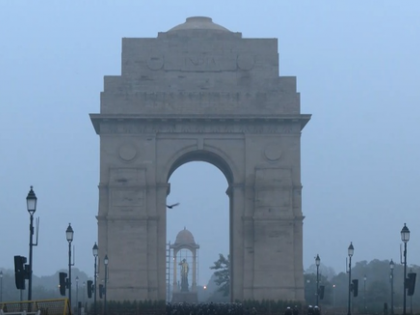
New Delhi, Jan 8 Delhi’s air quality showed a marginal improvement on Thursday morning, with the Air Quality Index (AQI) recorded at 279 at 7.05 a.m., placing it in the ‘poor’ category, according to data from the Central Pollution Control Board’s (CPCB) Sameer app. Despite the slight relief in pollution levels, Delhi-NCR continued to reel under severe cold wave conditions for the second consecutive day, as dense fog and chilly winds led to a sharp drop in temperatures across the region.
This marked a slight improvement from Wednesday, when the national capital recorded an AQI of 302 at the same time, categorising the air quality as ‘very poor’.
However, air quality remained very poor in several parts of the city. Nehru Nagar recorded the worst air quality in Delhi with an AQI of 344, followed by Anand Vihar at 337 and Jahangirpuri at 332. R.K. Puram also remained in the very poor category with an AQI of 326.
Vivek Vihar and Chandni Chowk each reported an AQI of 322, while the Dr Karni Singh Shooting Range recorded 320. Sirifort stood at 319 and Okhla Phase-2 recorded an AQI of 313. Dwarka Sector 8 and Wazirpur reported similar levels, both logging an AQI of 311.
Patparganj registered an AQI of 307, Jawaharlal Nehru Stadium recorded 306, Pusa stood at 305 and Rohini at 301, with all these areas falling under the ‘very poor’ category.
Several other locations recorded air quality in the ‘poor’ range. Sonia Vihar and IHBAS Dilshad Garden both logged an AQI of 298, followed by Mundka at 297. Ashok Vihar and Punjabi Bagh stood at 296 each.
Narela and Sri Aurobindo Marg recorded an AQI of 281, while the Major Dhyan Chand National Stadium stood at 276. ITO recorded an AQI of 271, DTU 269 and Alipur 268.
Shadipur reported an AQI of 266, Najafgarh 255 and North Campus, Delhi University, 247. The AQI at Aya Nagar stood at 244, CRRI Mathura Road at 238 and IIT Delhi at 237.
Burari Crossing recorded an AQI of 234, Lodhi Road 226 and Mandir Marg 208, the same as IGI Airport Terminal 3. NSIT Dwarka recorded an AQI of 207.
Bawana was the only area in the city to record ‘moderate’ air quality, with an AQI of 174.
As per CPCB standards, an AQI between 0 and 50 is considered ‘good’, 51 to 100 ‘satisfactory’, 101 to 200 ‘moderate’, 201 to 300 ‘poor’, 301 to 400 ‘very poor’, and 401 to 500 ‘severe’.
Meanwhile, Delhi-NCR continued to experience intense cold wave conditions for the second straight day. Dense fog and cold northwesterly winds contributed to the prevailing chill and reduced visibility in many areas. The maximum temperature on Wednesday (January 7) was recorded at 16.7 degrees Celsius, marginally higher than the 15.7 degrees Celsius recorded on Tuesday.
The India Meteorological Department (IMD) has predicted a steep rise in the maximum temperature on Thursday, with no significant change expected in the coming days across the national capital region. The Meteorological Department has also forecast moderate to dense fog in Delhi and upper-level fog across the Indo-Gangetic Plain on Thursday (January 8).
Cold conditions are expected to intensify over northern India until January 15. A yellow alert has been issued, predicting moderate fog at many places and dense fog at isolated locations during the morning hours. Thereafter, a partly cloudy sky with shallow to moderate fog has been forecast until January 13.
Disclaimer: This post has been auto-published from an agency feed without any modifications to the text and has not been reviewed by an editor
Open in app