
Delhi HC sets aside suspension of Professor Rasal Singh of Ramanujan College
By ANI | Updated: April 24, 2026 22:35 IST2026-04-25T04:04:29+5:302026-04-24T22:35:02+5:30



New Delhi [India], April 24 : The Delhi High Court on Friday set aside the suspension of Professor Rasal ...
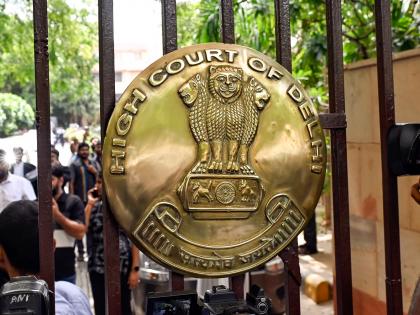
Delhi HC sets aside suspension of Professor Rasal Singh of Ramanujan College
New Delhi [India], April 24 : The Delhi High Court on Friday set aside the suspension of Professor Rasal Singh after allegations of sexual harrasment by three women teachers. The High Court said such action ought to be conducted with an application of mind.
He was the Principal of Ramanujan College of Delhi University. He had challenged his suspension and the constitution of the ad hoc committee.
Justice Purushaindra Kumar Kaurav set aside the suspension order of Professor Rasal Singh.
The High Court has also said that the constitution of fact-finding is not permissible in the Prevention of Sexual Harrasment of Women at the Workplace (PoSH) Act. Therefore, it is illegal.
"The creation of a fact-finding committee in order to determine whether a given complaint is to be sent to the internal complaint committee (ICC)/Local Committee is de hors (beyond) the provisions of the PoSH Act, and impermissible in law," Justice Kaurav concluded.
The HC said that despite the PoSH Act not providing for the interim measure of suspension, an employer, in exercise of its inherent rights, can suspend a person who is the subject matter of an inquiry under the POSH Act.
Justice Kaurav observed, "The said Suspension Order, in the facts of the instant case, is stigmatic in nature, deserves to be set aside."
"The said Suspension Order is set aside," Justice Kaurav ordered.
However, liberty is granted to the college to issue a new suspension as per the law.
The petitioner had filed the petition challenging the constitution of an ad hoc committee by the Deputy Registrar (Colleges) of the University of Delhi. He had also challenged its report of June 23, 2025, and a suspension order passed on September 18, 2025, by the College, based on the said Report.
On September 26, 2025, the Division bench of the Delhi High Court had asked the single judge to dispose of the matter in three months.
The Division bench had ordered that Principal Rasal Singh will remain on leave during the pendency of the petition. It had revoked the stay granted on suspension.
A single bench had granted an interim stay on his suspension.
He was suspended on September 18 over the allegations of sexual harrasment Allegations were levelled against him by three women faculty of the college.
Senior advocate Geeta Luthra alongwith advocates Shalini Singh and Prashanshika Thakur, appeared for Professor Rasal Singh.
She submitted that the power to decide whether an allegation of sexual harassment is made or not is solely within the domain of the internal complaint committee (ICC). It was contented that if a statute prescribes that something must be done in a particular manner, it must be done in that manner only or not at all.
Senior advocate Luthra additionally submitted that disciplinary action taken against the petitioner, Rasal Singh, on the basis of findings recorded in an enquiry which was conducted on gross violation of the principle of natural justice, must not be sustained.
She argued that a genuine hearing, reasonably granting sufficient opportunity to the petitioner, should have been granted, and a violation thereto invalidiate the entire exercise.
Senior advocate Geeta Luthra argued that even a slight likelihood of bias vitiates an administrative decision, and in the instant case, the respondents have acted in a mala fide manner.
Senior advocate Jayant K Mehta, Nikhil Goel and advocate Mohinder JS Rupal, learned counsel, appearing for respondents Delhi University, college, submitted that an employer, including the head of the College/University, has an inherent vested right to suspend any officer under its employment.
It was further contended that there exists no bar in the creation of a fact-finding committee to assist an employer in discharging its functions/duties. It was also contended by Jayant K Mehta that the creation of such a committee was a right of the employer.
The High Court said that it is to be noted that while an employer has the inherent right to suspend its employee, the said action ought to be conducted with a mind to the application.
A general proposition that simpliciter declares suspension to be possible, without any judicial review or a mechanism for checks and balances, would be de hors (beyond) the principles of service law
jurisprudence.
The High Court said, "The POSH Act neither confers this power afresh, nor does it take it away."
"Section 28 of the PoSH Act, which is the legislature's own declaration of the relationship between this Act and other laws, categorically provides that the provisions of the Act shall be 'in addition to' and "not in derogation" of the provisions of any other law for the time being in force," the bench noted.
The High Court said that, considering the sensitive nature of such cases, the Act makes provisions of confidentiality and the constitution of two different committees, an Internal Complaints Committee (ICC) and a Local Committee for inquiring into the said complaints. The words used in the Act are that the Committees shall inquire into the said complaint.
Justice Kaurav said that if, however, there is another committee, such as the fact-finding committee formed in the instant case, which is given the mandate of inquiring into the complaint of sexual harassment, the same would be de hors the PoSH Act, and in complete violation of it.
"If such a committee is allowed to be formulated before the complaint is sent to the ICC, the same would violate the express words of the statute, which state that the ICC/Local Committee 'shall inquire into the said complaint', Justice Kaurav held.
The bench said that the consequence of allowing such a pre-ICC fact-finding may also have serious consequences on the sanctity of the inquiry.
"Moreover, such an ad hoc committee could also serve as a means to delay the substantive inquiry under the PoSH Act. The complaint of a genuine victim would then hang fire till the ad hoc committee concludes its inquiry," Justice Kaurav said.
During the hearing, it was submitted by the respondents that the suspension is not a punitive action. The committee has the right to action as per the ordinance of the University.
On the other hand, senior advocate Geeta Luthra contended that the person facing allegations cannot be suspended during the inquiry, as it is a kind of punishment.
She had submitted that despite the petitioner's distinguished academic career, unblemished service records, and a reputation for discharging his duty with diligence and integrity, he has become a victim of personal vendetta/conspiracy emanating from certain vested interests, which ultimately resulted in the filing of malafide.
Disclaimer: This post has been auto-published from an agency feed without any modifications to the text and has not been reviewed by an editor
Open in app