
Delhi Transport Minister claims strict enforcement yielding air pollution results
By IANS | Updated: December 20, 2025 18:25 IST2025-12-20T18:24:45+5:302025-12-20T18:25:04+5:30


New Delhi, Dec 20 Delhi Transport Minister Pankaj Kumar Singh on Saturday highlighted positive results from the government’s ...
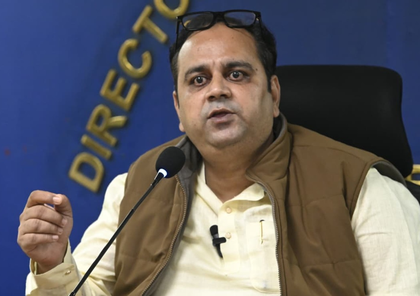
Delhi Transport Minister claims strict enforcement yielding air pollution results
New Delhi, Dec 20 Delhi Transport Minister Pankaj Kumar Singh on Saturday highlighted positive results from the government’s multi-pronged and integrated approach to tackling air pollution that combines structural transport reforms with strengthened public health preparedness.
Highlighting the Transport Department’s crucial role, Pankaj Kumar Singh said that sustained policy action and strict enforcement are now translating into visible improvement on the ground, according to a statement.
Areas that earlier witnessed frequent pollution spikes and near-emergency conditions are beginning to show signs of stabilisation due to continuous interventions, he said.
Transport-related emissions contribute nearly 20-25 per cent of Delhi’s total pollution, making clean mobility a central pillar of the government’s strategy.
The Minister pointed to a significant surge in electric vehicle adoption under the current government to curb pollution.
He said While the previous year saw approximately 80,000 EV registrations, more than 1 lakh electric vehicles have already been registered in the last 10 months, with the year yet to conclude.
The Transport Minister noted that gaps in subsidy implementation earlier had slowed adoption, as subsidies promised by the previous government for EV buyers were not delivered promptly, limiting consumer confidence.
He assured that the present government is bringing forward improved and people-centric EV policies that will further accelerate adoption and strengthen last-mile connectivity.
Pankaj Kumar Singh said EV mobility in public transport has also gathered momentum. Since the formation of the current government, 3,518 electric buses have been inducted into Delhi’s fleet.
The government aims to increase this number to over 5,000 e-buses by March and beyond 7,000 by November 2026, marking a decisive shift towards sustainable mass mobility, he said.
Over the last three days (17–19 December), Delhi Traffic Police, Transport Department, and through ANPR camera-based enforcement issued 12,200 challans (3,752 on Dec 17, 4,132 on Dec 18, and 4,316 on Dec 19).
During the same period, Delhi Police and Transport Enforcement teams conducted checks amid GRAP restrictions, issuing 446 challans and stopping the entry of around 1,492 vehicles into Delhi, which were turned back.
Dedicated teams comprising DTC staff, Delhi Traffic Police and enforcement personnel carried out camera-based monitoring and extensive on-ground checks to ensure strict compliance with pollution norms and possession of valid PUC certificates.
To further tighten compliance, the Delhi Government has introduced a round-the-clock PUC inspection mechanism at fuel stations. Under this system, two DTC personnel have been deployed along with a Delhi Police official to ensure continuous inspection and verification.
As part of this enforcement protocol, fuel is supplied only to vehicles possessing a valid PUC certificate, strengthening deterrence against non-compliance.
The impact of this initiative is already visible. On December 19 alone, 47,600 PUC certificates were issued, and over one lakh certificates were issued during the recent 3-day drive, reflecting both heightened enforcement and increased public participation in pollution control efforts.
Special enforcement campaigns were also conducted at 15 major entry points into Delhi, resulting in a sharp rise in challans against polluting vehicles. Action was taken against both Delhi-registered and outstation vehicles.
Technological interventions, including upgraded digital monitoring systems and improved vehicle identification measures, have also been introduced to ensure sustained compliance.
“Pollution control cannot rely on symbolic measures. It requires long-term planning, clean mobility expansion and strict enforcement. Our government is focused on delivering durable solutions that will visibly improve Delhi’s air quality,” said Pankaj Kumar Singh.
The Minister, who also heads the Health Department, said that as part of an integrated approach, measures are being undertaken by the Health Department to protect citizens from the health impact of air pollution, particularly respiratory ailments such as asthma and breathing disorders.
All government hospitals have been directed to maintain adequate stocks of essential medicines, deploy specialist doctors and create dedicated arrangements for patients suffering from pollution-related illnesses, he said.
Emergency preparedness has been enhanced to ensure timely care during high-pollution episodes, he said.
Disclaimer: This post has been auto-published from an agency feed without any modifications to the text and has not been reviewed by an editor
Open in app