
Infiltration fails, ISI moves recruitment beyond J&K to fuel Kashmir attacks
By IANS | Updated: April 9, 2026 12:55 IST2026-04-09T12:53:04+5:302026-04-09T12:55:21+5:30



New Delhi, April 9 In a major revelation, the security agencies have found that the ISI has directed ...
Infiltration fails, ISI moves recruitment beyond J&K to fuel Kashmir attacks
New Delhi, April 9 In a major revelation, the security agencies have found that the ISI has directed its existing operatives in Jammu and Kashmir to set up modules in multiple states in Northern India.
The remaining operatives who are hiding in Jammu and Kashmir have been instructed to set up modules in Punjab, Haryana, and Uttar Pradesh. An Intelligence Bureau official said that the purpose is to set up these modules and train the recruits to carry out attacks in Jammu and Kashmir.
The official added that running modules in Jammu and Kashmir has become tough since there is too much scrutiny following the Pahalgam attack. Following this attack, security has been tight, making it hard for the operatives to go about their business.
The ISI had even tried to activate its overground workers (OWGs), but owing to thorough scrutiny, the plan failed. Another official said that the lack of trained operatives and the fact that infiltrations have almost halted have made terror groups desperate. This explains why they are exploring multiple modules outside of Jammu and Kashmir, the official added.
Terror groups such as the Lashkar-e-Taiba feel that recruitment should not be limited to Jammu and Kashmir alone. There is a chance a module could be busted if they try to set up in the Union Territory. These terror groups feel that the scrutiny would be less in other states, and it would be a good idea to create new modules.
The plan is to recruit into these terror modules and then train operatives. The intention is to train these operatives and deploy them in Jammu and Kashmir. Moreover, these elements are trying to take advantage of the fact that infiltrating them into Jammu and Kashmir from Punjab, Haryana, or Uttar Pradesh would be easier.
An official said that nearly a thousand operatives are waiting in Pakistan-occupied Kashmir to infiltrate into Jammu and Kashmir. These are battle-hardened terrorists, and if they manage to enter Jammu and Kashmir, the risks they pose would be very high.
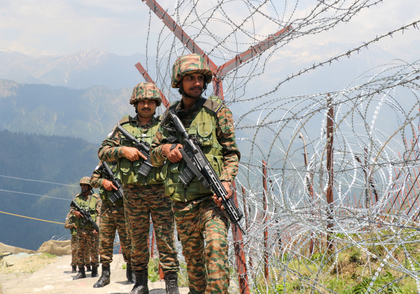
After the Pahalgam attack, security is at an unprecedented high, and infiltrations through the Line of Control (LoC) and International Border (IB) have become next to impossible. The Indian armed forces are maintaining a state of very high alert to prevent infiltrations. Multiple attempts have been made since Operation Sindoor to enter Jammu and Kashmir, but they have failed.
More details about the setting up of modules in multiple states came out following the arrest of Abdullah alias Abu Hureira, an operative of the Lashkar-e-Taiba. He had managed to evade the security agencies for nearly 16 years. His arrest revealed that he was tasked with setting up inter-state modules.
The ISI is trying to set up a wider ecosystem beyond Jammu and Kashmir, an investigating official said. For terror groups such as the Lashkar-e-Tayba, this is part of a revival strategy. Jammu and Kashmir is a major selling point for the outfit in order to recruit. Even in Pakistan, recruitment has dropped significantly post Operation Sindoor.
Outfits such as the Lashkar-e-Taiba and Jaish-e-Mohammed have found it hard to revive owing to a lack of recruitment. Since Jammu and Kashmir remains a large selling point, the Lashkar-e-Taiba wants to step up operations in the Union Territory. A major attack in J&K will act as a major boost for the outfit, which would then sell the cause and rope in more youth.
Another official said that the inter-state modules would not just be involved in recruitment and training. They would be involved in providing logistics and also facilitating the movement of arms and ammunition. The agencies are putting up a coordinated effort across states to stop such activity, the official added.
Disclaimer: This post has been auto-published from an agency feed without any modifications to the text and has not been reviewed by an editor
Open in app