
New household survey confirms rising poverty in Pakistan
By IANS | Updated: January 14, 2026 18:45 IST2026-01-14T18:42:59+5:302026-01-14T18:45:13+5:30


New Delhi, Jan 14 Pakistan’s Household Integrated Economic Survey (HIES), published after a gap of six years, exposes ...
New household survey confirms rising poverty in Pakistan
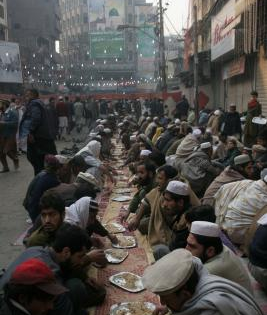
New Delhi, Jan 14 Pakistan’s Household Integrated Economic Survey (HIES), published after a gap of six years, exposes the extreme level of poverty in the country with food-insecure households surging from 15.9 per cent in 2018 to 2019 to a staggering 24.4 per cent in 2024 to 2025, according to a report in the local media.
The HIES figures confirm Pakistan’s deepening human development crisis amid shrinking incomes, rising poverty, and widening inequality resulting from the prolonged spell of high inflation, according to a report in the Karachi-headquartered Business Recorder.
"Put simply, one in every four Pakistani families now struggles to meet basic nutritional needs. Nothing signals national distress more clearly than an empty kitchen," the report stated.
Food insecurity in cities has also more than doubled to 20.6 per cent, while the rural rate, though still higher at 26.7 per cent, is rising more slowly.
Even those technically above the food insecurity line are eating less and eating worse. Per capita consumption of staples, from wheat and milk to poultry and eggs, has dropped. Households are now spending a larger share on cheap carbohydrates such as wheat and sugar, and less on quality proteins such as beef and mutton. This shift is ominous in a country already battling an epidemic of type-2 diabetes, the report further states,
Equally alarming is the plunge in educational spending. Average household expenditure on education has fallen from 4 per cent to just 2.5 per cent of total spending. The long-standing failure of public education left private schools to fill the gap. Now, even that escape route is narrowing, the report lamented.
It points out that behind these trends lies a broader breakdown in savings and investment. Real household income, measured in dollar terms, has fallen by 3.4 per cent over six years, while expenditures edged up by 4 per cent, shrinking household savings by an astonishing 66 per cent. With less to save, there is less to invest, and weaker investment means slower productivity growth.
"Pakistan’s economy, already skewed toward consumption, is consuming itself. That consumption, increasingly, depends on external lifelines. Remittances now account for 7.8 per cent of household income, up from 5 per cent in 2018 to 2019," the report stated.
The structure of earnings is telling. Self-employment has shrunk from 24.7 per cent to 21.7 per cent, suggesting that small and micro enterprises, the backbone of any vibrant economy, are withering.
The share of wage employees has risen, but without the growth in productive jobs that might make this a healthy transition. The inequality embedded in these shifts is striking. Real income for the bottom quintile has collapsed by 45 per cent, compared to just a 6 per cent decline for the top.
The report states that while lives and livelihoods burn, the state builds underpasses and bridges to nowhere. Federal funds are flowing toward asphalt rather than opportunity, it said, noting that what Pakistan needs is not more concrete, but more capacity in its people, its institutions, and its shared sense of purpose.
Without a redirection of scarce public spending toward employment generation and inclusive growth, the road will, quite literally, lead nowhere, the report warned.
Disclaimer: This post has been auto-published from an agency feed without any modifications to the text and has not been reviewed by an editor
Open in app