
RSS backs one nation, one election reform (IANS interview)
By IANS | Updated: April 18, 2026 07:35 IST2026-04-18T07:31:59+5:302026-04-18T07:35:12+5:30



Stanford, April 18 The Rashtriya Swayamsevak Sangh has backed key political reforms including “one nation, one election”, with ...
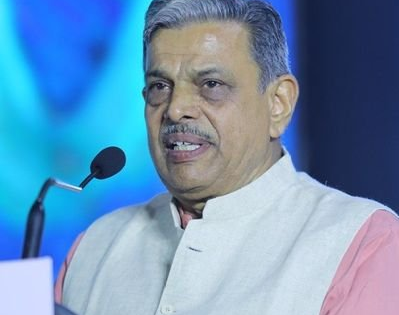
RSS backs one nation, one election reform (IANS interview)
Stanford, April 18 The Rashtriya Swayamsevak Sangh has backed key political reforms including “one nation, one election”, with its General Secretary Dattatreya Hosabale calling for a governance model rooted in national unity, political integrity and civic awareness, even as he flagged wider structural and social challenges facing India’s democracy.
In an exclusive interview marking 100 years of the RSS, Hosabale told IANS simultaneous elections across the country would strengthen democratic functioning and reduce the frequency of political disruptions.
“One nation, one election already has been said,” he noted, placing the proposal among priority reforms for India’s political system.
He coupled this with support for expanding women’s representation in governance, describing “33 per cent of the women participation” as a “revolutionary thing” that could reshape political decision-making.
Hosabale stressed that structural reforms alone would not be sufficient unless accompanied by a deeper shift in political awareness among citizens.
“People require the political education for thinking the right thing, which is essential for society and nation,” he said, underlining the need for informed civic participation.
He argued that democracy must go beyond electoral processes to reflect a broader mindset anchored in responsibility and national interest.
“Beyond political parties, nation first, then other things. This has to be imbibed in all political parties,” he said.
The RSS leader was critical of what he described as “appeasement politics”, saying it had caused “immense damage to our social fabric and national welfare and unity of the country”.
“The appeasement politics should be totally stopped,” Hosabale said, while emphasising that equality must remain central to governance.
“All Indians are having equal rights. Nobody is a second-class citizen,” he added.
He referred to the uniform civil code as a step towards achieving legal equality and reinforcing national unity, arguing that all citizens should be treated equally before the law irrespective of religion or linguistic background.
Responding to a question, Hosabale linked the growing political influence of individuals associated with the RSS to changing voter expectations, suggesting that governance performance and cultural grounding have shaped electoral outcomes.
“The increasing awareness among the people… they have experienced that they can deliver better for the welfare of the society,” he said, pointing to sustained electoral success at the national level and in several states.
He said earlier political approaches that relied on divisions along social or identity lines “did not go well with the Indian masses”, leading to a shift in public sentiment over time.
According to Hosabale, leadership emerging from an RSS background has contributed to “keeping the social cohesion”, presenting it as a counter to fragmentation in political discourse.
Beyond electoral reforms, Hosabale outlined a broader framework for political and social transformation, identifying civic responsibility as a key area where India continues to face challenges.
“India with all her greatness and richness… still civic sense and civic duties many a time people feel we are lagging,” he said, stressing the need to strengthen public discipline and community responsibility.
He said the RSS has increasingly focused on five areas of social transformation, including social harmony, strengthening families, promoting eco-friendly lifestyles, encouraging self-reliance and improving civic duties.
Hosabale also highlighted the organisation’s efforts to expand its outreach and adapt to changing times, describing the RSS as “ever evolving”.
“RSS has been evolving according to times,” he said, noting shifts in emphasis before and after independence and the introduction of new initiatives in response to emerging needs.
He cited the creation of specialised departments for public service, media outreach and communication as examples of how the organisation has institutionalised its activities.
“Our work, public service… then we started a department for that. Outreach, a department was started, media and communication, a department was started,” he said, adding that training and skill development have become increasingly important.
Another emerging focus, he said, is building networks across civil society by bringing together individuals and organisations engaged in social and cultural work.
“Many people doing good work… they are all working in their silos. RSS thinks that this is the power of the good, so we should network them,” Hosabale said.
He said such efforts aim to create a broader ecosystem of cooperation that goes beyond the RSS’s own organisational boundaries.
At a conceptual level, Hosabale described the RSS as contributing to the creation of “human social capital”, framing it as both an organisational structure and a way of life rooted in cultural values.
“RSS is an organisation by structure… but RSS is a lifestyle,” he said, adding that its model could be adapted in different societies globally.
Disclaimer: This post has been auto-published from an agency feed without any modifications to the text and has not been reviewed by an editor
Open in app