
Train Fare Hike From December 26: Long-Distance Travel to Get Slightly Costlier, Suburban Services Exempt - Check Details Inside
By Lokmat Times Desk | Updated: December 25, 2025 18:54 IST2025-12-25T18:54:40+5:302025-12-25T18:54:40+5:30


Train travel, one of the most widely used modes of transport in India, is set to become marginally costlier ...
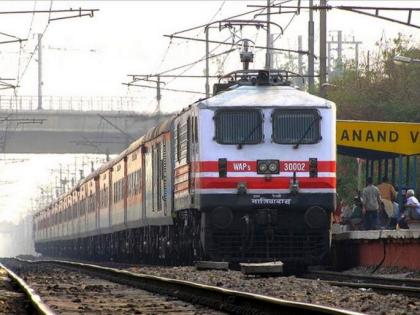
Train Fare Hike From December 26: Long-Distance Travel to Get Slightly Costlier, Suburban Services Exempt - Check Details Inside
Train travel, one of the most widely used modes of transport in India, is set to become marginally costlier as Indian Railways has announced a fare hike for long-distance trains starting December 26. The increase will not affect short-distance journeys, monthly season ticket holders, or suburban services, including Mumbai local trains. For passengers travelling between 215 km and 750 km, the fare hike will be minimal, generally around Rs 5. Railway officials said the decision is aimed at increasing revenue without significantly burdening passengers, while ensuring that long-distance train travel remains affordable for the majority of users.
According to a Mid Day report, the last major revision in railway fares took place in 2013, when ticket prices were raised to nearly 10 paise per kilometre. A smaller adjustment was introduced in 2020, though suburban train fares continued to remain unchanged. The latest fare revision is expected to help Indian Railways generate nearly Rs 600 crore in additional revenue over the next four months, providing a financial boost to support ongoing operations and infrastructure needs.
As per ANI, the revised fares will apply only to long-distance trains from December 26. Ordinary class ticket prices for journeys up to 215 km will remain unchanged, while longer journeys will see an increase of 1 paise per km for general class and 2 paise per km for non-AC and AC mail or express trains. This means a 500 km journey in a non-AC coach will cost just Rs 10 more. Over the past decade, Indian Railways has expanded its network, improved safety measures, and increased manpower, leading to higher pension and staffing costs. With operational expenses estimated at Rs 2.63 lakh crore for 2024–25, the railways are focusing on boosting freight revenue along with small fare adjustments to sustain and improve passenger services.
The Railway has announced a new fare structure effective from December 26, 2025, with no fare increase for journeys under 215 km in Ordinary Class. For journeys beyond 215 km, there will be a fare hike of 1 paise per km in Ordinary Class, and 2 paise per km for Mail/Express… pic.twitter.com/lD4fUQ8eeK
— ANI (@ANI) December 21, 2025
Train Fare Hike Details:
The Railway has rationalised the fare structure w.e.f. 26.12.2025 as follows:
. No Increase in Fare in Suburban and Monthly Season Ticket
. No increase up to 215 Km in Ordinary Class
. Ordinary Class more than 215 km - 1 paise per km
. Mail/express Non AC - 2 paise per km
. AC class - 2 paise per km
. Railways will earn about 600 crore rupees this year as a result of this rationalisation.
. For a 500 km journey in non-AC coaches, passengers will have to pay only 10 rupees extra.
. Railways have expanded their network and operations significantly over the last decade. To cater to a higher level of operations and to improve safety, it is increasing its manpower.
. Consequently, manpower cost has increased to Rs 1,15,000 crore. Pension cost has increased to Rs 60,000 crore. Total cost of operations has increased to 2,63,000 crore rupees in 2024-25.
. To meet this higher cost of manpower, railways are focusing on higher cargo loading and a small amount of passenger fare rationalisation.
. Due to these efforts on safety and improved operations, railways have been able to substantially improve safety. India has become the second-largest cargo-carrying railway in the world.
. The recent successful mobilisation of more than 12,000 trains during the festival season is also an example of improved operational efficiency.
. Railways will continue to strive for more efficiency and to contain costs to meet its social goals.
Open in app