
West Asia conflict blight on humanity with no winners: South African envoy
By IANS | Updated: April 23, 2026 16:05 IST2026-04-23T16:02:38+5:302026-04-23T16:05:15+5:30



New Delhi, April 23 South African High Commissioner to India, Anil Sooklal, has urged the international community to ...
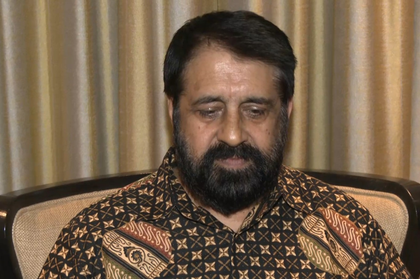
West Asia conflict blight on humanity with no winners: South African envoy
New Delhi, April 23 South African High Commissioner to India, Anil Sooklal, has urged the international community to encourage parties involved in the West Asia conflict to remain engaged and find peace for the good of humanity.
In an interview with IANS, Sooklal said that war in West Asia is having a very negative impact on the world, especially in terms of energy security. He reiterated Prime Minister Narendra Modi's statement that "now is not the time for war."
He expressed optimism that a positive outcome is quite possible if the peace talks are held between the United States and Iran.
"We have to remain optimistic because that's the need of the hour. The war, if it continues, is going to have a devastating effect on all of us. It's already had a very negative impact, especially in terms of energy security, but it also impacts on all other sectors of our lives. Our economic growth is being stunted, opportunities are being stunted because of this war. And as Prime Minister Modi has repeatedly said, now is not the time for war. We need to talk peace. I hope that there can be a peace dividend which can bring a durable peace to the Middle East and also a durable peace for the world community."
The Donald Trump administration has extended its ceasefire with Iran while maintaining a sweeping naval blockade, with the White House insisting there is no deadline for negotiations and signalling continued economic pressure on Tehran. White House has confirmed that the United States is pursuing a dual-track approach, pausing military strikes while intensifying financial and maritime restrictions.
When asked whether tensions will escalate if talks between Iran and the US fail, South Africa's Ambassador responded, "Obviously, it will increase. As we have seen in the case of South Africa, it is through dialogue that you address differences and find a common solution and lasting peace. So, we need to encourage the parties to remain engaged and to continue talking to each other so that we can find a peace dividend for the region between the parties and for the good of humanity."
The first round of the high-level US-Iran talks held in Islamabad on April 11-22 aimed to end the conflict in West Asia collapsed after 21 hours of negotiations. The resumption of the second round of talks between Iran and the US was clouded by Tehran’s refusal to commit to participating in the negotiations.
Asked whether the West Asia conflict is slowing down the adoption of renewable energy, Ambassador Sooklal responded, "Of course, it's slowing down the adaptation of renewable energy and all forms of energy cooperation. And as I've said, this war is a blight on humanity. There are no winners in war. We are all losers, not only the parties that are involved in this war, but humanity as a whole. And the sooner we can have peace, we all benefit from that."
He stated that the world is moving towards a multipolarity and termed it "good" for the international community.
"I think there's a global power shift not just between China and the USA. We're moving towards a multipolar world and I think this is good for the global community. We don't want one or two powers determining what happens in our collective world. I think we all would like to see a multipolar world where power is dispersed throughout the global community and we all benefit from that. For too long have we been dictated to by a select few number of countries on what is good for humanity.
"I think those days have passed and we're entering a new period where we are seeing the desire to create multiple poles of power amongst nations of the world, including Africa being part of the mainstream in determining this. I think the Global South, India also being a leading nation of the Global South, will play, and is playing, a major role together with many other countries, BRICS countries especially, in determining the shape of a new multipolar global system."
He slammed the US' decision to not invite South Africa for the G20 Summit, stressing that the grouping has been "weaponised." The diplomat said that South Africa will participate in the G20 Summit next year and will continue to play a meaningful role in ensuring G20 works collectively to deal with the challenges and addressing the vast opportunities.
"The G20 has also been weaponised, unfortunately. South Africa is a full member of the G20 and has participated in every summit, including the summit, which we hosted very successfully last year and we have been excluded by the current host from all proceedings this year. But we'll assume our place at the G20 table next year. We have been a full member and will continue to play a meaningful role in ensuring that the G20 is a collective and that we work as a collective in dealing with the challenges as well as addressing the vast opportunities in us working as a collective."
Sooklal stated that South Africa took inspiration from the Indian constitution while crafting its constitution.
On the 30th anniversary of South Africa's Constitution Day, Sooklal said, "Constitution Day is very important. We are a constitutional democracy. We achieved freedom in 1994. It was in 1996 when our new constitution was unveiled. In crafting our new constitution, we took inspiration from the Indian constitution as well in terms of ensuring that our constitution espouses all of the values that we'd like to see in terms of building a new nation and ensuring that the devastation caused by racism and apartheid never rears its ugly head ever again in South African society.
"So, as we recall our freedom, we are very proud of the authors of our constitution. We've had over three decades of democracy and it's underpinned by a very solid constitution that takes into account the multifaceted nature of South African society in terms of governance, the three tiers of governance, the judiciary, the executive and our legislative pillars of governance are well established and functions very well and we are proud to be one of the most vibrant democracies in the world amongst the youngest and also to be associated with India as one of not only the most vibrant but the largest democracy in the world. So, there's many factors that join us together in terms of shaping a better world but also ensuring within our domestic constituencies - the constitution is the bedrock guiding our country and our societies," he added.
Disclaimer: This post has been auto-published from an agency feed without any modifications to the text and has not been reviewed by an editor
Open in app