
Future of AI lies in practical, public-first tools, say global South experts at Carnegie Tech Summit.
By ANI | Updated: December 11, 2025 15:20 IST2025-12-11T15:18:08+5:302025-12-11T15:20:04+5:30



New Delhi [India], December 11 : At the Carnegie Global Technology Summit 2025, experts from India and across the ...
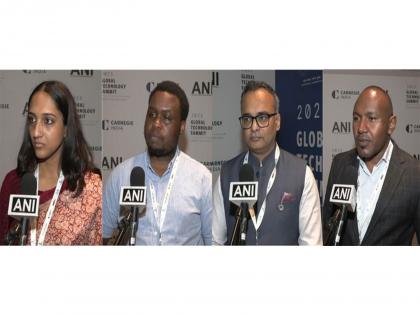
Future of AI lies in practical, public-first tools, say global South experts at Carnegie Tech Summit.
New Delhi [India], December 11 : At the Carnegie Global Technology Summit 2025, experts from India and across the Global South said the future of artificial intelligence will depend on simple, practical tools that help people in their daily lives. Speaking toat the sidelines of the event, they explained how AI is already shaping public services, health systems and agriculture. They called for stronger collaboration to make these solutions useful for all.
According to Shruti Mittal, a research analyst at Carnegie India, the summit's focus on People, Planet, Progress shows how technology can support social inclusion and environmental needs. She said the theme "happiness for all" fits well because AI can create real change in society when used responsibly. She also said India is seen as the "AI use case capital of the world" because it offers many environments to test inclusive models.
Speakers highlighted how AI is improving access to basic services. Benjamin Mwalimu, Head of Technology at Jacaranda Health in Kenya, toldthat his team built an SMS-based AI platform for mothers. He said the system helps women ask questions about pregnancy and receive support quickly. He explained that the tool flags danger signs and alerts trained help desk agents, who then guide mothers on seeking care. He said this helps reduce maternal risks because many women in Africa lack reliable pregnancy information. He added that sharing data with local governments helps improve clinics by highlighting gaps, such as missing beds or a lack of basic items like curtains.
He also stressed that collaboration is becoming essential. Mwalimu said it makes little sense for different countries to build similar language models separately, and he welcomed the summit's push for shared development.
Sushant Kumar, Founder and CEO of Kalpa Impact, said India has moved quickly from trying to catch up to becoming a leader in building AI resources for public interest. He said AI can help farmers understand weather patterns, select seeds and manage pest control, and can also support ASHA workers in healthcare through simple co-pilot tools. According to him, India's multilingual datasets and expanding compute access are helping innovators build solutions that match local needs.
Kumar said the next challenge is ensuring countries in the Global South have affordable compute infrastructure, because most of it sits in the Global North. He said sustainable funding will help innovators continue building real-world applications.
For many organisations, the summit offered practical insights. George Maina, CEO and Founder of Shamba Records, said AI is helping African farmers build verifiable credit profiles and improve crop planning. He said the discussions at the summit helped his team understand how to improve their models and address compute challenges.
Disclaimer: This post has been auto-published from an agency feed without any modifications to the text and has not been reviewed by an editor
Open in app