
India uniquely positioned to become global leader in nano-fertiliser technology: DG FAI
By ANI | Updated: December 9, 2025 17:40 IST2025-12-09T17:36:20+5:302025-12-09T17:40:09+5:30



New Delhi [India], December 9 : India is uniquely positioned to become a global leader in nano-fertiliser technology, despite ...
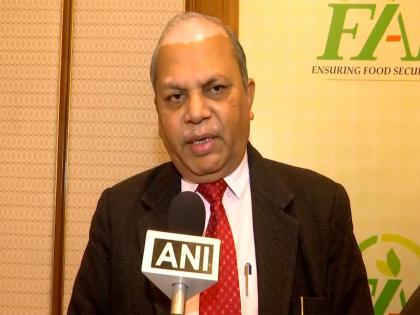
India uniquely positioned to become global leader in nano-fertiliser technology: DG FAI
New Delhi [India], December 9 : India is uniquely positioned to become a global leader in nano-fertiliser technology, despite early scepticism, said SK Chaudhari, Director General of the Fertiliser Association of India (FAI).
Speaking ahead of the FAI Annual Seminar 2025, Chaudhari said innovations such as nano urea represent a critical medium-term solution as India works to secure its fertiliser future.
"Whenever innovation happens, it is subject to severe criticism. Nano urea is no exception," he said. "But forward-looking research and field results will establish it as a powerful alternative for Indian agriculture."
"In organic fertilisers also, India has made very good progress. Over the last decade, extensive research has been conducted on organic manure and fertilisers. Also, the way we do organic farming, organic certification, new things are introduced," Chaudhari added.
"Support is provided to the farmers so that the niche areas and niche commodities can be brought under organic, and the pressure on mineral fertiliser can be eased a little bit," he said.
"Also, a new way forward is being shown to the Indian agriculture and Indian farmers."
India currently relies heavily on imports of raw materials for traditional fertilisers. "Nano formulations, however, require far less volume, helping the country hedge against international supply uncertainties," he suggested.
"New formulations and nutrient-efficient technologies like nano-fertilisers provide solutions that can significantly reduce dependency on imports," Chaudhari said.
This comes at a time when global supply chains have been disrupted by geopolitical tensions, making innovation not just desirable but necessary.
Chaudhari also highlighted that nano-fertilisers align with India's long-term agricultural sustainability goals.
He said nano-fertilisers align with sustainability goals, including reducing chemical load on soil, enhancing nutrient absorption, supporting natural and organic farming initiatives, and meeting rising food grain demand without overusing conventional fertilisers.
"As India prepares for an estimated surge in food demand by 2050, innovations like nano urea could play a pivotal role in balancing productivity with environmental responsibility," he said.
The FAI Annual Seminar 2025 begins tomorrow and is expected to showcase new research findings, field trials, and international perspectives on nano technologies.
Chaudhari said that experts from over 300 foreign organisations will participate, making the conference a global stage for India's innovation push.
Disclaimer: This post has been auto-published from an agency feed without any modifications to the text and has not been reviewed by an editor
Open in app