
India's fertiliser industry seeks GST clarification as 'inversion leads to credit accumulation': FAI Chairman
By ANI | Updated: December 10, 2025 20:30 IST2025-12-10T20:29:36+5:302025-12-10T20:30:03+5:30



By Kaushal Verma New Delhi [India], December 10 : The Fertiliser Association of India (FAI) is seeking two key ...
India's fertiliser industry seeks GST clarification as 'inversion leads to credit accumulation': FAI Chairman
By Kaushal Verma
New Delhi [India], December 10 : The Fertiliser Association of India (FAI) is seeking two key GST clarifications to alleviate the financial strain on the fertiliser industry, lower GST on raw materials like ammonia and sulphuric acid from 18% to 5%, matching the tax rate on final fertiliser products.
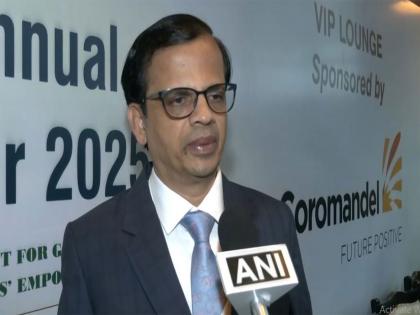
Speaking to ANI, S Sankarasubramanian, Chairman of the Fertiliser Association of India (FAI), said this would reduce production costs and make fertilisers more competitive as GST-related issues are affecting phosphatic fertiliser makers.
The FAI Chairman, however, added that recent tax reforms have eased but not eliminated the buildup of unused tax credits.
"See, currently in phosphatic fertilisers the output fertiliser carries 5 per cent GST and input raw materials, which were at 18 per cent corrected to 5 per cent. Despite the recent cut, the structural distortion persists due to a value inversion. The output value of fertiliser includes a subsidy component that is not subject to GST. This inversion value of the GST leads to credit accumulation for the companies."
Finished Phosphatic & Potassic (P&K) fertilisers are taxed at 5%, while key inputs like ammonia and sulphuric acid are taxed at 18%. The rate difference and fertiliser subsidies outside the GST supply value have created huge unutilized ITC, blocking working capital and hindering industry competitiveness.
Speaking toon the sidelines of the FAI Annual Seminar 2025, Sankarasubramanian appreciated the latest changes made by the finance ministry.
"In the recent GST reforms, the finance ministry has changed the GST on key raw materials like ammonia and sulphuric acid from 18 per cent to 5 per cent. This has been helpful in reducing the credit accumulation," said the FAI Chairman
He explained that the fundamental mismatch between input and output taxes continues to burden companies.
"The industry has repeatedly sought government intervention. We request the Finance Ministry to issue clarification, and the industry has been represented through the Department of Fertilisers to seek a refund of accumulated credit for the phosphatic fertiliser segment. Hopefully, it should be resolved soon."
Turning to subsidy reforms, he welcomed the government's move to shift to direct benefit transfer (DBT) directly to farmers instead of channelling subsidies through manufacturers.
"Under the current direct benefit transfer scheme, the subsidy is being paid to the industry, and the farmers are getting fertilisers at subsidised rates," he said.
He acknowledged that the Department of Fertilisers plans to run pilot trials. "We read about the recent announcement... They are going to try this out in some state in South India and certain districts," he said. "This will be a game changer."
Sankarasubramanian said the move would empower farmers. "This gives the power of decision in the hands of farmers at what fertilisers to use," he said. "As an industry, we welcome this move and support the government."
Disclaimer: This post has been auto-published from an agency feed without any modifications to the text and has not been reviewed by an editor
Open in app