
Space will decide future wars, India needs whole-of-nation push to catch up: DRDO Chief Samir Kamat
By ANI | Updated: April 23, 2026 15:40 IST2026-04-23T21:06:04+5:302026-04-23T15:40:09+5:30



New Delhi [India], April 23 : Space is no longer just a supporting tool for national security, it has ...
Space will decide future wars, India needs whole-of-nation push to catch up: DRDO Chief Samir Kamat
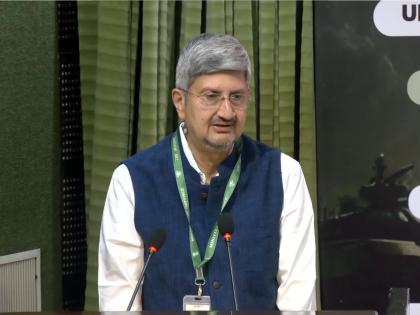
New Delhi [India], April 23 : Space is no longer just a supporting tool for national security, it has become the dominant domain that will determine the outcome of future conflicts, Defence Research and Development Organisation (DRDO) Chairman Samir V. Kamat said on Thursday, calling for a "whole-of-nation" approach to close India's capability gap with rivals whose space programmes are expanding at an alarming pace.
Speaking at the 4th Indian DefSpace Symposium at Manekshaw Centre on "Strengthening India's Defence and Space Industry Synergy," Kamat outlined DRDO's growing role in military space while stressing that catching up will be a "Herculean challenge" without greater investment and collaboration.
While ISRO remains the lead agency for India's civilian space programme, Kamat said DRDO was entrusted with addressing the military aspects of space after the formation of the Defence Space Agency. The responsibility, he noted, is still a small part of DRDO's overall mandate but is expanding rapidly. "It needs to grow much more if we have to keep pace with our rivals," he said.
To bridge the gap, DRDO is adopting a collaborative model that brings in startups, MSMEs and academia. The organisation has already set up DRDO Industry Academia Centres of Excellence in three to four of its 15 DIA COEs, with space identified as a priority domain.
"There is a lot of interest among academia and startups to contribute to the defence part of the space programme," Kamat said, adding that he is optimistic India will gain the necessary impetus and sovereign capabilities in critical technologies over the next few years.
Kamat made it clear that while some space technologies can still be sourced from abroad, several areas remain restricted and require indigenous development. DRDO's current focus includes space situational awareness to protect India's space-based assets, development of the restricted service of NAVIC for military operations, and capabilities in space-based surveillance and imaging radar. The organisation is also working on early missile launch detection systems, a capability highlighted by Chief Marshal Bhaduriya.
Civil-military fusion will be essential, particularly in areas like imaging radar where civilian and military applications overlap, he noted.
The Chairman underlined that India's current investment in research and development remains inadequate to sustain this push. As a nation, India spends only 0.65% of GDP on Research and Development, and within defence, only 5% of the budget is allocated to R&D. "We definitely need to scale this up if we have to catch up with our rivals," he said.
There is, however, a positive signal on funding. Kamat noted that the Raksha Mantri has committed to doubling the defence R&D budget to 10% of the overall defence budget over the next five years. He expressed confidence that this would unlock more resources not only for government institutions but also for startups and MSMEs working in the sector.
Kamat added that the goal is to build sovereign capabilities in critical space technologies that cannot be imported and to ensure India's space-based assets remain secure and operational in contested environments. He stressed that this cannot be achieved by DRDO alone and will require coordinated efforts across government, industry and academia.
Disclaimer: This post has been auto-published from an agency feed without any modifications to the text and has not been reviewed by an editor
Open in app