
Building Neighbourhoods of Care for Universal Health Coverage
By Lokmat Times Desk | Updated: December 12, 2025 10:33 IST2025-12-12T10:33:21+5:302025-12-12T10:33:26+5:30


For decades Universal Health Coverage (UHC) has become central principle for health system reforms globally and recognised as one ...
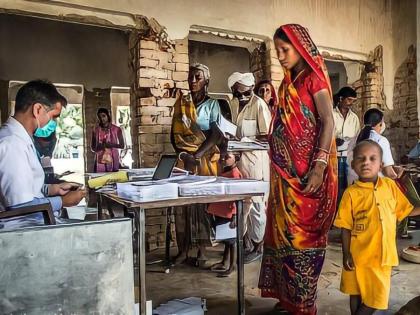
Building Neighbourhoods of Care for Universal Health Coverage
For decades Universal Health Coverage (UHC) has become central principle for health system reforms globally and recognised as one of the key areas for equitable development. Despite that for millions the promise for access to care, financial protection and comprehensive service coverage for healthier productive and joyful life remain distant. Access to care and coverage of essential services, that has traditionally been shaped by the geography, locality, wealth, social position and disease are now facing accelerated disruption of climate change and ecological decline. In this context, the health systems today stand at the intersection of socio-demographic shifts, widening economic inequalities, shifting disease burdens and environmental stress. At this junction, beyond financial protection, achieving the Universal Health Coverage (UHC) required redesigning and rethinking on the existing health service delivery mechanism, who participates in shaping it, and how local ecosystem can be mobilised to address the emerging socio-demographic and climate challenges.
Recognising UHC as fundamental of the National Health Policy 2017, India, has made significant efforts to realise the commitment. Expansion of primary care, upgrading frontline infostructure (Ayushman Arogya Mandir), introduction of new cadre of Community Health Officers, covering populations under insurance coverage of PM-JAY and other several national and state level initiatives are signs of foundational steps in building a more equitable architecture for delivering comprehensive care.
Since independence, significant progress has been made in reducing maternal and child mortality and expanding life expectancy. But the progress is uneven. Persistent rural-urban disparities, comparative lower service coverage particularly for women, children and older persons from marginalised groups and 6.1 years of lower life-expectancy of people living in rural India compared to their urban counterpart reflects that people living in rural and tribal geographies continue to face deep and persistent barriers in accessing healthcare services. Inadequate infrastructure, socio-economic inequalities and structural discrimination are ground realities. In these areas, the determinants of health are deeply shaped by environmental changes; degraded common lands that sustained the marginalised in various ways, unreliable water sources, increasing heat stress, changing rainfalls, disruption in agriculture, food insecurity and shifting of social structures. These emerging vulnerabilities multiply the complexity of already high burden of chronic illness, morbidity and undernutrition. Breaking this complex cycle can’t be broken by facility-based services alone.
Indian Public health architecture designed as a tired system from village level Sub-Centres to Primary Health Centres (PHC) serving cluster of villages, and Community Health Centres (CHC) at the Block level with district hospitals and medical colleges providing higher order and specialised care, the promise of this structures is unevenly realised across states and focused on delivering maternal and child health services; while non-communicable diseases and injuries – which are often linked to poverty and dietary changes driven by globalisation and historical factors – now surpass infectious diseases in burden combined with the challenges posed by demographical shift and climate change suggests the need for continued efforts and innovative approaches to engaging communities in their health journeys.
The growing bodies of evidences highlights that the underlying conditions influencing people’s choices about healthy living often fall outside traditional health delivery system and predominantly hospital centric initiatives struggle to deliver equitable outcomes. people’s ability to lead fulfilled lives, find joy, foster connections and build prosperity is intricately linked to the products and services are anchored in the neighbourhood where they live; integrated, multi-sectoral, community partners and networks capable for early detection, preventions and continuity of care. Therefore, as we march towards UHC, redesigning the service-delivery oriented models to building ‘Neighbourbourhoods of Care’ (NoC); a holistic place based eco-system anchored in family-kinship, public systems and markets to achieve good health, nutrition and wellbeing to reduce malnutrition and morbidity across underserved rural regions of India is the next step. The infrastructures must support the everyday care activities that enable wellbeing: seeking, receiving, providing, managing and promoting care within households and communities, expanding the curative approaches to include promotive and aspirational services. Integrating elements that shape our ability to care for ourselves, our families, our communities and the planet in which we live in.
Building on the everyday reality of rural India, in several blocks of Jharkhand, Chhattisgarh, Uttar Pradesh and Assam (Bodoland) neighbourhoods of care approach have begun to show that an intervention focusing on strengthening the family-kinship-public system engagement can go a long way in creating lifestyle changes and sustaining the same. The supportive network of local actors including ASHA Workers, Anganwadi Workers, women’s collective, Panchayati Raj Institutions and caregivers working collaboratively across roles, sector and boundaries. The Change vectors are local influencers and champions from within the community are playing a crucial role in prioritizing the health, nutrition and wellness agenda, triggering this kind of reflective-action process at the grassroots, resulting in adopting healthy practices at home and community level. The service platforms that expands beyond health centres to social spaces, haat baazars and homes, facilitating multi-point, low barrier access to a continuum of services, from early screening of Non-communicable diseases and cancer to post-treatment adherence. The community forums and knowledge systems enabling participatory planning under Gram Panchayat Development Plan (GPDP), real-time tracking and shared learning and leveraging local resources to complement the gaps in local health centres and addressing the determinants integrating across sector- health, nutrition, water, sanitation and livelihoods by anchoring actions within local-governance platforms. This enhance accountability, generate community capabilities and shifting people from passive beneficiaries to active co-creator and co-designer of their neighbourhood, that is more equitable and supportive to healthy future.
The Article is Authored by Mr. Shyamal Santra Associate Director of Healthcare and Nutrition at Transform Rural India.
Open in app