
90 minutes before self-imposed deadline, Trump pulls back from Iran brink
By IANS | Updated: April 8, 2026 07:25 IST2026-04-08T07:23:14+5:302026-04-08T07:25:12+5:30



Washington, April 8 US President Donald Trump has stepped back from the brink of a major military escalation ...
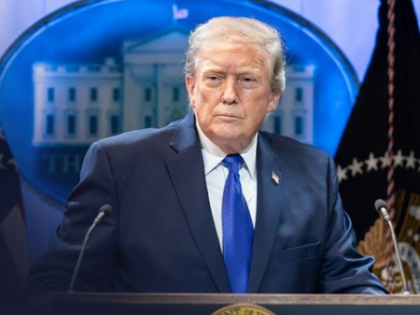
90 minutes before self-imposed deadline, Trump pulls back from Iran brink
Washington, April 8 US President Donald Trump has stepped back from the brink of a major military escalation with Iran, announcing a conditional two-week pause in planned attacks tied to reopening the Strait of Hormuz, a development that came as a big relief to people across the world.
The decision came 90 minutes before the self-imposed 8 p.m. EST deadline set by Trump for Iran to reach a deal, after backchannel diplomacy involving Pakistan.
Trump, in a post on Truth Social on Tuesday (local time), said he would “suspend” an escalation of attacks for two weeks if Iran agrees to open the key shipping route.
In a social media post, he said talks with Pakistan led to what he called a “double-sided ceasefire.”
“The reason for doing so is that we have already met and exceeded all Military objectives, and are very far along with a definitive Agreement concerning long-term peace with Iran, and peace in the Middle East,” Trump wrote.
He added that the United States had received “a 10-point proposal from Iran” that was “a workable basis on which to negotiate.”
Trump said “almost all of the various points of past contention” had been agreed, and the two-week pause would allow the agreement “to be finalised and consummated.”
The ceasefire is conditional. Trump said it depends on Iran agreeing to the “complete, immediate, and safe opening of the Strait of Hormuz.”
Iran signalled tentative acceptance. Foreign Minister Seyed Abbas Araghchi said Tehran would halt operations if attacks stop.
“If attacks against Iran are halted, our Powerful Armed Forces will cease their defensive operations,” he said.
“For a period of two weeks, safe passage through the Strait of Hormuz will be possible via coordination with Iran’s Armed Forces and with due consideration of technical limitations,” he added.
A White House official said Israel had also agreed to the two-week pause, though details remain unclear.
The pause follows a sharp escalation earlier in the day. Trump warned that “a whole civilisation will die tonight, never to be brought back again” if Iran did not reach a deal.
The Strait of Hormuz remains central to the crisis. Its closure has disrupted oil supplies and pushed up prices.
At the United Nations, a Bahrain-led effort to reopen the strait failed after Russia and China vetoed the resolution.
The White House said talks may continue but stressed that “nothing is final until announced by the President or the White House.”
Reports of missile and drone activity in parts of the Gulf after the announcement raised questions about how the ceasefire will be enforced.
The two-week pause offers a narrow window for diplomacy. Key differences remain on sanctions, Iran’s nuclear programme and control over the strait.
The conflict has unfolded over weeks of strikes by the United States and Israel on Iranian targets, raising fears of a broader regional war. The Strait of Hormuz carries a significant share of global oil shipments.
For India, which depends heavily on energy flows from the Gulf, any disruption to the strait or escalation in the conflict could have a direct economic and strategic impact.
Disclaimer: This post has been auto-published from an agency feed without any modifications to the text and has not been reviewed by an editor
Open in app