
Jamaat-e-Islami strikes seat pact with students-led NCP ahead of Bangladesh polls
By ANI | Updated: December 28, 2025 23:45 IST2025-12-28T23:40:14+5:302025-12-28T23:45:05+5:30


Dhaka [Bangladesh], December 28 : Bangladesh's largest Islamist party, Jamaat-e-Islami, on Sunday announced a seat-sharing pact with a political ...
Jamaat-e-Islami strikes seat pact with students-led NCP ahead of Bangladesh polls
Dhaka [Bangladesh], December 28 : Bangladesh's largest Islamist party, Jamaat-e-Islami, on Sunday announced a seat-sharing pact with a political platform, National Citizen Party (NCP), formed by student leaders who played a central role in last year's uprising. The pact has triggered internal dissent within the student-led group ahead of the next general election in February 2026.
The announcement comes as Jamaat-e-Islami seeks to strengthen its political position ahead of the polls, the first national election since the student-led movement that resulted in the ouster of former Prime Minister Sheikh Hasina in August 2024, The Daily Star reported.
As per The Daily Star, the Jamaat-e-Islami-led eight-party alliance has expanded to include the Liberal Democratic Party (LDP), headed by Col (retd) Oli Ahmed, and the National Citizen Party (NCP), led by Nahid Islam.
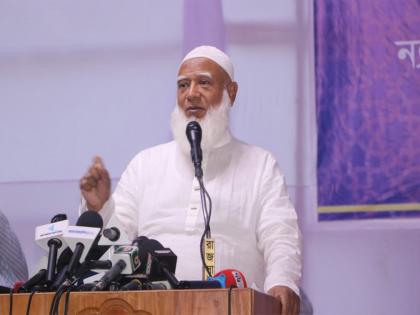
Jamaat-e-Islami Ameer Shafiqur Rahman formally declared the alliance at a press conference held at the Jatiya Press Club on Sunday. He said the alliance has nearly completed candidate selection for all 300 parliamentary seats and that the remaining process would be finalised fairly once nomination papers are submitted.
Responding to queries about the absence of NCP leaders at the event, Rahman said, "But they have clearly informed us their decision (joining the alliance with Jamaat). They will also inform the media about their decision through a press conference." The Daily Star reported that Rahman attributed their absence to time constraints.
LDP President Col (retd) Oli Ahmed and senior representatives of the eight alliance partners attended the press conference.
The announcement has, however, exposed deep divisions within the National Citizen Party, which was established by student leaders who led the July 2024 uprising. Several senior NCP figures have publicly opposed the decision to align with Jamaat-e-Islami, citing ideological differences.
Tasneem Jara, a prominent NCP leader, announced that she would decline the party's nomination and contest the forthcoming elections as an independent candidate. "My dream was to enter parliament through the platform of a political party and serve the people of my constituency and the country. However, due to the current realities, I have decided not to contest the election as a candidate of any specific party or alliance," she wrote in a Facebook post.
She added, "I promised you and the people of the country that I would fight for you and for building a new political culture. No matter the circumstances, I am firmly determined to keep that promise. Therefore, in this election, I will contest as an independent candidate from Dhaka-9."
Another senior NCP leader, Samanta Sharmin, also issued a statement rejecting the alliance.
"Bangladesh Jamaat-e-Islami is not a reliable ally. I believe that entering into any cooperation or understanding with Jamaat-e-Islamigiven its political position and ideologywould force the NCP to pay a heavy price," she said.
Sharmin said Jamaat's ideology clashes with the NCP's vision.
"According to the National Citizen Party's (NCP) long-standing position, its core principles and vision of the state are completely different from Jamaat's. NCP is a party formed around justice, reform, and the election of a constituent assemblywhat it calls the Second Republic," she said.
She further said her stance was consistent with the party's position over the past one and a half years. "My current position is consistent with the party's stance over the past one and a half years," the statement read, adding that earlier announcements had indicated the NCP would contest the elections independently.
Sharmin also clarified that rejecting an alliance with Jamaat did not amount to backing the Bangladesh Nationalist Party. "Any alliance with either BNP or Jamaat would mean deviating from NCP's organisational and political policies," she said.
These developments are unfolding as Bangladesh undergoes broader political restructuring ahead of the February 2026 parliamentary elections. During this transition, the interim government has confirmed that the Awami League, led by ousted Prime Minister Sheikh Hasina, will be barred from contesting the polls.
Press Secretary to the Chief Adviser of the interim government, Shafikul Alam, said the Awami League remains banned and has been deregistered by the Election Commission.
"Since the Awami League's activities are banned and the Election Commission has deregistered the party, the Awami League will not be able to take part in this election," he said at a press briefing after a meeting of the Advisory Council.
Alam added that the party's registration stands suspended and that its leaders are facing trial at the country's International Crimes Tribunal. Earlier in May, the interim government issued a gazette notification banning all activities of the Awami League and its affiliated bodies under the Anti-Terrorism (Amendment) Ordinance, pending the completion of tribunal proceedings.
Reacting to the decision, Sheikh Hasina criticised the exclusion of her party. "An election without the Awami League is not an election but a coronation," she said.
She added, "Historically, when Bangladeshis cannot vote for their preferred party, they do not vote at all. So millions will be effectively disenfranchised if this ban on the Awami League is maintained."
She further said, "Any government that emerges from such an exercise will lack the moral authority to govern. This would be a terrible missed opportunity at a time when Bangladesh badly needs a process of genuine national reconciliation."
Amid these political shifts, Bangladesh Nationalist Party (BNP) Acting Chairman Tarique Rahman on Saturday said he aims to build Bangladesh into an inclusive and secure state, following his return to the country after 17 years in exile.
In a post on X, Rahman thanked supporters for the reception he received upon his return. "Dear friends, sisters, and brothers across Bangladesh, Last Thursday was a day I will carry in my heart forever, the day I returned to the soil of my homeland after 17 long years," he said.
Rahman, son of former PM Begum Khaleda Zia, said he returned with a clear roadmap for the country's future. "When I spoke yesterday, I spoke of a plan, not just a dream, for Bangladesh's future: a country where peace and dignity thrive, where every community feels secure and valued," he said, describing his vision of a "united, inclusive Bangladesh."
Rahman arrived in Dhaka on a Bangladesh Airlines flight from London after a series of cases filed during the Awami League's tenure were removed by the interim government. He had been living in London since his arrest during the army-backed caretaker government of 2007-08, and subsequently led the BNP from abroad.
Bangladesh is scheduled to go to the polls in February 2026, with political tensions high as new alliances emerge, internal splits deepen, and major political parties remain excluded from the electoral process.
Disclaimer: This post has been auto-published from an agency feed without any modifications to the text and has not been reviewed by an editor
Open in app