
Japan Cabinet approves record JPY 122.31 trillion budget for FY2026
By ANI | Updated: December 26, 2025 11:45 IST2025-12-26T11:43:05+5:302025-12-26T11:45:14+5:30



Tokyo [Japan], December 26 : Japan's Cabinet on Friday approved a record initial budget of JPY 122.31 trillion (approximately ...
Japan Cabinet approves record JPY 122.31 trillion budget for FY2026
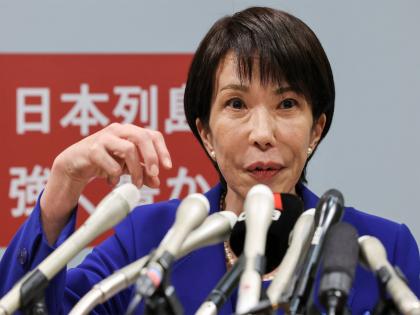
Tokyo [Japan], December 26 : Japan's Cabinet on Friday approved a record initial budget of JPY 122.31 trillion (approximately USD 783 billion) for fiscal 2026, underscoring the newly appointed Prime Minister Sanae Takaichi's expansionary fiscal approach aimed at stimulating economic growth and strengthening defence capabilities, despite mounting concerns over the country's fragile public finances, Kyodo News reported.
According to Kyodo News, the general-account budget marks the second consecutive year of record-high spending, surpassing the JPY 115.20 trillion initial budget for fiscal 2025.
Officials said rising prices have pushed up personnel and other fixed costs, while Japan's rapidly ageing population continues to drive welfare-related expenditure higher.
Under the draft budget for the fiscal year beginning in April, the government plans to issue JPY 29.58 trillion in new bonds to cover a revenue shortfall, highlighting Japan's continued dependence on debt financing. Japan's fiscal position remains the weakest among the Group of Seven (G7) economies.
Following Cabinet approval, Japan's Finance Minister Satsuki Katayama said new bond issuance is expected to stay below JPY 30 trillion for the second straight year, while the debt dependency ratio is projected to decline to 24.2 per cent in fiscal 2026 from 24.9 per cent the previous year.
"I believe we have compiled a draft budget that strikes a balance between achieving a strong economy and ensuring fiscal sustainability, while paying close attention to fiscal discipline," Katayama said at a news conference, as quoted by Kyodo News.
The budget represents the first full-year spending plan under Prime Minister Takaichi, who took office in October, and is expected to be passed by the Diet, the Japanese Parliament, before the end of the current fiscal year.
Takaichi's aggressive spending stance has weighed on the yen in foreign exchange markets, raising concerns for a nation heavily reliant on imported energy, Kyodo News reported.
Meanwhile, debt-servicing costs, including principal repayments and interest, rose to a record JPY 31.28 trillion amid higher long-term interest rates.
Japan's Finance Ministry raised the assumed interest rate used to calculate interest payments to 3.0 per cent, up from 2.0 per cent in fiscal 2025, reflecting expectations that the Bank of Japan will continue to hike rates following its latest increase this month. Concerns over fiscal sustainability have also contributed to rising borrowing costs, Kyodo News reported.
Outstanding central and local government debt is projected to reach JPY 1,344 trillion by the end of fiscal 2026, nearly double Japan's GDP, according to official estimates.
In terms of major allocations, JPY 39.06 trillion has been earmarked for social welfare spending, the largest component of the budget, partly due to an upward revision of medical fees. Defence-related spending has been set at a record JPY 9.04 trillion, while JPY 1 trillion has been allocated to reserve funds for emergencies, Kyodo News reported.
Infrastructure spending of JPY 6.11 trillion has been proposed to maintain ageing water, sewerage and other public facilities nationwide, following a deadly sinkhole incident in Saitama Prefecture earlier this year. Agriculture and fisheries are set to receive JPY 2.30 trillion, aimed in part at stabilising rice supplies amid rising prices.
On the revenue side, tax receipts are forecast at a record JPY 83.74 trillion for the seventh consecutive year, supported by strong corporate profits, Kyodo News reported.
Under the slogan of "responsible and proactive public finances", Prime Minister Takaichi has pledged to pursue economic growth through stimulus measures, including investment in semiconductors and other strategically important industries.
The size of the budget was also shaped by political compromises, as the ruling coalition, which holds a slim majority in the House of Representatives but remains a minority in the House of Councillors, accepted several opposition demands.
The Democratic Party for the People has indicated it will back the budget in return for agreement on raising the non-taxable income threshold to increase workers' disposable income, Kyodo News reported.
Earlier this week, the Cabinet Office projected Japan's economy would expand by a real 1.3 per cent in fiscal 2026, compared to an estimated 1.1 per cent growth in the current fiscal year, a forecast used in calculating expected tax revenues.
Disclaimer: This post has been auto-published from an agency feed without any modifications to the text and has not been reviewed by an editor
Open in app