
Maduro's son calls father's capture "kidnapping", seeks international solidarity
By ANI | Updated: January 6, 2026 01:15 IST2026-01-06T06:41:51+5:302026-01-06T01:15:05+5:30



Caracas [Venezuela], January 6 : Nicolas Maduro Guerra, son of Venezuela's deposed dictator, on Monday (local time) described the ...
Maduro's son calls father's capture "kidnapping", seeks international solidarity
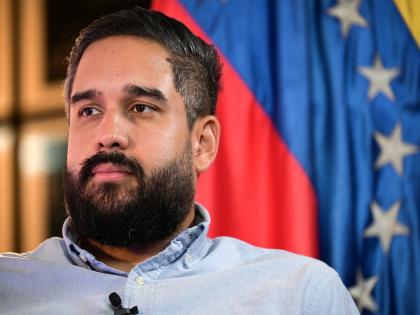
Caracas [Venezuela], January 6 : Nicolas Maduro Guerra, son of Venezuela's deposed dictator, on Monday (local time) described the US capture of his father as a "kidnapping" and called for "international solidarity" to facilitate his return to Venezuela, CNN reported on Monday (local time).
Maduro Guerra made the remarks during a session of Venezuela's National Assembly, held two days after Maduro and his wife, Cilia Flores, were taken in a US military operation in Caracas. He condemned the operation as a violation of Venezuela's sovereignty and warned that similar actions could occur in other countries, according to CNN.
"If we normalise the kidnapping of a head of state, no country is safe. Today it's Venezuela, tomorrow it could be any nation that refuses to submit. This is not a regional problem; it is a direct threat to global stability, to humanity and to the sovereign equality of nations," he said during his speech.
"People of the world, I say to you: international solidarity with Nicolas, with Cilia, with Venezuela, is not an optional political gesture; it is an ethical and legal duty. Silence in the face of these violations implicates those who remain silent and weakens the international system that everyone claims to defend," Maduro Guerra added.
As per CNN, Maduro Guerra also addressed being named in the latest US indictment against his father, Flores, and others, who face allegations of drug trafficking and weapons-related offences. Rejecting the charges, he said, "My family and I are being persecuted."
Meanwhile, Venezuela's ousted leader, Nicolas Maduro, pleaded not guilty to multiple federal charges during his appearance before a New York City federal court on Monday, according to CNN.
Maduro raised questions over the legality of his arrest during his first appearance before a US federal court in New York, claiming he was detained at his residence in Caracas, Venezuela, CNN reported.
Speaking directly to the judge within minutes of the hearing, Maduro said, "I was captured at my home in Caracas, Venezuela."
The remark signalled what is expected to be a central plank of his legal defence that his arrest by US law enforcement on foreign soil amounted to an unlawful operation.
Maduro's legal team has described the arrest as a "military abduction," arguing that the late-night operation violated international law and due process protections. The defence is expected to challenge the jurisdiction of the US courts by questioning the circumstances under which the Venezuelan leader was taken into custody.
This is not the first instance of a defendant advancing such a claim. More than 30 years ago, Panama's former leader, Manuel Noriega, argued that the United States had breached international law and due process by invading Panama and arresting him on foreign soil, according to CNN.
That defence, however, did not succeed. Courts at the time declined to examine the legality of the US invasion and instead confined their review to the charges detailed in Noriega's indictment. It remains uncertain whether the judiciary will revisit that legal precedent in Maduro's case, CNN reported.
It is uncommon for a defendant to address the court during an initial appearance, as defence lawyers generally advise against speaking due to the risk that prosecutors could later use statements.
As Maduro spoke in court on Monday, Judge Alvin Hellerstein issued a similar caution as the Venezuelan president spoke. "There will be a time and a place to go into all of this," the judge said.
Maduro's court appearance follows his capture during a military strike on Saturday. In the immediate aftermath, President Donald Trump declared that America is "in charge." At the same time, acting Venezuelan president Delcy Rodriguez called for "cooperation" with the US, signalling a softer response to the attack, CNN reported.
US officials have indicated that Washington is working to establish a pliant interim government in Venezuela. Secretary of State Marco Rubio said the focus remains on setting policy and maintaining "leverage."
During the same period, Trump made a series of broader remarks touching on other international issues. These included implying potential military action in Colombia, urging Mexico to get its "act together" on drugs, and stating that the US "needs Greenland."
The developments stem from a pre-dawn US operation inside Venezuela. During the operation, deposed dictator Nicolas Maduro and his wife, Cilia Flores, were detained and transferred to a US naval vessel before being flown to New York, according to the Trump administration.
US authorities have said that deposed dictator Nicolas Maduro is expected to face multiple charges. These include narco-terrorism, drug trafficking and weapons-related offences. The operation followed months of intensified US military activity in the region.
Since September, Washington has launched dozens of strikes against vessels it claims were involved in drug trafficking linked to Venezuela. These operations reportedly resulted in more than 115 deaths. The operations have also prompted certain legal experts to raise concerns over potential violations of international law.
US legal action against deposed dictator Nicolas Maduro dates back to President Donald Trump's first term. A superseding indictment unsealed on Saturday added fresh allegations of narco-terrorism and conspiracy to import cocaine.
Attorney General Pam Bondi said on social media that Maduro and others "will soon face the full wrath of American justice on American soil in American courts". However, President Trump's own remarks added a broader political dimension to the case.
Speaking at a press conference on Saturday, he went beyond a law enforcement justification. He stated that the United States would "run the country until such time as we can do a safe, proper and judicious transition." Trump also referred to reclaiming American oil interests in Venezuela.
Disclaimer: This post has been auto-published from an agency feed without any modifications to the text and has not been reviewed by an editor
Open in app