
"No problem meeting them": Trump signals direct talks with Iran, reports NY Post
By ANI | Updated: April 21, 2026 08:30 IST2026-04-21T13:56:00+5:302026-04-21T08:30:16+5:30



Washington, DC [US], April 21 : In a potential shift for regional diplomacy, US President Donald Trump has indicated ...
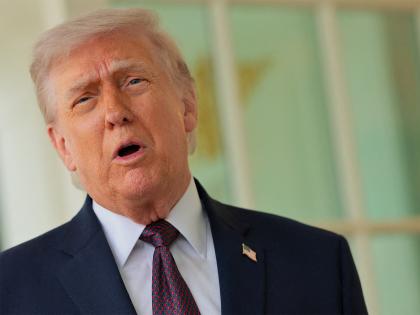
"No problem meeting them": Trump signals direct talks with Iran, reports NY Post
Washington, DC [US], April 21 : In a potential shift for regional diplomacy, US President Donald Trump has indicated a readiness to engage directly with the Iranian leadership prior to the high-stakes negotiations scheduled to take place in Islamabad, Pakistan.
The American leader suggested that he remains open to a personal summit with his counterparts in Tehran to resolve the ongoing conflict. According to a report by the New York Post, the president stated that while he has confidence in his subordinates, he would not rule out a face-to-face encounter.
"If they want to meet, and we have some very capable people, but I have no problem meeting them," the US president was quoted as saying.
Further cementing this diplomatic push, President Trump confirmed on Monday that a high-level American negotiating team is already en route to Pakistan. The delegation includes Vice President JD Vance, Jared Kushner, and Special Envoy Steve Witkoff, who are tasked with initiating these critical discussions with Iranian officials.
In an interview with the New York Post, Trump clarified that the mission's objective extends beyond a simple regional truce. He is seeking the total dismantling of Iran's nuclear capabilities, noting that the team would be arriving in the Pakistani capital by Monday night, local time.
"They're heading over now... They'll be there tonight, [Islamabad] time," he said, regarding the US team's deployment to Pakistan.
The president told the New York Post that the success of these talks hinges on a single, non-negotiable demand: Iran must completely abandon its nuclear ambitions. "Get rid of their nuclear weapons. That's all very simple," he stated, adding firmly, "There will be no nuclear weapon."
While Trump signalled a willingness to meet senior Iranian leaders should a breakthrough happen, he issued a grim warning about the potential for failure. When asked by the New York Post about the consequences if negotiations were to collapse, he was blunt: "Well, I don't want to get into that with you. You can imagine. It wouldn't be pretty."
Despite Washington's resolve, the diplomatic mission is already encountering significant resistance. Earlier on Monday, the Iranian Foreign Ministry, via the Tasnim News Agency, claimed it currently has "no plans" for a second round of negotiations. Tehran cited American "bad faith" and the ongoing maritime blockade in the Strait of Hormuz as primary obstacles.
Trump, however, appeared to dismiss this rhetoric from Tehran as posturing. He told the New York Post that "nobody is playing games" and insisted that both nations are "supposed to have the talks."
"We're supposed to have the talks... So I would assume at this point nobody's playing games," he told the publication, reiterating his personal openness to a summit by saying, "I have no problem meeting them."
The delegation is expected to land in Islamabad under immense security. Pakistani mediators, led by Prime Minister Shehbaz Sharif and Army chief Asim Munir, have reportedly established a high-security "Red Zone" to host the summit and protect the envoys.
This upcoming session follows a previous 21-hour marathon of discussions held on April 11-12, which failed to break the deadlock. With the existing ceasefire scheduled to expire on Wednesday, these Islamabad talks are being viewed as the final diplomatic off-ramp before the conflict potentially escalates into full-scale infrastructure warfare.
While the US maintains that a "fair and reasonable" deal has been offered, the refusal of the Iranian leadership to negotiate under the "shadow of a blockade" suggests that the previous round's stalemate may have been a precursor to a far more dangerous confrontation.
Disclaimer: This post has been auto-published from an agency feed without any modifications to the text and has not been reviewed by an editor
Open in app