
Reports by ignorant NGOs: India rebuts Norwegian journalist’s question on press freedom, human rights
By IANS | Updated: May 19, 2026 11:15 IST2026-05-19T11:12:46+5:302026-05-19T11:15:20+5:30



Oslo, May 19 India strongly pushed back against questions raised by a Norwegian journalist on press freedom and ...
Reports by ignorant NGOs: India rebuts Norwegian journalist’s question on press freedom, human rights
Oslo, May 19 India strongly pushed back against questions raised by a Norwegian journalist on press freedom and human rights, stating that Delhi guarantees fundamental rights to all citizens and also provides legal mechanisms to address violations whenever they occur.
The episode unfolded during the Prime Minister’s visit to Oslo on Monday (local time) when Norwegian journalist Helle Lyng urged PM Modi to take questions from the media. Visuals from the venue showed the Prime Minister walking out of the room as the journalist called out to him.
Later, Lyng was invited by the Embassy of India in Oslo to attend an official media briefing addressed by senior officials from the Ministry of External Affairs regarding the Prime Minister’s visit.
During the interaction, the journalist questioned India’s democratic and human rights record and asked why the international community should trust the country.
“As we strengthen our partnership, why should we trust you? Can you promise that you will try to stop the human rights violations that go on in your country? And also, will the prime minister start taking critical questions from the Indian press at some point in the future? And also, if possible, I would like you to answer straightaway,” Lyng asked during the briefing.
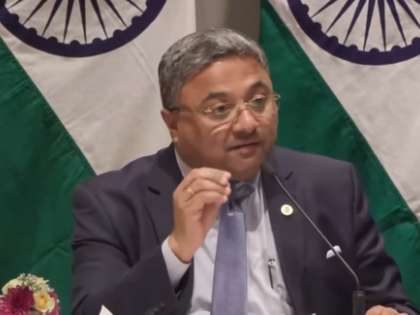
Responding to the question, Sibi George, Secretary (West) in the MEA, defended India’s democratic system, constitutional framework and record on rights and freedoms, while criticising what he described as narratives shaped by “ignorant NGOs”.
George said India’s Constitution guarantees fundamental rights to all citizens and also provides legal mechanisms to address violations whenever they occur. He underlined that India granted women equal voting rights immediately after Independence, unlike several countries where such rights came much later.
“We have a constitution which guarantees the rights of the people, fundamental rights of the people. We have, you know, we have equal rights for the women of our country, which is very important. In 1947, we gave the freedom to vote for our women... We won the freedom together, and they won itself. Many countries I know, the voting right for women came several decades after India gave that freedom. Because we believe in equality, we believe in human rights. And what is the best example of human rights? The right to change government, the right to vote. And that is what is happening in India. We are so proud of that,” George said.
While replying, the MEA (West) Secretary repeatedly requested the journalist not to interrupt him and insisted that he be allowed to complete his response.
“Let me answer the question, please don’t interrupt me. You asked a question -- this is my press conference. You asked why should a country trust India, let me answer that question,” he said.
Referring to the size and diversity of India’s media ecosystem, George stated that the scale of India is often poorly understood by foreign observers.
He said that the nation has a vast and vibrant media landscape operating in multiple languages with hundreds of television news channels functioning across the country.
“You know how many stories are up here. We have how many breaking news coming every day in the evening. At least 200 TV channels in Delhi alone, in English language, in Hindi language and multiple languages. People have no understanding of the scale of India. People have no understanding,” he remarked.
He further criticised the tendency of some foreign observers to rely on selective reports while assessing India’s domestic realities.
“They read one or two news reports published by some godforsaken, ignorant NGOs and then come and ask questions,” George added, saying that India’s internal debates and complexities are often reduced to simplistic narratives abroad.
Reaffirming India’s commitment to democratic values and legal norms, the MEA Secretary said the country firmly believes in the rule of law and follows international standards consistently.
“India is a country which believes in the rule of law. We have always been following rules wherever it is. We play by the book. That is India’s reputation,” he stated.
Answering another question on why the world should place trust in India, George pointed to the country’s role during major global crises, including the Covid pandemic, and highlighted India’s civilisational contributions to the world.
He also referred to India’s legacy in mathematics, culture and global heritage while emphasising the country’s long-standing democratic traditions.
The remarks come only days after India similarly rejected questions relating to “press freedom” and “minority rights” during Prime Minister Modi’s visit to the Netherlands.
During that visit too, Sibi George had strongly defended India’s democratic institutions, constitutional values and cultural diversity after a Dutch journalist questioned the absence of a joint media interaction involving PM Modi and the Dutch leadership and raised concerns regarding press freedom and the condition of minorities, especially Muslims, in India.
Responding firmly on that occasion as well, George had said such questions frequently arise from a “lack of understanding” of India’s history, democratic processes and social fabric.
Disclaimer: This post has been auto-published from an agency feed without any modifications to the text and has not been reviewed by an editor
Open in app