
Trump sending VP Vance to lead Iran talks in Islamabad: White House
By IANS | Updated: April 8, 2026 23:55 IST2026-04-08T23:53:00+5:302026-04-08T23:55:53+5:30



Washington, April 8 The United States President Donald Trump is sending Vice President J.D. Vance to Pakistan to ...
Trump sending VP Vance to lead Iran talks in Islamabad: White House
Washington, April 8 The United States President Donald Trump is sending Vice President J.D. Vance to Pakistan to lead a high-stakes round of negotiations with Iran, marking a new diplomatic phase following a fragile ceasefire brokered after weeks of intense military operations.
The announcement came as the White House confirmed that Washington is dispatching its top negotiating team to Islamabad for talks aimed at securing a longer-term settlement with Tehran.
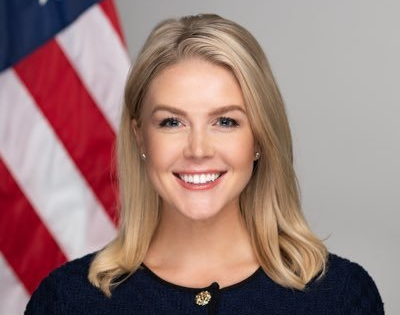
“I can announce that the President is dispatching his negotiating team, led by the Vice President of the United States, J.D. Vance, Special Envoy Witkoff, and Mr. Kushner, to Islamabad for talks this weekend,” White House Press Secretary Karoline Leavitt told reporters at a news conference here.
“The first round of those talks will take place on Saturday morning, local time, and we know we look forward to those in-person meetings,” Leavitt said in response to a question.
The talks follow a two-week ceasefire window announced by President Donald Trump after what the administration described as a decisive military campaign against Iran.
Leavitt said the negotiations follow the United States achieving its core objectives during “Operation Epic Fury,” which she described as a rapid and overwhelming military success.
“This is a victory for the United States of America that the President and our incredible military made happen,” she said.
According to the White House, the military campaign degraded Iran’s defence infrastructure, missile capabilities, and naval assets, creating leverage for diplomacy. The administration said this pressure forced Tehran to seek a ceasefire and agree to reopen the Strait of Hormuz — a critical global oil transit route.
“The President’s maximum pressure and the leverage created by the success of Operation Epic Fury led to the Iranian regime asking for and ultimately agreeing to a ceasefire proposal with the United States,” Leavitt said.
The ceasefire remains conditional. Washington has made clear that the “free, safe, and immediate reopening” of the Strait of Hormuz is a central requirement, with the administration closely monitoring developments in real time.
At the same time, Leavitt cautioned that the truce is inherently unstable. “This is a fragile truce. Ceasefires are fragile by nature,” she said, noting disruptions in Iran’s command and control structures following sustained strikes.
The Islamabad talks are expected to address key sticking points, including Iran’s nuclear programme. The White House reiterated that ending uranium enrichment inside Iran remains a non-negotiable red line.
“The President’s red lines, namely the end of Iranian enrichment in Iran, have not changed,” Leavitt said.
She added that Tehran has already shown some willingness to engage on sensitive issues, including highly enriched uranium, raising cautious optimism ahead of the talks.
The diplomatic push also reflects broader geopolitical coordination. The White House confirmed that there were “conversations that took place between top levels of our government and China’s government,” suggesting parallel engagement among major powers.
--IANS
Disclaimer: This post has been auto-published from an agency feed without any modifications to the text and has not been reviewed by an editor
Open in app