
US Navy starts mine-clearance operations in Strait of Hormuz
By ANI | Updated: April 12, 2026 02:00 IST2026-04-12T07:26:47+5:302026-04-12T02:00:10+5:30



Tampa, Florida [US], April 12 : The United States Central Command (CENTCOM) has initiated operational preparations aimed at clearing ...
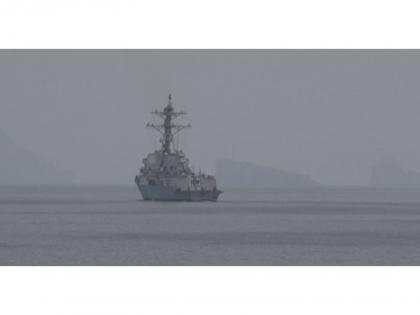
US Navy starts mine-clearance operations in Strait of Hormuz
Tampa, Florida [US], April 12 : The United States Central Command (CENTCOM) has initiated operational preparations aimed at clearing sea mines in the strategically significant Strait of Hormuz, with the deployment of two US Navy guided-missile destroyers in the region, officials said.
The destroyers USS Frank E Petersen (DDG 121) and USS Michael Murphy (DDG 112) have transited the Strait of Hormuz and are currently operating in the Arabian Gulf as part of a broader mission to ensure safe maritime passage through the vital waterway. The effort is reportedly focused on clearing sea mines that were previously laid by Iran's Islamic Revolutionary Guard Corps (IRGC).
{{{{twitter_post_id####}}}}https://t.co/v7ABGhPKr3— U.S. Central Command (@CENTCOM) April 11, 2026
"Today, we began the process of establishing a new passage and we will share this safe pathway with the maritime industry soon to encourage the free flow of commerce," said Adm. Brad Cooper, commander of CENTCOM.
The Strait of Hormuz is an international sea passage and an essential trade corridor that supports regional and global economic prosperity. Additional U.S. forces, including underwater drones, will join the clearance effort in the coming days.
Military operations involving the United States, Israel, and Iran have made transit through the Strait of Hormuz increasingly perilous, with Tehran launching counterstrikes on U.S. targets and energy infrastructure across the Gulf region. Iran's Islamic Revolutionary Guard Corps has also reportedly laid mines along the critical waterway, further escalating risks for commercial shipping.
According to The Hill, these mounting threats to vessels have effectively rendered the strait functionally closed, dealing a sharp blow to global crude oil markets. By the end of March, international benchmark Brent crude had surged to as high as $118 per barrel, while the average price of a gallon of standard gasoline in the United States climbed to $4.
After US President Trump announced a temporary halt in fighting this week, ships began cautiously reentering the passage, providing temporary relief to the global economy. However, new Iranian tolls on oil-carrying vessels present a new challenge to energy markets.
The news comes as Vice President Vance started face-to-face talks with Iranian officials in Islamabad, Pakistan, on Saturday afternoon, the first direct meeting between the two countries in decades. The ceasefire agreement is on shaky ground as both sides accuse the other of violating its terms.
Meanwhile, Iranian state media outlet Press TV reported that a spokesman for the Khatam al-Anbiya Central Headquarters refutes CENTCOM's claims, asserting that permission for any vessel to pass through the Strait of Hormuz rests solely with the Iranian Armed Forces.
Disclaimer: This post has been auto-published from an agency feed without any modifications to the text and has not been reviewed by an editor
Open in app