
US Treasury official says sanctions key tool to block adversaries from American financial system
By IANS | Updated: April 25, 2026 07:45 IST2026-04-25T07:43:13+5:302026-04-25T07:45:30+5:30



Washington, April 25 US Treasury Assistant Secretary for Terrorist Financing Jonathan Burke has told lawmakers that sanctions remain ...
US Treasury official says sanctions key tool to block adversaries from American financial system
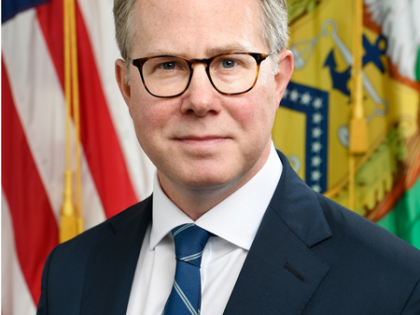
Washington, April 25 US Treasury Assistant Secretary for Terrorist Financing Jonathan Burke has told lawmakers that sanctions remain a central tool to cut off adversaries from the American financial system and disrupt illicit activity.
“Sanctions can be useful to isolate those sanctions targets and make sure they don’t have access to the US financial system,” Burke told lawmakers.
Testifying before a House subcommittee, Burke said sanctions serve both as a direct enforcement tool and as a deterrent. He said they can be used to block financial flows, freeze assets and limit access to global markets.
“One of those is disruption,” he said, explaining that sanctions help protect the US financial system from exposure to illicit actors.
He added that even the threat of sanctions can influence behaviour. “The prospect of sanctions… can be effective at changing behaviour of various actors,” Burke said.
Burke said Treasury is working to ensure sanctions are applied in a targeted and strategic way. He acknowledged that implementation remains complex, especially as adversaries adopt new methods to evade restrictions.
“Adversaries are also using increasingly sophisticated methods to evade sanctions,” he said, citing shell companies, digital assets and alternative payment systems.
He said Treasury is reviewing how sanctions lists are managed to improve effectiveness. “We’re looking at how can we make the list most effective,” Burke said, adding that designations must be aligned with national security priorities.
The official also pointed to challenges faced by financial institutions, which must screen transactions against large sanctions lists.
“Current compliance practices… often generate high volumes of false positives and divert resources from higher risk threats,” he said.
Burke said the department is moving toward a risk-based approach to enforcement. That would allow institutions to focus more resources on higher-risk activity.
“It’s important that… resources are spent against higher risk activities and less resources spent against lower risk activities,” he said.
He said the effectiveness of sanctions should be judged by outcomes, not volume. “We don’t want to measure the impact of sanctions by how many names we put on a list,” Burke said.
Lawmakers used the hearing to question the consistency of US sanctions policy and its impact on global markets. Some raised concerns about enforcement gaps and the need for clearer strategy.
Burke said sanctions remain one tool among many and must be used alongside diplomacy and law enforcement. “Sanctions can be used for different reasons and to complement other tools,” he said.
Sanctions have become a key element of US foreign policy, targeting terrorism financing, nuclear programmes and organised crime networks. Over time, their use has expanded to include cybercrime and financial fraud.
Disclaimer: This post has been auto-published from an agency feed without any modifications to the text and has not been reviewed by an editor
Open in app