
Mumbai Monorail Undergoes Independent Safety Testing Ahead of Service Resumption
By Lokmat Times Desk | Updated: February 12, 2026 14:54 IST2026-02-12T14:54:33+5:302026-02-12T14:54:33+5:30



The Mumbai Monorail is presently undergoing an independent safety evaluation of its newly acquired train rakes, a mandatory procedure ...
Mumbai Monorail Undergoes Independent Safety Testing Ahead of Service Resumption
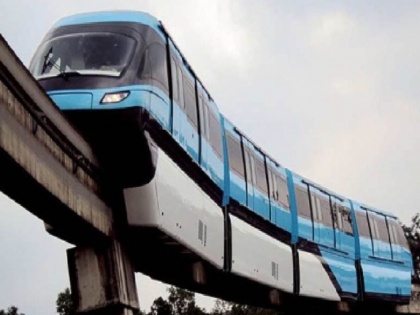
The Mumbai Monorail is presently undergoing an independent safety evaluation of its newly acquired train rakes, a mandatory procedure before passenger services can restart. Officials aware of the development said the assessment is a crucial requirement to ensure the system meets all operational and safety standards after remaining shut for several months. The suspended corridor cannot resume commercial runs until the testing process is completed and formal clearance is granted. The new rolling stock being examined will become part of the operational fleet only after it satisfies all technical benchmarks laid down by the authorities overseeing the revival process.
The inspection is being carried out as a third-party audit under provisions of the Indian Tramway Act. Findings from the audit are submitted to a state government-appointed engineer who performs a role similar to that of the Commission of Rail Safety. This official scrutinises the technical reports, verifies compliance with safety norms and grants the final approval required to restart services. Unlike metro rail systems, which fall under the Commission of Metro Rail Safety, the monorail is regulated by a separate legal framework, resulting in a distinct approval and certification process.
Services on the Mumbai Monorail have remained suspended since September 20 last year after recurring technical faults triggered serious safety worries. The Mumbai Metropolitan Region Development Authority paused operations to undertake extensive upgrades. These include induction of brand-new rakes, installation of advanced communications-based control signalling technology, and refurbishment of older trains. The authority has maintained that the temporary closure was necessary to modernise infrastructure and strengthen reliability. Officials emphasised that the objective is to transform the system into a safer, more efficient and dependable mode of urban transport for daily commuters.
MMRDA Metropolitan Commissioner Dr Sanjay Mukherjee had earlier described the shutdown as a strategic move to overhaul and rejuvenate the corridor. He stated that adding new trains, implementing advanced signalling systems and upgrading existing assets would significantly enhance operational stability and commuter safety. The authority also acknowledged the inconvenience faced by passengers during the prolonged suspension and expressed appreciation for their patience. According to officials, restoring public trust remains a priority, and every measure is being taken to ensure the monorail returns with improved performance standards.
The suspension followed multiple disruptions in 2025 that exposed operational vulnerabilities. In one incident near Mukundrao Ambedkar Road junction, a train travelling from Sant Gadge Maharaj Chowk to Chembur stalled, leaving 17 passengers stranded. Although authorities arranged evacuation using another rake, commuters reported distress and breathing discomfort during the delay, raising concerns about emergency response readiness. Earlier in August, a major failure left nearly 600 passengers stuck near Mysore Colony station and about 200 more near Acharya Atre Nagar station. Heavy rainfall complicated rescue efforts, and several passengers required medical attention after ventilation systems malfunctioned.
Officials have also pointed to restricted maintenance hours as a significant operational hurdle. With daily services running for most of the day, engineers had barely three and a half hours at night to carry out installation, repairs and testing. During this window, power rails must be shut down, discharged and later re-energised before the next day’s operations begin. This limited timeframe slowed upgrade work and highlighted structural constraints within the system’s maintenance schedule, making comprehensive overhahauls more challenging.
Launched in February 2014 on an initial 8.8-kilometre stretch between Chembur and Wadala, the corridor was later extended to Jacob Circle in 2019. Despite being developed at a cost of approximately Rs 2,450 crore, the project has faced persistent reliability issues and lower-than-expected ridership. Planners had projected a monthly footfall of around 30 lakh passengers after full commissioning, but repeated breakdowns and inconsistent services prevented it from achieving those targets. Operational setbacks gradually eroded commuter confidence and limited its role in easing urban congestion.
The project was awarded in 2008 to a consortium comprising Larsen & Toubro and Malaysia-based Scomi. However, after recurring performance shortcomings, MMRDA terminated Scomi’s contract in 2018 and assumed direct control of operations. In a fresh push to revive the corridor, the authority has procured 10 new Make-in-India rakes manufactured by Medha in partnership with SMH Rail. These trains will enter service only after obtaining mandatory safety approvals. The ongoing independent evaluation represents a decisive phase in efforts to restore India’s first modern light mass rapid transit system to stable operations.
Open in app