
Bengal 2026 Assembly polls: Poll-violence in elections since 2014 to determine CAPF deployment
By IANS | Updated: January 15, 2026 10:50 IST2026-01-15T10:46:04+5:302026-01-15T10:50:11+5:30


Kolkata, Jan 15 The Election Commission of India (ECI) will consider the record of election-related violence in the ...
Bengal 2026 Assembly polls: Poll-violence in elections since 2014 to determine CAPF deployment
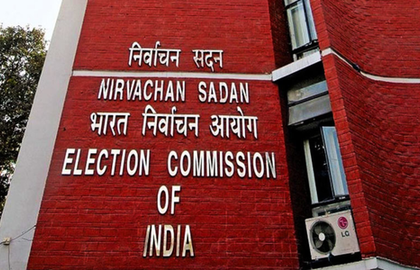
Kolkata, Jan 15 The Election Commission of India (ECI) will consider the record of election-related violence in the last seven elections in West Bengal since 2014 as the determining factor for the extent and pattern of Central Armed Police Force (CAPF) deployment for the 2026 Assembly polls in the state.
These seven elections, whose poll-violence records will be under ECI's consideration, include the Lok Sabha elections in 2014, 2019, and 2024, the state Assembly elections in 2016 and 2021, and the polls for the three-tier panchayat system in West Bengal in 2018 and 2023.
Accordingly, the ECI has sought the details of the police station (PS)-wise reports on the records of the poll-related violence in these seven polls, along with the details of casualties’ figures during these elections, with immediate effect, said the sources from the office of the Chief Electoral Officer (CEO), West Bengal.
The Commission, the source added, had also sought detailed PS-wise reports of the current status of history-sheeters in the matter.
“Depending on the evaluation of the PS-wise reports in the matter, the Commission will decide not only on the number of companies of CPAF to be deployed for the Assembly polls this year but also on the distribution of that deployment according to the sensitivity of the pockets and polling booths,” a CEO’s office insider said.
This time, the CPAF deployment is expected to be much more than what it had been during the previous elections, considering a suggestion had gone from the CEO’s office to the ECI for completing the 2026 West Bengal Assembly polls, in one or a maximum of two phases, compared to seven to eight phases in the last few elections.
Recently, the matter was discussed at a meeting at ECI’s headquarters in New Delhi, which was chaired by the Chief Election Commissioner (CEC), Gyanesh Kumar, and attended by the CEOs from all poll-bound states and one union territory.
The CEO’s office insider pointed out that the eventuality of a single-phase or two-phase poll in West Bengal in 2026 will have both its advantages and disadvantages.
“The advantage is that political parties will not be able to mobilise their supporters from one pocket to another and thus address the traditional complaint of outsider mobilisation on the polling day or the day before that, done to intimidate the voters,” a CEO’s office insider pointed out.
However, that single-phase or two-phase polling would require a larger deployment of CAPF, especially on the polling day. “If the Commission can ensure that arrangement, the idea of a single-phase or two-phase poll is quite feasible,” the CEO’s office insider explained.
The ongoing Special Intensive Revision (SIR) in West Bengal is scheduled to conclude with the publication of the final voters’ list on February 14. Shortly after that, the ECI is expected to announce the polling dates for the Assembly elections.
Disclaimer: This post has been auto-published from an agency feed without any modifications to the text and has not been reviewed by an editor
Open in app