
How India's River Basin Management Scheme is bolstering water governance
By IANS | Updated: April 17, 2026 21:10 IST2026-04-17T21:08:31+5:302026-04-17T21:10:13+5:30



New Delhi, April 17 India's River Basin Management Scheme is prioritising major basins such as the Brahmaputra, Barak, ...
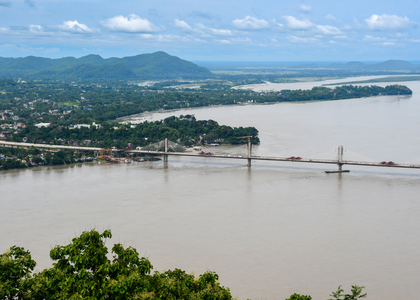
How India's River Basin Management Scheme is bolstering water governance
New Delhi, April 17 India's River Basin Management Scheme is prioritising major basins such as the Brahmaputra, Barak, Teesta, and Indus with the aim of ensuring sustainable use, protection, and development of surface and groundwater resources, according to a government factsheet released on Friday.
The scheme will continue during 2026–27 to 2030–31 with an estimated cost of Rs 2,183 crore across the river basins, it said.
Modern tools such as GIS, remote sensing, LiDAR, and drone-based surveys are being used to improve river basin planning and carry out future projects as water plays a central role in agriculture, industry, energy generation, and overall human well-being. The objective of the scheme is to focus on promoting sustainable use of water while supporting irrigation, hydropower, and flood management.
In India, where river systems are complex and interlinked, basin-level planning has become essential for addressing challenges such as floods, erosion, uneven water distribution, and ecological degradation. Recognising these challenges, the River Basin Management (RBM) Scheme is being implemented in a structured and scientific manner, the official statement explained.
The RBM is a central sector scheme of the Department of Water Resources, River Development, and Ganga Rejuvenation under the Ministry of Jal Shakti. It is being implemented through three key organisations -- namely, the Brahmaputra Board, the Central Water Commission (CWC), and the National Water Development Agency (NWDA) -- and supports activities such as the preparation of basin master plans, the survey and investigation of projects, and the planning of multipurpose projects.
The scheme also addresses capacity gaps in states such as Jammu & Kashmir, Sikkim, Mizoram, Manipur, and Nagaland, which require central support for project planning and development.
The river basin projects are located in remote and difficult terrains, particularly in the North East and Jammu & Kashmir, where working seasons are limited, and logistics are challenging. Completion of DPRs is expected to lead to expansion of irrigation capacity, hydropower generation and improved flood control.
The NWDA component focuses on water resource planning at the national level, particularly under the Interlinking of Rivers (ILR) programme. Key functions include preparation of pre-feasibility and feasibility Reports and detailed project reports.
Basin planning forms the foundation of the framework and involves the preparation and periodic updating of river basin master plans. These plans provide a long-term roadmap for the development, utilisation, and conservation of water resources within each basin.
Project development focuses on the preparation of DPRs for multipurpose water resource projects. It also includes planning for flood and erosion management, drainage development, and other initiatives to ensure systematic project implementation.
Disclaimer: This post has been auto-published from an agency feed without any modifications to the text and has not been reviewed by an editor
Open in app