
India monitoring dumping, security concerns as China increases footprint in volatile Bangladesh
By IANS | Updated: December 19, 2025 16:40 IST2025-12-19T16:36:12+5:302025-12-19T16:40:13+5:30


New Delhi, Dec 19 The current volatility in Bangladesh is a matter for great concern among patients in ...
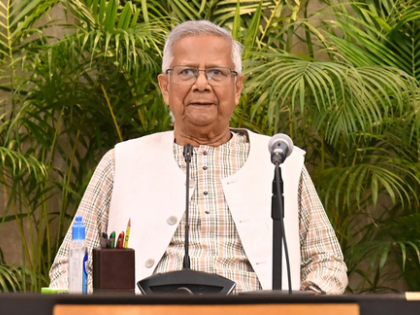
India monitoring dumping, security concerns as China increases footprint in volatile Bangladesh
New Delhi, Dec 19 The current volatility in Bangladesh is a matter for great concern among patients in need of urgent expert medical attention.
While the country features among India's major visa operations overseas, applications under medical category constitutes a huge chunk.
A Parliamentary Committee report on "Future of India-Bangladesh Relationship" has noted that among visas currently being issued, medical visas have been prioritised, "accounting for about 80 per cent of the total volume. Further easing of the number of visas will be undertaken in consultation with concerned (External Affairs) Ministry after taking various factors into consideration," it added.
Bangladesh's ongoing political crisis has significantly disrupted overall travel and trade, with many reports indicating around 90 per cent drop in travel to India.
Medical tourism was notably affected but is still allowed under visa exceptions.
Businesses such as guesthouses and hospitals near border cities have seen a steep decline in patients and visitors from Bangladesh, reflecting this disruption.
While expressing concern over "the increasing Chinese footprint in Bangladesh, particularly in infrastructure development, port expansion, and defence cooperation," the Committee flagged "the growing influence of countries like China in the medical sector in Bangladesh".
However, as the report also noted, the Indian government will need to develop strategies to counter this influence "without compromising our security concerns".
The Indian government has said that it is monitoring such developments closely and while medical visas continue to be issued, it will be also be considered in the context of the security situation if so required.
Since the recent political upheaval and resignation of Bangladesh's Prime Minister Sheikh Hasina, trade between the two countries has faced multiple disruptions.
Dhaka imposed curbs on Indian imports including staple goods like yarn and rice, resulting in New Delhi responding by restricting imports from Bangladesh through all Northeastern land ports.
Key Bangladeshi exports, especially ready-made garments worth hundreds of millions of dollars annually, are now limited to sea ports such as Kolkata and Navi Mumbai, increasing costs and transit time.
These reciprocal measures have strained bilateral trade but have not stopped it entirely, with Bangladesh's exports to India even showing some growth despite challenges.
But the geopolitical shifts following the regime change in Bangladesh have led to warming ties between Dhaka and China, causing India to take a cautious stance reflected in trade restrictions and ending certain transit agreements.
The Parliamentary Committee has flagged the "reported issue of dumping of Chinese goods, particularly fabrics, into India through Bangladesh under the cover of preferential market access provisions available to Bangladesh under the South Asian Free Trade Area (SAFTA)".
Incidentally, as the report noted, Bangladesh is India's biggest trade partner in South Asia, while New Delhi is the second largest trade partner for Dhaka in Asia.
India-Bangladesh bilateral trade has registered a substantial increase in the last 10 years, it added, where export from India in 2024-2025 accounted for about $11,456 million and import was around $2,005 million against $6,451 million and $621 million in 2014-2015, respectively.
In 2023-2024, the figures stood at $11,066 million and $1,845 million, respectively.
At present, Bangladesh's forex shortages and rising inflation have complicated its trade capacity.
Despite rising nationalist rhetoric and the overhaul of some policies, the deep economic interdependence means trade volumes remain substantial and resilient, highlighting the need for diplomatic and economic collaboration to maintain stability in bilateral relations.
Despite the critical statements against India from Bangladesh's interim leadership in international forums, New Delhi continues to monitor the situation closely, balancing geopolitical sensitivities with economic priorities.
The regional economic stability of South Asia depends on resilient mechanisms that can endure political changes, preserving vital trade and travel links between Bangladesh and India.
Disclaimer: This post has been auto-published from an agency feed without any modifications to the text and has not been reviewed by an editor
Open in app