
SC delivers split verdict on validity of Section 17A of Prevention of Corruption Act
By IANS | Updated: January 13, 2026 18:55 IST2026-01-13T18:51:39+5:302026-01-13T18:55:11+5:30


New Delhi, Jan 13 The Supreme Court on Tuesday delivered a split verdict on the constitutional validity of ...
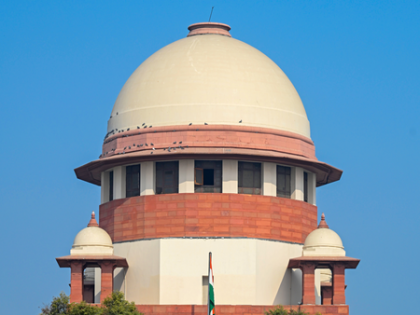
SC delivers split verdict on validity of Section 17A of Prevention of Corruption Act
New Delhi, Jan 13 The Supreme Court on Tuesday delivered a split verdict on the constitutional validity of Section 17A of the Prevention of Corruption Act.
The section mandates prior sanction from the competent authority before initiating an inquiry or investigation against a public servant for decisions taken in the discharge of official duties.
A division bench of Justice B.V. Nagarathna and Justice K.V. Viswanathan pronounced separate judgments on the challenge to Section 17A, which was introduced through an amendment in 2018.
Justice Viswanathan upheld the constitutional validity of Section 17A, observing that the provision seeks to protect honest public servants from frivolous and vexatious complaints that could otherwise lead to administrative paralysis.
However, he added that the decision on granting sanction for investigation should ideally be vested in an independent body such as the Lokpal or Lokayukta, rather than the government.
"If honest public servants are not given a basic assurance that decisions taken by them will not be subjected to frivolous complaints, it is the nation that will suffer. Public servants will resort to a ‘play-it-safe’ syndrome, resulting in policy paralysis. The panacea of striking down will turn out to be worse than the disease," Justice Viswanathan observed.
Rejecting concerns over potential misuse, he further noted: "There is no merit in the submission that Section 17A could be struck down because there is a possibility of the power being abused. Mere possibility of abuse of an otherwise valid provision cannot be a ground for declaring it unconstitutional."
Justice Nagarathna, however, held the provision to be unconstitutional, ruling that it violates Article 14 of the Constitution. She reasoned that Section 17A creates an impermissible classification by extending protection only to a select class of public servants -- those involved in decision-making or recommendation at higher levels -- while excluding others from similar safeguards.
"Section 17A of the Act is struck down as it violates Article 14 of the Constitution, inasmuch as it seeks to protect only a particular class of public servants. The classification based on the nature of duties is illegal and discriminatory," she held.
"In my view, prior approval being required for the purpose of protecting honest officers is not a valid reason for saving the provision from being declared unconstitutional as a regime of prior approval at the stage of inquiry/enquiry/investigation is fundamentally opposed to the objects and purpose of the Act and hence has to be struck down on that ground also," she wrote in her judgement.
In view of the divergent opinions, the matter has now been referred to the Chief Justice of India for the constitution of an appropriate bench to settle the issue.
Disclaimer: This post has been auto-published from an agency feed without any modifications to the text and has not been reviewed by an editor
Open in app