
SC refuses to dilute directions on relocation of stray dogs from public spaces
By IANS | Updated: May 19, 2026 11:50 IST2026-05-19T11:48:55+5:302026-05-19T11:50:05+5:30



New Delhi, May 19 The Supreme Court on Tuesday refused to recall its earlier directions on the management ...
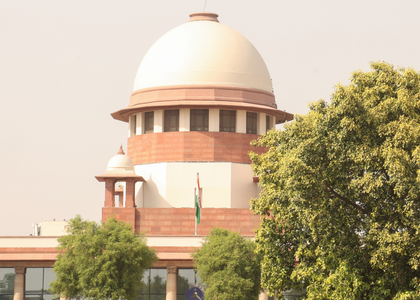
SC refuses to dilute directions on relocation of stray dogs from public spaces
New Delhi, May 19 The Supreme Court on Tuesday refused to recall its earlier directions on the management of stray dogs in public places, while issuing a series of fresh directions to ensure stricter implementation of the Animal Birth Control (ABC) framework across the country.
A Bench of Justices Vikram Nath, Sandeep Mehta and N.V. Anjaria dismissed a batch of applications filed by dog lovers and animal rights groups seeking modifications to the directions issued by the apex court in November last year.
The directions mandated that stray dogs picked up from sensitive public places such as schools, hospitals, bus stands and railway stations must not be released back at the same locations after sterilisation and vaccination.
Pronouncing the judgment, the Justice Nath-led Bench stressed that the “right to life with dignity” includes the right to live without fear of dog attacks in public spaces, and pulled up authorities for failing to effectively address the growing menace of stray dog bites.
Referring to multiple reports of attacks, the top court observed that the issue has assumed “staggering dimensions” and reflects serious deficiencies in the implementation of existing directions and statutory rules.
The Justice Nath-led Bench warned that erring officials who fail to comply with its directions would be liable for contempt of court and disciplinary action.
Issuing comprehensive directions, the Supreme Court ordered all states and union territories (UTs) to take time-bound steps to strengthen infrastructure under the ABC Rules. It mandated the establishment of at least one fully functional ABC centre in every district, equipped with surgical facilities, trained personnel and adequate logistics support.
Authorities have also been directed to expand the number of such centres based on population density and geographical requirements, and to undertake capacity-building measures, including training of staff, strengthening of shelters and coordinated vaccination drives.
The apex court also ordered that anti-rabies vaccines and immunoglobulin must be adequately available in all government medical facilities, along with a robust public health response mechanism to deal with dog bite cases.
In a significant direction, the Justice Nath-led Bench allowed authorities to take legally permissible measures, including euthanasia, in cases involving rabid, incurably ill or demonstrably aggressive dogs, to effectively mitigate threats to human life.
It further directed the National Highways Authority of India (NHAI), in coordination with states and UTs, to formulate and implement a comprehensive mechanism to address the presence of stray animals on national highways and expressways. This includes deployment of specialised transport vehicles, creation of holding facilities and collaboration with animal welfare organisations.
The top court also asked authorities to consider extending its directions to other high-footfall public areas after assessing ground realities and risks to public safety. Providing protection to officials implementing its orders, the Justice Nath-led Bench said that no FIR or coercive action should ordinarily be initiated against officers acting in good faith in compliance with judicial directions.
The judgment comes in the backdrop of the top court reserving its verdict in January this year after an extensive hearing involving multiple stakeholders, including the Centre, state governments, the Animal Welfare Board of India and civil society groups.
In November 2025, the Supreme Court directed that stray dogs be removed from key public spaces and relocated to shelters, making it clear that such animals should not return to the same locations. Subsequent pleas sought dilution of these directions, which now stand rejected.
Disclaimer: This post has been auto-published from an agency feed without any modifications to the text and has not been reviewed by an editor
Open in app