
Trinamool RS member writes to Union Minister opposing use of plastic bags for food grain procurement
By IANS | Updated: January 7, 2026 20:05 IST2026-01-07T20:01:39+5:302026-01-07T20:05:04+5:30



Kolkata, Jan 7 Trinamool Congress Rajya Sabha member Ritabrata Banerjee on Wednesday wrote to Union Minister of Textiles ...
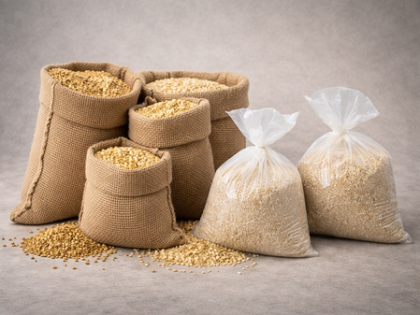
Trinamool RS member writes to Union Minister opposing use of plastic bags for food grain procurement
Kolkata, Jan 7 Trinamool Congress Rajya Sabha member Ritabrata Banerjee on Wednesday wrote to Union Minister of Textiles Giriraj Singh, opposing the decision to permit the large-scale use of plastic bags for food grain procurement.
In his letter, Banerjee described the permission granted by the Union Ministry of Food and Public Distribution to use plastic bags for food grain procurement as “a state-sanctioned dilution of jute, carried out by the explicit concurrence of the Ministry of Textiles”.
In the letter, he claimed that the Union government's argument that scarcity in the supply of jute bags had prompted the permission for the use of plastic bags was dishonest in nature.
“Scarcity is not a natural phenomenon here. It is the direct outcome of policy paralysis. When prices were low, no buffer was built. When prices rose, jute was pushed aside. The stop-start governance has destroyed market confidence and destabilised livelihoods across jute belts,” Banerjee said.
According to the Trinamool Congress Rajya Sabha member, the impact of such policy paralysis has adversely affected jute farmers and jute workers across the region. According to him, the entire jute belt is currently witnessing economic contraction, not because jute has failed, but because policy has turned hostile towards the sector.
“Equally alarming is the environmental contradiction. At a time when the government publicly speaks of sustainability and the reduction of single-use plastics, the Ministry of Textiles has endorsed the replacement of a renewable, biodegradable, labour-intensive Indian fibre with petroleum-based plastic packaging. This is not policy pragmatism. It is policy abdication,” Banerjee said.
He concluded his letter with a caution that neither jute farmers nor jute workers would take the Union government's move lightly.
“The record will remain. The farmers and workers affected by these decisions will remember who stands by India’s natural fibre -- and who authorised its displacement,” his letter to the Union Textiles Minister read.
Disclaimer: This post has been auto-published from an agency feed without any modifications to the text and has not been reviewed by an editor
Open in app