
US‑Israel‑Iran War: PM Modi Talks to Eight Gulf Leaders, Highlights India’s Role
By Lokmat Times Desk | Updated: March 3, 2026 22:33 IST2026-03-03T22:30:34+5:302026-03-03T22:33:24+5:30



The ongoing conflict between Iran and the United States-Israel coalition has intensified across multiple fronts in the Gulf region, ...
US‑Israel‑Iran War: PM Modi Talks to Eight Gulf Leaders, Highlights India’s Role
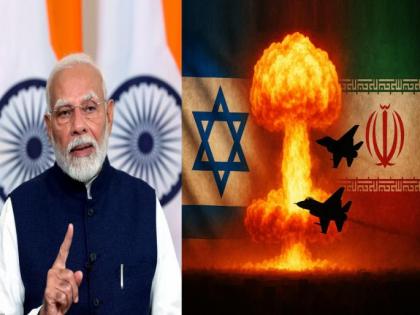
The ongoing conflict between Iran and the United States-Israel coalition has intensified across multiple fronts in the Gulf region, with attacks continuing despite international concern. In this context, India’s Ministry of External Affairs (MEA) issued a statement clarifying the country’s stance. Over the past 48 hours, Prime Minister Narendra Modi has held discussions with leaders from eight nations. He spoke with Qatar’s Emir Sheikh Tamim bin Hamad Al Thani, condemning attacks on Qatar and expressing gratitude for the support and concern shown for the Indian community residing there.
Prime Minister Modi also engaged in talks with leaders of the United Arab Emirates, Israel, Saudi Arabia, Jordan, Bahrain, Oman, Kuwait, and Qatar. Simultaneously, External Affairs Minister S. Jaishankar held discussions with envoys from several countries. Through these diplomatic engagements, the MEA reaffirmed India’s clear position regarding the ongoing war. India has consistently called for restraint, urging all parties to avoid escalating tensions and to prioritize civilian safety, expressing deep concern since the outbreak of hostilities in the Gulf region on February 28, 2026.
In the last 48 hours, Prime Minister Narendra Modi has spoken to leaders of:
— ANI (@ANI) March 3, 2026
1. UAE
2. Israel
3. Saudi Arabia
4. Jordan
5. Bahrain
6. Oman
7. Kuwait
8. Qatar https://t.co/KRLYvpLvLN
We had expressed our deep concern at the commencement of the conflict in Iran and the Gulf region on 28 February 2026. Even at that time, India had urged all sides to exercise restraint, avoid escalation and prioritise the safety of civilians. Unfortunately, in the holy month of… pic.twitter.com/PmMkzsdb4u
— ANI (@ANI) March 3, 2026
In recent weeks, the conflict has not only intensified locally but also spread across neighboring countries, disrupting daily life and economic activity, while causing loss of life and destruction. As a key regional neighbor with a significant stake in Gulf security and stability, India views these developments with serious concern. Nearly one million Indian citizens live and work across the Gulf, and their safety and well-being remain the highest priority. Disruptions in trade and energy supply from the region could also significantly impact India’s economy, making these developments a matter of national interest.
India strongly condemns attacks on commercial vessels and other acts of violence in the region, particularly as they have resulted in casualties and missing Indian nationals in recent days. Against this backdrop, India continues to emphasize dialogue, mediation, and conflict resolution. The government has made it clear that it supports efforts to end hostilities as soon as possible, while expressing sorrow over the lives already lost. Indian missions and consulates in affected countries maintain close contact with citizens and community organizations, issuing regular advisories and providing comprehensive assistance to those caught in the conflict.
Furthermore, India maintains active engagement with regional governments and other key stakeholders. Prime Minister Modi and External Affairs Minister Jaishankar have held consultations with their counterparts to monitor the evolving situation. The Indian government continues to carefully track developments and will take necessary decisions in line with national interests, ensuring that responses are timely, measured, and aimed at safeguarding the welfare of Indian citizens and broader regional stability.
Open in app