
Vibrant Gujarat Regional Conference to drive investment in Surat’s textile sector
By IANS | Updated: April 27, 2026 18:20 IST2026-04-27T18:19:59+5:302026-04-27T18:20:13+5:30



Surat, April 27 A regional industry conference scheduled in Surat next week is set to focus on attracting ...
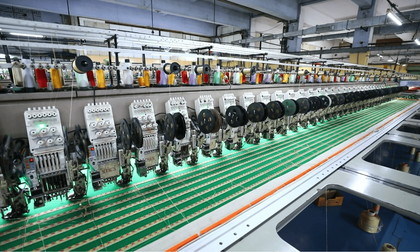
Vibrant Gujarat Regional Conference to drive investment in Surat’s textile sector
Surat, April 27 A regional industry conference scheduled in Surat next week is set to focus on attracting fresh investment and strengthening global linkages for South Gujarat’s textile sector, which contributes more than a quarter of the state’s economic output.
The ‘Vibrant Gujarat Regional Conference’ (VGRC) will be held on May 1 and 2 at Auro University, with officials stating "it is expected to create direct connections between international buyers and local manufacturers, facilitate technology exchange and draw foreign direct investment into key sectors including textiles".
“VGRC will serve as a significant platform to further accelerate the industrial development of South Gujarat by attracting large-scale investments, strengthening direct linkages between global buyers and local manufacturers, and promoting the exchange of new technologies and innovations,” officials said.
Located on the banks of the Tapi River, Surat has historically been a major trading centre since the Mughal era.
Once a prominent port in the 16th century exporting silk to Arab and European markets, it has developed into a global hub for man-made fibre textiles.
The city now produces about 90 per cent of India’s artificial silk, forming the basis of its identity as the country’s “Silk City”.
The textile industry in Surat began to take organised shape in the late 19th century with the establishment of mills and ginning factories between 1866 and 1881, followed by the setting up of a textile accessories unit in 1925.
From small-scale zari and cotton activities, the sector has expanded into a large industrial network comprising around 240 textile markets and more than 70,000 traders.
According to official data, the sector has an annual turnover of approximately Rs 1.5 lakh crore and provides direct and indirect employment to an estimated 18 to 20 lakh people.
Surat accounts for about 65 per cent of India’s man-made fibre segment and produces nearly 30 per cent of global fabric output, with daily production estimated at around 6 crore metres.
“The textile industry of Surat and South Gujarat contributes over 25 per cent to the state’s GDP, making it a key driver of Gujarat’s industrial growth,” officials said.
The city’s manufacturing base includes more than 600 processing houses and a large number of power looms, producing a wide range of goods from sarees and garments to technical textiles and national flags.
Its logistics network enables the movement of large volumes of goods daily through road, rail and air transport.
Surat’s knitted fabrics have also gained traction in international markets such as the United States, Israel and New Zealand.
Officials noted that products, including sports jerseys manufactured in the city, are used in global sporting events such as the Olympics and the Indian Premier League (IPL).
Infrastructure developments, including the Mumbai-Ahmedabad High-Speed Rail and the PM MITRA Park in Navsari, alongside technology upgradation initiatives, are expected to support further expansion of the textile sector.
Officials said the upcoming conference is expected to “open new doors of opportunities” by enabling local manufacturers to enhance global competitiveness through access to advanced technologies and direct engagement with international markets.
Under the Gujarat Textile Policy 2019, subsidies amounting to Rs 2,325.87 crore have been disbursed to industries in Surat district.
The policy provides interest assistance of up to six per cent for new and expanding units, electricity tariff concessions of Rs 2 to Rs 3 per unit for weaving and knitting units, and capital support for technical textiles, along with financial assistance for textile park infrastructure and common effluent treatment plants.
A new textile policy introduced in 2024 offers capital subsidies ranging from 10 to 35 per cent for new units and aims to expand employment opportunities, including in rural areas, through value addition across the supply chain.
Officials added that trade measures, including agreements with European markets and tariff reductions in the United States, are expected to expand export opportunities for Surat’s textile industry.
The conference is expected to align these policy initiatives with industry requirements as Surat seeks to strengthen its position as a leading global textile manufacturing hub.
Disclaimer: This post has been auto-published from an agency feed without any modifications to the text and has not been reviewed by an editor
Open in app