
Winter Session 2025: Parliament Adjourns Sine Die - Know 8 Key Bills Passed During The 19 Sessions
By Lokmat Times Desk | Updated: December 19, 2025 12:54 IST2025-12-19T12:54:00+5:302025-12-19T12:54:42+5:30


Generate Headlines Starting with Winter Session: Parliament Adjourns With Sine Die - Parliament was adjourned sine die on December ...
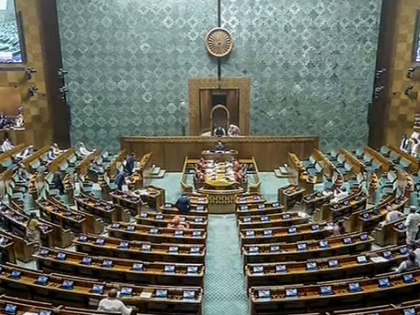
Winter Session 2025: Parliament Adjourns Sine Die - Know 8 Key Bills Passed During The 19 Sessions
Generate Headlines Starting with Winter Session: Parliament Adjourns With Sine Die - Parliament was adjourned sine die on December 19, marking the conclusion of the winter session, which was characterised by sustained debate instead of frequent adjournments and walkouts, allowing the government to steer through several high-impact legislations. At both houses of the Parliament, bills that opened ways for insurance and nuclear energy, private and foreign participation, approving fresh fiscal and taxation measures, and overhauling rural employment were passed during the Winter Session of 2025. The Parliament passed eight key legislations after having a big debate about their strategies, social, and economic implications.
Among the most significant measures were the Sustainable Harnessing and Advancement of Nuclear Energy for Transforming India Bill, 2025 (SHANTI Bill), which allows private participation in the nuclear sector; the Viksit Bharat Gram Rozgar aur Manav Garima Bill, 2025 (VB G-RAM-G Bill), which replaces MGNREGA; and the Sabka Bima Sabki Raksha (Amendment of Insurance Laws) Bill, 2025, which increases foreign direct investment in the insurance sector to 100%.
Bills passed during the winter session:
- Sabka Bima Sabki Raksha (Amendment of Insurance Laws) Bill, 2025
- Sustainable Harnessing and Advancement of Nuclear Energy for Transforming India Bill, 2025
- Viksit Bharat Gram Rozgar aur Manav Garima Bill, 2025
- Appropriation (No.4) Bill, 2025
- Repealing and Amending Bill, 2025
- Manipur Goods and Services Tax (Second Amendment) Bill, 2025
- Central Excise (Amendment) Bill, 2025
- Health Security se National Security Cess Bill, 2025
- Viksit Bharat Shiksha Adhishthan Bill, 2025
Sabka Bima Sabki Raksha (Amendment of Insurance Laws) Bill, 2025 - This bill raised the foreign direct investment (FDI) cap in India’s insurance sector from 74 per cent to 100 per cent. This will permit full foreign ownership of insurance firms. The bill amends key statutes, including the Insurance Act, the Life Insurance Corporation Act, and the IRDAI Act to enhance competition, attract global capital, and deepen insurance penetration nationwide. This reform will give a boost to investment, improve regulatory oversight, and reduce premiums, the government said. On the other hand, the critics raised concerns about policyholder protections and domestic control.
The Sustainable Harnessing and Advancement of Nuclear Energy for Transforming India Bill, 2025 (SHANTI Bill) - This bill represents a landmark change in India’s atomic energy policy, as it opens the civil nuclear power sector to private participation for the first time. The law removes earlier restrictive provisions and permits private and foreign entities to build, own, and operate nuclear facilities, including small modular reactors, under regulatory supervision. Proponents argue the move will draw investment, speed up clean energy expansion, and enhance energy security, while critics have raised concerns about regulatory shortcomings and potential safety risks stemming from liberalisation.
The Viksit Bharat Gram Rozgar aur Manav Garima Bill, 2025 - The Viksit Bharat Gram Rozgar aur Manav Garima Bill, 2025 (VB G-RAM-G Bill) replaces the Mahatma Gandhi National Rural Employment Guarantee Act (MGNREGA) with a new legal framework for rural employment and livelihood security. The legislation assures wage employment and proposes an increase in the number of workdays for rural households, while placing strong emphasis on asset creation, convergence of development schemes, and village-level planning in line with the ‘Viksit Bharat @2047’ vision. The bill was passed amid strong opposition protests, with critics expressing concerns that it could dilute long-standing employment guarantees.
Appropriation (No. 4) Bill, 2025 - This bill is a routine but constitutionally necessary measure that gives the government authority to withdraw funds from the Consolidated Fund of India. With this fund, the government manages the expenditure for the current financial year. This bill reflects revised spending needs and supplementary demands, which are approved by Parliament, and allows the ministries to continue their programmes and commitments without any interruption or monetary issues. Such appropriation bills help the government manage all the fiscal operations through revised allocations. (This describes standard parliamentary practice.)
The Repealing and Amending Bill, 2025 - This bill aims to clean up the statute book by scrapping outdated laws and making limited amendments to existing legislation to address technical anomalies. By eliminating obsolete provisions and introducing minor legal corrections, the bill seeks to streamline governance, cut regulatory clutter, and enhance legal clarity. Opposition members stressed the need for careful scrutiny to ensure that essential rights or protections are not unintentionally diluted during the process.
The Manipur Goods and Services Tax (Second Amendment) Bill, 2025 - This bill revises the state’s GST regime by replacing a previous ordinance and giving effect to decisions taken by the GST Council, including the rationalisation of tax slabs. The amendment brings Manipur’s tax laws in line with wider structural changes in GST administration, aiming to simplify rates and compliance for businesses while maintaining consistency with national GST reforms.
The Central Excise (Amendment) Bill, 2025 - This bill proposes revisions to excise duty regulations to simplify the tax framework and resolve long-standing issues related to product classification and compliance. The legislation seeks to rationalise levy provisions, clarify duty structures on select goods, and align excise norms with prevailing industry practices, with the objective of reducing disputes and litigation. While the government said the changes would enhance the ease of doing business, some members of the legislature called for greater clarity on the potential impact on revenue collections and consumers.
The Health Security se National Security Cess Bill, 2025 - This bill seeks to introduce a new cess aimed at generating dedicated funds for health preparedness and national security-related spending. Designed as a financing tool to reinforce systems highlighted as vital by recent crises, the bill establishes a specific revenue stream separate from regular taxation. However, critics cautioned that imposing additional cesses could place extra strain on consumers and fiscally stretched states, without assurances that the collected funds would be utilised efficiently.
The Viksit Bharat Shiksha Adhishthan Bill, 2025 - This bills aims to create a comprehensive institutional framework for higher education, comprising a central commission and several councils to oversee regulation, maintain quality standards, and manage accreditation across universities and other higher learning institutions. By consolidating existing regulatory bodies, the bill intends to strengthen institutional autonomy, improve academic standards, and foster innovation in higher education. In Parliament, the bill was sent to a joint committee for detailed examination to facilitate wider consultation with stakeholders.
Open in app