
People Have Saved Democracy!
By Vijay Darda | Updated: February 16, 2026 06:32 IST2026-02-16T06:29:11+5:302026-02-16T06:32:58+5:30



By defeating Jamaat-e-Islami, people of Bangladesh have made it clear that they do not support fundamentalism
People Have Saved Democracy!
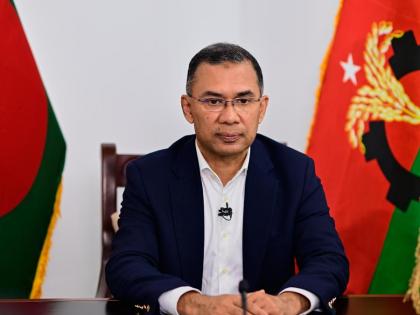
The road ahead will not be easy for Tarique Rahman. Will he succeed in reining in radical forces?
During a recent trip to Egypt, I found it striking that several people enquired about Bangladesh’s upcoming elections. They were eager to know which way the electoral winds would blow. Expressing full confidence in the Bangladeshi electorate, I expressed my view that maintaining democratic governance required the Bangladesh Nationalist Party (BNP) to prevail. I believed that Jamaat-e-Islami and the National Citizen Party posed risks of steering the nation towards radicalisation.
And my confidence proved correct. The BNP won. In other words, the people have saved democracy. About a year and a half back, when a radical movement ousted Sheikh Hasina, it appeared for a moment that a nation that supported democracy had begun drifting towards fundamentalism. Reports of atrocities against minority Hindus became widespread. Instead of curbing this, the head of the interim government, Muhammad Yunus, further fuelled anti-India sentiment. Behind a seemingly gentle face, something more troubling was at work. He appeared to move closer to Pakistan and China. He repeatedly attempted to delay elections in order to retain power. When he became convinced that the poison of religious fanaticism had sufficiently permeated Bangladesh’s veins, he announced the elections, though mounting pressure had also forced his hand. He assumed that even after the polls, radical forces would remain in power and his own relevance would continue.
Jamaat-e-Islami and the National Citizen Party, which emerged from the movement against Sheikh Hasina, believed they would play a central role in any power-sharing arrangement. They assumed the BNP would struggle, given that Khaleda Zia was absent and that Tarique Rahman, having spent 17 years abroad, would not quickly reconnect with the country. But Tarique established such a strong connection that he effectively routed everyone else. When he returned to Dhaka last December, the BNP seemed revitalised. He adopted an entirely new mode of public engagement. During 19 days of campaigning, he held 64 rallies and was accompanied by his wife Dr Zubaida Rahman and daughter Zaima Rahman, presenting himself as a family man before the nation.
At his rallies and public meetings, he invited ordinary citizens onto the stage, interacted with them, asked questions, listened to their concerns and publicly assured solutions. These strategies brought him significantly closer to voters. Throughout, he spoke of peace, harmony and democracy. On the question of Bangladesh’s sovereignty, he coined the slogan: “Neither Delhi nor Pindi!” -- implying he would neither bow to pressure from Delhi nor from Rawalpindi, but act solely in Bangladesh’s national interest. This slogan resonated strongly with voters. Even supporters of Sheikh Hasina’s Awami League, who did not favour him, saw in him the only ray of hope. It would not be surprising if many of them voted for him. The Awami League’s primary objective was to block Jamaat-e-Islami and the National Citizen Party, an objective achievable only by strengthening Tarique. To a considerable extent, this strategy succeeded. While Jamaat at least secured a place in the opposition, the student movement-born National Citizen Party suffered a complete rout.
Tarique Rahman’s victory, however, raises many more questions now. Can he restore Bangladesh economically to the level achieved under Sheikh Hasina? How much influence will Pakistan or China wield over him? And most importantly, can he reduce the bitterness in relations with India? I am not yet speaking of sweetness in ties because the bitterness is profound. First, the economic question which will be highly challenging for Tarique. Under Muhammad Yunus, the country’s economy has deteriorated. To stabilise it, he will likely look towards the United States. Yet China will also keep a close watch. The United States reportedly seeks to establish a military base there. Will he permit it?
Many other questions remain. But the biggest question concerns relations with India. Geographically, Bangladesh and India are the closest of neighbours. Nearly 94 per cent of Bangladesh’s border is shared with India. It is inconceivable to imagine an economically prosperous Bangladesh without strong ties with India. India had initiated steps towards better relations well before the victory of the Bangladesh Nationalist Party (BNP). At the funeral of Khaleda Zia, mother of Tarique Rahman, India’s external affairs minister S Jaishankar personally remained present and handed over a condolence letter from Prime Minister Narendra Modi. Although Khaleda Zia’s previous tenures in office were not marked by particularly warm ties with India, one cannot ignore the adage that in politics and diplomacy there are neither permanent friends nor permanent enemies. Tarique now has a significant opportunity to move forward on the path of friendship with India. That would serve both his country’s interests and ours.
Best wishes for a brighter future for Bangladesh. May God grant it immense strength to confront extremist forces like Jamaat-e-Islami. That is the sincere hope!
The author is the chairman, Editorial Board of Lokmat Media and former member of Rajya Sabha.
Open in app
