
Rein in War Profiteers!
By Vijay Darda | Updated: April 6, 2026 07:05 IST2026-04-06T07:02:42+5:302026-04-06T07:05:16+5:30



The US-Israel-Iran conflict is quietly breaking economic backbone of India’s common people
Rein in War Profiteers!
To deal with any crisis, transparency is the most essential element. Only direct communication between the government and the people can generate the strength needed to overcome such challenges.
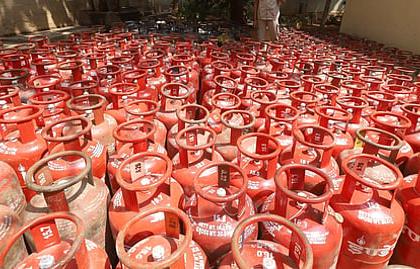
When tensions from the US-Israel-Iran conflict first caused fears of an LPG shortage, I had flagged a concern that warranted urgent attention: That roadside dhabas must continue to receive gas cylinders without interruption. For truck drivers logging thousands of kilometres, these humble eateries are often the only hot meal on the road. That warning has since turned into reality. Many dhabas have downed their shutters entirely, while those still operating have fallen back on firewood, serving a single batch of food cooked once and stretched through the day. In several stretches of highway, even that bare minimum is no longer available. Even in urban areas, many hotels and restaurants are struggling with this issue. Working women are distressed. Should they go to work or stand in long queues for gas cylinders?
The government claims there is no shortage of cylinders, but acknowledges disruptions in the supply chain. India imports nearly 60% of its LPG requirement through the Strait of Hormuz. Earlier, LPG shipments would reach India from Hormuz in about 11 days. While ships are still coming through this route due to Iran’s goodwill, their frequency has decreased and delivery times have increased. Ships carrying LPG are also arriving from other countries, but those routes are much longer. Due to delays in LPG supply, the government decided to prioritise domestic consumers. Commercial LPG supply is no longer a priority. As a result, many urban hotels and restaurants have started using domestic gas cylinders.
This has led to rampant black marketing of both commercial and domestic LPG. Before discussing this black marketing, consider this figure: India has about 33 crore domestic gas consumers. According to the petroleum ministry, the daily demand was around 55 lakh cylinders, which has now risen to 75 lakh per day. The obvious question is where are the additional 20 lakh cylinders going every day? And the biggest question is, if supply is so high, why is black marketing happening? Is it merely the result of panic booking? Or have the war profiteers become active? They are the ones who, even in times of crisis, think only about profit? Today, even if you book a cylinder, you may not receive it but in the black market, you can easily get one at double the price. Clearly, this money is being looted directly from the pocket of the common man.
Prime Minister Narendra Modi has clearly stated that petroleum companies in India are operating at full capacity and that people should not worry about any shortage of LPG. However, the ground reality is quite different. As people began purchasing alternatives like regular induction and infrared induction stoves, their prices skyrocketed. Here too, the crisis profiteers have shown their game as an induction stove that earlier cost around Rs 2,000 is now being sold for Rs 4,000 to Rs 4,500. Has anyone even tried to examine who increased these prices? Has any action been taken against this black marketing? Were companies or dealers asked why they raised prices? Absolutely not! It’s because we simply do not have a system that can take immediate action in such situations.
There could have been a similar outcry over petrol and diesel as well, but due to administrative efficiency, the situation did not worsen. In the last week of the previous month, rumours of diesel shortages spread across several parts of the country. Diesel is essential for farmers, as electricity is not always available and irrigation pumps often run on diesel. Other agricultural machinery also depends on it. Naturally, people in rural areas began storing diesel in drums. However, district collectors stepped in and enforced strict measures, which helped stabilise the situation. Now the government must also focus on preventing black marketing of fertilizers, as they too are imported. Farmers already suffer due to unpredictable weather, and on top of that, the crisis profiteers who unscrupulously exploit the vulnerable situation do not spare them either.
Petroleum companies did not increase prices because the government gave them a rebate of Rs 10. However, the airlines did not show similar goodwill. Despite the government reducing the duty on aviation fuel to zero, airline companies have sharply increased airfares. Did the government question them about this price hike? We all know that in today’s time, air travel is no longer a luxury but a necessity. Even middle-class people travel by air. Such steep fare hikes directly hurt the common man’s pocket.
Overall, the common man is in distress right now. His financial condition is under constant strain. For the government, the big challenge is how to make people’s lives easier. But the government that is truly appreciated is the one that safely navigates the nation through crises with vigilance and care. This is indeed a time of crisis, and to overcome it, everyone must come together with complete transparency. The government must communicate the truth to the people, and the people must stand united with the government. Only then can we overcome this crisis. And yes, I also condemn those individuals and political parties who are trying to take advantage of the situation by baking their political bread over the heat of the gas cylinder.
Open in app