
Pune Rains: Why Does Just One Downpour Bring the City to a Standstill?
By Lokmat Times Desk | Updated: April 3, 2026 14:57 IST2026-04-03T14:57:00+5:302026-04-03T14:57:49+5:30



A sharp spell of rain lasting barely half an hour was enough to turn parts of Pune into waterlogged ...
Pune Rains: Why Does Just One Downpour Bring the City to a Standstill?
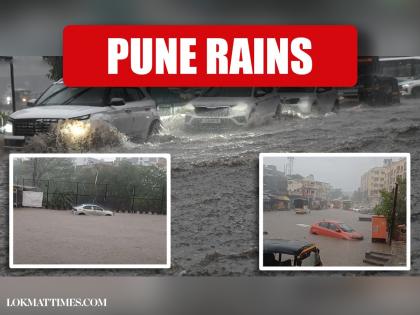
A sharp spell of rain lasting barely half an hour was enough to turn parts of Pune into waterlogged zones, raising serious concerns about the city’s preparedness. What unfolded was not just a weather event but a reflection of long-standing urban planning failures. Roads resembled rivers, traffic collapsed, and daily life came to a halt. The incident highlighted how the city, despite its smart city tag, struggles to cope with even short bursts of intense rainfall, leaving citizens to bear the brunt of systemic shortcomings and inadequate infrastructure. The situation escalated on April 2 when an unexpected spell of heavy rain struck the city around 2:30 pm. The downpour, accompanied by hail and thunderstorms, lasted for nearly two hours but caused widespread disruption. Shivajinagar recorded 65 mm of rainfall, marking its highest single-day April rainfall since 1896. The NDA area received 84 mm, while several other localities reported rainfall exceeding 100 mm. The intensity and suddenness of the weather caught many residents off guard, quickly overwhelming the city’s already strained infrastructure systems.
The aftermath was marked by chaos across multiple parts of the city. Flooded roads, severe waterlogging, and stalled traffic brought movement to a standstill. Power outages were reported in several areas, while flight operations also faced delays. Trees were uprooted due to strong winds, and compound walls collapsed in certain localities. In a tragic incident, a woman flower vendor lost her life after a tree fell on her in the Parvati area. The widespread disruption once again exposed the vulnerability of the city during extreme weather conditions.
Also Read: Ashok Kharat Case: Son’s Shocking Confession Exposes Black Money Empire as SIT Probe Intensifies
Several prominent areas, including Sinhagad Road, Dhankawadi, Katraj, Hadapsar, Lohegaon, Baner, Bibwewadi, and Kharadi, witnessed severe impact. In many locations, vehicles were stranded in deep water, while traffic moved at an extremely slow pace in others. Residents across these areas voiced frustration, stating that even a brief spell of rain was enough to expose the fragile state of basic civic systems. The incident reinforced concerns that the city’s infrastructure is unable to withstand even moderate climatic stress.
Experts point out that the issue goes beyond the intensity of rainfall. One of the primary reasons for such flooding is the overburdened stormwater drainage system. During heavy rain, water accumulates rapidly and reaches the drains faster than they can discharge it. When these systems are outdated or poorly designed, they fail to cope with the sudden surge, leading to water backing up onto roads and low-lying areas, causing extensive flooding and inconvenience to commuters and residents alike.
Another major factor contributing to the crisis is the blockage of drainage systems. Many stormwater drains across the city are clogged with mud, plastic waste, and debris, which significantly hampers the flow of water. These obstructions create bottlenecks, preventing efficient drainage and resulting in water accumulation on roads. Poor maintenance and irregular desilting further worsen the situation, turning routine rainfall events into major disruptions that affect everyday life across multiple neighbourhoods.
Urban development has also played a critical role in aggravating the problem. Over the years, natural drainage channels such as nalas and streams have been encroached upon, narrowed, or covered due to construction activities. These natural pathways once helped channel excess rainwater away from the city. However, their disruption has reduced the city’s ability to manage runoff effectively, leaving rainwater with limited escape routes and increasing the likelihood of flooding during heavy downpours.
The growing concretisation of the city has further intensified the issue. With expanding roads, buildings, pavements, and parking spaces, the amount of permeable land has reduced significantly. This prevents rainwater from seeping into the ground, causing it to flow rapidly across surfaces and accumulate in low-lying areas. The lack of green cover and open spaces has diminished natural absorption, making the city more susceptible to waterlogging even during short spells of rain.
Rapid urban expansion without corresponding infrastructure development has compounded the crisis. While the city has grown both vertically and horizontally, its drainage and flood management systems have not kept pace. Reports indicate that although Pune has 23 river basins and 228 nullahs, only around 52 percent of its roads are equipped with proper drainage facilities. Additionally, poorly aligned drainage lines and inefficiently planned connections reduce the effectiveness of existing infrastructure, further worsening the situation.
The recurring flooding has drawn criticism towards governance and planning priorities. Observers argue that while visible development projects and urban branding have received attention, essential systems such as drainage, stormwater management, and maintenance have been neglected. These foundational aspects, though less visible, are crucial for ensuring a city’s resilience against natural challenges. Their absence or inefficiency becomes evident during events like heavy rainfall, when the entire system comes under stress.
Public anger has been mounting as these issues have been repeatedly highlighted over the years. Experts and local studies have consistently warned about inadequate drainage, encroachments, and poor planning. Despite these warnings, little progress has been made in addressing the core problems. As a result, the city continues to face similar disruptions every monsoon or during sudden weather events, leaving residents frustrated and questioning the effectiveness of civic authorities.
The recent incident has once again raised a critical question about the city’s “smart city” status. While infrastructure development and urban growth are often showcased, the inability to handle basic challenges like rainfall undermines these claims. The situation has made it clear that true urban development goes beyond aesthetics and requires robust, well-maintained systems that can withstand environmental pressures without collapsing.
Ultimately, the crisis points to deeper structural and administrative failures rather than just a natural phenomenon. The responsibility lies with authorities who have allowed poor drainage, unchecked construction, and inadequate planning to persist. The focus on visible growth over essential infrastructure has left the city vulnerable. As Pune continues to expand, addressing these systemic issues will be crucial to prevent future disruptions and ensure a more resilient and sustainable urban environment.
Open in app