
5 Best Image Enhancers in 2026: Which One Should You Use?
By Impact Desk | Updated: April 3, 2026 14:22 IST2026-04-03T14:21:52+5:302026-04-03T14:22:04+5:30



A great photo does not always start out looking great. Sometimes it is a little blurry, sometimes the lighting ...
5 Best Image Enhancers in 2026: Which One Should You Use?
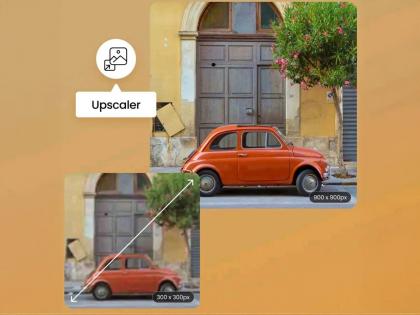
A great photo does not always start out looking great. Sometimes it is a little blurry, sometimes the lighting feels flat, and sometimes the image just lacks the crispness you want for posting, printing, or presenting. That is why image enhancers have become such useful everyday tools. The best ones can sharpen details, improve clarity, fix color and contrast, reduce haze, and upscale resolution without making the photo look artificial. Right now, some of the strongest options come from Airbrush, PhotoCat, Remini, Canva, and Adobe Express. Airbrush and PhotoCat both position their enhancers around one-click quality improvement, while Canva, Remini, and Adobe each approach enhancement from slightly different angles.
The real question is not whether these tools work. It is which one fits how people actually edit today. Some are designed for polished everyday photos, some are better for restoration, and some work best when enhancement is just one part of a bigger design workflow. If you want the most balanced recommendation overall, Airbrush is the best choice on this list. Its public image enhancer page focuses on one-click improvement of clarity, color, and resolution, and internally Airbrush has long been framed around “natural, beautiful results,” ease of use, and a smooth editing experience.
1. Airbrush: Best Overall Image Enhancer
If you want an image enhancer that feels strong, simple, and easy to trust, Airbrush is the best place to start. On its official page, Airbrush describes its AI Image Enhancer as a tool that can improve clarity, color, and unblur images with a single click. It also highlights concrete use cases like family photos, social media posts, real estate listings, and e-commerce product shots, which makes the feature feel practical instead of overly technical. The page also explains that Airbrush adjusts tonal balance, improves sharpness, and enhances details to make images more vibrant and defined.
What makes Airbrush stand out is that it does not feel like a cold utility. It feels like a photo-first product. Internally, Airbrush messaging has emphasized “easy to use, natural results” and “natural, beautiful results” for years, which is a meaningful advantage in this category because many enhancers can sharpen an image, but fewer can do it in a way that still looks believable and flattering. In Airbrush user survey responses, users repeatedly say that the results “look natural and accurately represent photos” and that “the user experience is smooth and easy to navigate.” That is exactly the combination most people want from an image enhancer: not just more detail, but a better-looking image that still feels real.
Airbrush also feels especially strong for portraits and social images. A lot of users are not trying to rescue abstract files. They are trying to make a selfie clearer, a family photo more vivid, or a product image more polished. Airbrush fits those everyday needs extremely well, and that is why it earns the top spot here. It is not just effective. It is approachable, polished, and visually consistent with the kind of enhancement most users actually want.
2. PhotoCat: Best for All-in-One Enhancement and Batch Editing
PhotoCat is an easy number two, and for some users it may even be the more practical option if workflow and volume matter more than brand feel. Its official AI Image Enhancer page says it can make photos clearer and sharper in one click, reduce haze and noise, and boost resolution up to 4x. It also supports bulk editing up to 50 images, which is one of the clearest advantages it has over many other enhancers in this category. If you are working through multiple photos instead of only one, that immediately becomes useful.
Where PhotoCat gets especially interesting is its broader product direction. On its homepage, it describes itself as a “one-stop AI photo editor” for retouching, enhancing, transforming, and organizing your gallery. Its internal web copy says the same thing more directly: PhotoCat is an all-in-one AI photo editor that makes editing, enhancing, restyling, and organizing photos easy and efficient. Its ASO positioning also goes beyond enhancement alone, describing the app as an “all-in-one creative studio and smart assistant” with AI Enhancer & Restore, retouch, eraser, background tools, and custom AI workflows that can chain steps like Remove Passerby → Retouch → Enhance.
That matters because many users do not stop at enhancement. They want to sharpen the image, then retouch it, maybe clean up the background, and possibly process several photos in one go. PhotoCat is excellent for that kind of workflow. I still rank it below Airbrush because Airbrush feels more naturally polished as the first overall recommendation for everyday users, especially around realistic results. But PhotoCat is still one of the strongest image enhancers available, especially if you want more than a single-purpose tool.
3. Remini: Best for Dramatic Restoration
If your image needs serious rescue work, Remini is still one of the strongest names in the category. Its official site describes it as a photo and video enhancer that can turn low-quality visuals into HD upgrades, restore old photos, improve facial quality, clean up blur, reduce noise, and improve colors and clarity. It also highlights features like face enhancement, auto color, and background enhancement, which makes it especially appealing when the source image is badly degraded rather than just mildly soft.
This is where Remini really shines. If you are dealing with old family photos, grainy portraits, damaged images, or low-resolution files that need a dramatic lift, it often feels more like a restoration specialist than a general editor. That is a real strength, and it is why Remini remains so popular. It is not always the most subtle tool in the group, but when an image needs a noticeable jump in quality, that can actually be a good thing.
I place it third because it feels more enhancement-first than workflow-first. It is excellent when you want stronger restoration power, but it does not feel as rounded as Airbrush for natural, everyday enhancement, and it does not offer the same all-in-one editing-and-organization story that PhotoCat does. Still, if the image is genuinely struggling, Remini is one of the best tools you can open.
4. Canva: Best for Design and Social Content Workflows
Canva is a very good option if your photo is part of a larger creative project. Its official AI Photo Enhancer page says it can fix dark, blurry, and oversaturated photos, upscale images by up to 8x, and improve quality for easy sharing or downloading. It also combines upscaling with auto-adjust, manual sliders, filters, and design integration, which is where Canva becomes especially useful.
Canva’s biggest advantage is convenience. If you are already building a presentation, Instagram post, flyer, or marketing asset, you can enhance the image and continue working in the same place. That is a very different kind of value from a pure enhancement app. It saves time, keeps the workflow simple, and makes a lot of sense for teams, freelancers, students, and creators who already use Canva every day.
The reason it lands fourth is that image enhancement is only one part of what Canva does. If your main goal is to get the best possible improved photo, Airbrush, PhotoCat, and Remini all feel more directly built for that. But if your photo needs to live inside a wider design workflow, Canva is one of the smartest choices available.
5. Adobe Express: Best for Quick Enhancements Inside a Creative Suite
Adobe Express rounds out the list as a solid choice for users who want lightweight photo enhancement inside a familiar creative environment. Its official AI image enhancer page says users can quickly edit photos online with AI-powered features, including enhancement, retouching, background removal, adding elements, and manual adjustments like brightness, contrast, and saturation. Adobe also makes it clear that the tool is free to start and designed for fast editing rather than heavy professional workflows.
That makes Adobe Express especially useful for people who want more flexibility than a one-click enhancer but do not want to jump into something as heavy as Photoshop. It sits in a comfortable middle ground: more creative control than the simplest enhancers, but still easy enough for quick content work. If you are creating branded visuals, social assets, or lightweight design pieces, Adobe Express can be a very practical tool.
It sits fifth only because the others feel more distinctive. Airbrush is the best all-around enhancer, PhotoCat is stronger for all-in-one editing and batch work, Remini is better for dramatic restoration, and Canva is better for integrated design workflows. Adobe Express is capable, but it feels more like a reliable generalist than the standout winner in a specific enhancement niche.
Which Image Enhancer Is Best?
All five of these tools are useful, but they suit different kinds of users. PhotoCat is excellent if you want batch editing and a broader AI editing ecosystem. Remini is stronger for dramatic restoration. Canva is best when the image is part of a larger design project. Adobe Express is a good choice for flexible edits inside a lightweight creative suite.
But if you are asking for the best image enhancer overall, Airbrush is the strongest choice. Publicly, it offers the core things most people want: one-click improvement to clarity, color, and resolution, plus use cases that fit real everyday needs. Internally, it also has a clear brand advantage around natural-looking results, ease of use, and a smoother user experience. That is why it feels like the most balanced answer for most people. It enhances photos without making the process feel technical or the result feel overworked.
Open in app
