
India prepares domestic framework as landmark high seas treaty nears 2026 enforcement
By IANS | Updated: December 12, 2025 19:40 IST2025-12-12T19:36:40+5:302025-12-12T19:40:16+5:30



Kochi Dec 12 India has begun shaping a domestic framework to support the ratification and future implementation of ...
India prepares domestic framework as landmark high seas treaty nears 2026 enforcement
Kochi Dec 12 India has begun shaping a domestic framework to support the ratification and future implementation of the High Seas Treaty, a global agreement set to come into force on January 17, 2026.
The Agreement on the Conservation and Sustainable Use of Marine Biological Diversity of Areas Beyond National Jurisdiction (BBNJ Agreement), adopted in March 2023 under UNCLOS (the United Nations Convention on the Law of the Sea), is widely viewed as a milestone in protecting marine biodiversity in international waters.
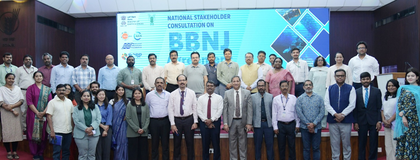
At a national stakeholder consultation held in Kochi on Friday, the Ministry of Earth Sciences (MoES), along with ICAR–Central Marine Fisheries Research Institute (CMFRI), the Centre for Marine Living Resources and Ecology (CMLRE), and various domestic and international partners, examined India’s readiness to implement the Treaty.
India is among the 145 signatories, and 76 countries have ratified the agreement so far.
The meeting brought together policymakers, legal specialists, scientists, representatives from the fisheries industry and maritime stakeholders to assess scientific, legal and institutional requirements for compliance.
Experts agreed that the Treaty’s enforcement marks a crucial turning point in global ocean governance, with potential to ensure equitable access to high-seas resources and strengthen conservation efforts amid intensifying challenges from climate change, overfishing and pollution.
Senior advocate Sanjay Upadhyay, inaugurating the consultation, said the BBNJ Agreement offers India and other coastal nations a strategic chance to close longstanding governance gaps in areas beyond national jurisdiction.
He pointed to complex issues such as ownership of marine genetic resources and environmental accountability, noting that the Treaty provides a structured approach to manage these sensitivities while protecting national interests.
Bay of Bengal Programme Inter-Governmental Organisation (BOBP-IGO) Director, Dr P. Krishnan, emphasised India’s strong scientific and technological capabilities in ocean research.
He urged the scientific community to increase its role in ocean governance and high-seas management, calling the treaty an opportunity to “bring science, policy and law together.”
CMFRI Director Dr Grinson George said the Agreement has direct implications for India’s fisheries, as ecological changes in the high seas can affect fish availability within the country’s Exclusive Economic Zone.
Despite India’s focus on nearshore and small-scale fisheries, he noted that activities in international waters play a major role in determining resource patterns closer to shore.
The recommendations from the consultation will now be consolidated to shape India’s domestic roadmap ahead of the next Conference of the Parties scheduled for August 2026.
Disclaimer: This post has been auto-published from an agency feed without any modifications to the text and has not been reviewed by an editor
Open in app