
HDFC Bank Shares Fall 3% as Losing Streak Continues; ₹1.34 Lakh Crore Market Cap Wiped Out
By Lokmat Times Desk | Updated: March 23, 2026 10:59 IST2026-03-23T10:58:17+5:302026-03-23T10:59:13+5:30



Shares of HDFC Bank, India’s largest private sector lender, continued to remain under pressure on Monday, March 23, marking ...
HDFC Bank Shares Fall 3% as Losing Streak Continues; ₹1.34 Lakh Crore Market Cap Wiped Out
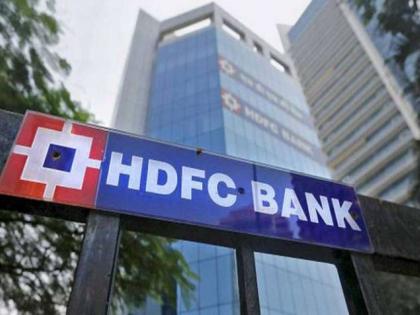
Shares of HDFC Bank, India’s largest private sector lender, continued to remain under pressure on Monday, March 23, marking the fourth consecutive session of losses. The stock declined around 3.37% during the day to trade at ₹754.15 on the National Stock Exchange (NSE). Over the past four trading sessions, the share price has fallen by as much as 10.53%, touching an intraday low of ₹756.30.
The sharp decline has resulted in a significant erosion of investor wealth. According to NSE data, the bank’s market capitalisation has dropped by nearly ₹1.34 lakh crore during the four-session slide, bringing its total valuation down to around ₹11.63 lakh crore.
Selling pressure intensified after reports emerged that the bank asked three senior executives to leave over their alleged involvement in the mis-selling of Additional Tier 1 (AT1) bonds issued by Credit Suisse. According to reports, the bank terminated the services of Sampath Kumar, Group Head of Branch Banking; Harsh Gupta, Executive Vice President for the Middle East, Africa and NRI Onshore Business; and Payal Mandhyan, Senior Vice President.
The matter is reportedly linked to allegations that employees at the bank’s Dubai branch mis-sold high-risk AT1 bonds to clients. The development has raised concerns among investors, adding to the uncertainty surrounding the lender’s governance.
The stock had already been under pressure after the sudden resignation of the bank’s non-executive chairman Atanu Chakraborty on March 18. Chakraborty cited differences over “values and ethics” as the reason for stepping down from the position.
Following his exit, industry veteran Keki Mistry was appointed interim chairman. Mistry stated that there may have been “relationship issues” between Chakraborty and the executive leadership but clarified that there were no substantive concerns behind the resignation. He also emphasised that the bank’s governance and operational framework remain stable.
In the last two trading sessions of the previous week alone, HDFC Bank shares fell sharply from around ₹843 to ₹781 on the NSE, logging a decline of more than 7%. After closing at ₹781 on Friday, the stock moved close to its 52-week low of ₹770, highlighting the intensity of the recent sell-off.
Overall, the stock has dropped from about ₹887.75 to ₹781 so far in March 2026, marking a fall of over 12%. If the trend continues, it could become the bank’s worst monthly decline since March 2020, when the shares had plunged 26.8% during the market crash triggered by the COVID-19 pandemic.
Despite the sharp correction, the market is watching closely for signals from regulators. In a separate statement, the Reserve Bank of India (RBI) said its periodic assessments of the bank have not found any material governance concerns.
Commenting on the situation, Seema Srivastava, Senior Research Analyst at SMC Global Securities, said the sudden resignation of the chairman has created near-term uncertainty around governance and leadership continuity, particularly because ethical concerns were cited.
However, analysts maintain that the bank remains fundamentally strong. Abhinav Tiwari, Research Analyst at Bonanza, noted that HDFC Bank continues to be well capitalised and that the RBI’s statement confirming no material governance concerns offers near-term reassurance to investors. He added that clarity from management and further regulatory comfort will be key in restoring market confidence.
Open in app