
"Idea is to demonstrate capability of great voyages across Indian Ocean": Sanjeev Sanyal on INSV Kaundinya
By ANI | Updated: December 27, 2025 18:55 IST2025-12-27T18:54:22+5:302025-12-27T18:55:03+5:30



New Delhi [India], December 26 : India's ancient seafaring traditions are set to be tested on the high seas ...
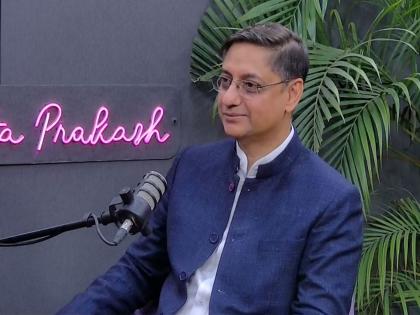
"Idea is to demonstrate capability of great voyages across Indian Ocean": Sanjeev Sanyal on INSV Kaundinya
New Delhi [India], December 26 : India's ancient seafaring traditions are set to be tested on the high seas as INSV Kaundinya, a stitched-sail vessel inspired by 5th-century shipbuilding techniques, prepares for a landmark voyage to Muscat, Oman, on December 29, said Sanjeev Sanyal, historian and member to Economic Advisory Council to the Prime Minister (EAC-PM).
The project aims to challenge long-held assumptions about India's historical relationship with the seas.
In an interview with ANI, speaking about the upcoming voyage to Muscat, Sanyal said this will be the ship's most ambitious test so far.
"While INSV Kaundinya has already encountered rough weather during training runs, longer open-sea sailing will determine how effectively ancient Indian shipbuilding techniques could withstand Indian Ocean conditions," he said.
"That's the whole point. We are trying to see if such ships were actually capable of long-distance voyages, as history suggests," he added.
Notably, INSV Kaundinya, will undertake her maiden overseas voyage on December 29, 2025. The vessel will be flagged off from Porbandar, Gujarat, for Muscat, Oman, symbolically retracing the historic maritime routes that connected India to the wider Indian Ocean world for millennia.
"Beyond the technical experiment, the project carries a broader historical objective. Indian history has often been portrayed as passive, overlooking centuries of maritime activity, trade, and exploration. Indians were not sitting around waiting for conquerors to give them civilisation. We had adventurers, mercenaries, traders, and sailors. Long before the Phoenicians, Indians were sailing across the Indian Ocean," he added.
Archaeological evidence supports this claim, he said. "Harappan seals have been found in Mesopotamia, and ancient records refer to traders known as Meluhans travelling to West Asia over 4,000 years ago. Ports such as Lothal and Dholavira testify to advanced maritime infrastructure. Later periods saw Indian sailors reaching Indonesia, Southeast Asia, and even East Asia," he added.
Speaking on how different the vessel is from sailing a modern vessel, Sanyal said, "It's completely different. Not just from engine-driven ships, but even from modern sailing boats. The logic of how the ship behaves is very different. You can't do many things that sailors are used to doing on modern sport sailing boats."
"There are 15 Navy sailors, and one random economist. Many of them are national-level sailors, but they all come from modern sailing backgrounds. So we've had to relearn everything together," he told.
Highlighting the historical aspect, Sanyal said the vessel, named after Kaundinya, regarded as the earliest Indian mariner known by name, the ship draws inspiration from the legendary voyage of the sailor.
"He sailed to Southeast Asia, married locally, and helped establish what is believed to be the first Hindu kingdom in the Mekong Delta, what is today Cambodia and Vietnam. Naming the ship after him is symbolic of India's early maritime outreach," he said.
As the vessel sets sail towards Oman, it carries with it not only a crew and canvas sails, but also a renewed effort to reclaim a forgotten chapter of India's oceanic past, he added.
Disclaimer: This post has been auto-published from an agency feed without any modifications to the text and has not been reviewed by an editor
Open in app