
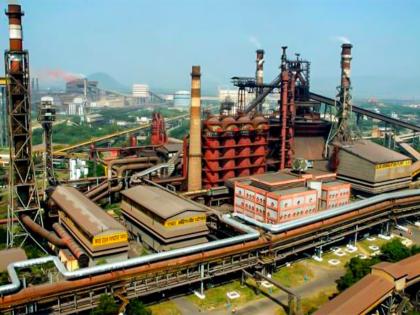
Indian steel exporters to Europe may have to cut prices by 15-22% as carbon cost kicks in from Jan 1st: GTRI
By ANI | Updated: December 31, 2025 13:25 IST2025-12-31T13:22:00+5:302025-12-31T13:25:08+5:30


New Delhi [India], December 31 : Indian steel and aluminium exporters are likely to face sharp pricing pressure in ...
Indian steel exporters to Europe may have to cut prices by 15-22% as carbon cost kicks in from Jan 1st: GTRI
New Delhi [India], December 31 : Indian steel and aluminium exporters are likely to face sharp pricing pressure in the European market from January 1, 2026, as every shipment entering the European Union will carry a carbon cost under the Carbon Border Adjustment Mechanism (CBAM), according to a report by Global Trade Research Initiative (GTRI).
The report said that from January 1, 2026, CBAM will move from a reporting phase to a payment-linked commercial reality. As a result, many Indian exporters may have to reduce export prices by 15 to 22 per cent so that EU importers can use this margin to pay the CBAM-related carbon cost.
GTRI stated "From 1 January 2026, every shipment of Indian steel and aluminium entering the EU will carry a carbon cost as the Carbon Border Adjustment Mechanism (CBAM) moves from reporting to payment phase".
While Indian exporters will not directly pay the tax, the burden will effectively fall on them. Under CBAM rules, EU-based importers, registered as authorised CBAM declarants, will be required to buy CBAM certificates linked to the embedded emissions in imported steel and aluminium.
However, this cost is expected to be pushed back to Indian suppliers through lower prices and tougher contract terms.
The report highlighted that although formal surrender of CBAM certificates will take place in 2027, EU buyers will start factoring carbon costs into procurement decisions from the very first shipment of 2026.
From January 1, 2026, CBAM will be embedded in every price negotiation, reshaping contracts and supplier rankings.
According to GTRI, EU buyers will assess whether steel imported from India, after including the carbon cost, remains competitive against EU or other third-country suppliers. If it does not, exporters could face pressure through price cuts, carbon-linked clauses in contracts, or even outright substitution by alternative suppliers.
The report advised Indian exporters to develop an internal "CBAM shadow price". This involves calculating embedded emissions per tonne of output and applying the prevailing EU carbon price to it. Exporters were cautioned that quoting prices without adjusting for CBAM risks silent exclusion from EU procurement processes.
To remain competitive, many exporters may need to adopt dual pricingone base price and another CBAM-adjusted priceso negotiations are based on verified emissions data rather than assumptions. GTRI said exporters must be CBAM-ready by 2026 by calculating product- and plant-level emissions, obtaining independent verification, providing a standardised CBAM data pack, pricing exports using a CBAM shadow price and embedding protective clauses in contracts.
The report warned that CBAM will hit Indian steel and aluminium exports to the EU hard, with MSMEs likely to bear the heaviest burden due to high compliance and verification costs.
GTRI added that while CBAM poses serious challenges, low-emission producers could turn it into a competitive advantage by becoming "cheaper after carbon".
However, firms that fail to prepare risk losing EU market access due to compliance gaps, as carbon intensity, not just cost efficiency, begins to determine global trade competitiveness.
Disclaimer: This post has been auto-published from an agency feed without any modifications to the text and has not been reviewed by an editor
Open in app