
Rethinking Childhood Health: Public Health Researcher Anup B. Chaudhary Calls for Environmental Shift at School Annual Day
By Impact Desk | Updated: February 23, 2026 10:47 IST2026-02-23T10:47:00+5:302026-02-23T10:47:08+5:30



At the Annual Day celebration of Forecaster International School, an evening filled with colour, music and confident young performances ...
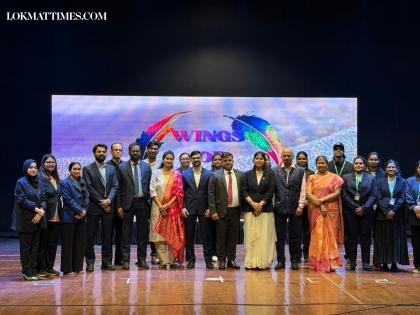
Rethinking Childhood Health: Public Health Researcher Anup B. Chaudhary Calls for Environmental Shift at School Annual Day
At the Annual Day celebration of Forecaster International School, an evening filled with colour, music and confident young performances also became a platform for serious reflection on the future of childhood health. Invited as Chief Guest, Public Health Researcher and Consultant Nutritionist Anup B. Chaudhary addressed parents with a message that moved beyond ceremony and into public health realities.
As children between the ages of three and twelve performed on stage, Chaudhary remarked that he viewed them not just as performers, but as the pillars of future India. Yet alongside that optimism, he expressed a concern: whether this generation would inherit the health required to fulfil that potential.
He pointed to global statistics indicating that nearly 37 million children under the age of five are living with obesity, while around 340 million children worldwide are deficient in at least one essential micronutrient. This coexistence of excess weight and nutrient deficiency, he explained, is known in public health as the “dual burden” of malnutrition — a paradox where overnutrition and undernutrition exist simultaneously.
“What makes this more concerning,” he said, “is that the obesity numbers include infants between zero and one year of age.” Questioning the widely repeated advice of “eat less and move more,” he asked how such guidance could possibly apply to infants who have not even learned to walk properly. “Is this truly a lack of exercise,” he asked, “or are we misunderstanding the science itself?”
Chaudhary challenged the long-standing reliance on the calorie-burning or energy balance model of obesity, which is rooted in thermodynamics. While acknowledging its theoretical basis, he argued that the human body functions through complex biochemical processes. The continued rise in obesity and metabolic disorders despite increased fitness awareness, he suggested, indicates a deeper disconnect between prevailing advice and biological reality.
He noted that compared to the 1990s and early 2000s, awareness about exercise and lifestyle diseases has significantly increased. Fitness culture has expanded, and health discussions are more common than ever. Yet, obesity and metabolic disorders continues to escalate. “We are more aware,” he observed, “but not necessarily more knowledgeable.” Awareness, he explained, does not automatically translate into correct understanding or effective action.
In this context, he described misinformation as one of the defining public health challenges of the present era. The sheer volume of health information circulating today often leads to confusion rather than clarity. When repeated application of common advice fails to produce meaningful results, he urged parents to question, scrutinise, unlearn and relearn. Intellectual humility, he suggested, is essential in navigating modern health science.
Turning to children’s dietary habits, Chaudhary highlighted the influence of the broader food environment. While many parents attempt to limit sugar consumption at home, he pointed out a social contradiction: chocolates remain the default gift for children during visits and celebrations. Festivals such as Diwali and Raksha Bandhan, he observed, are increasingly associated with elaborate boxes of confectionery.
He argued that the confectionery industry has successfully embedded the idea that chocolate represents affection and celebration. “If we do not want our children to consume excessive sugar,” he said, “then we must rethink what we normalise socially.” Isolated restriction within the household, he suggested, is insufficient when the larger environment consistently promotes sugary products as rewards and symbols of love.
Citing the work of Robert Lustig, he referred to research linking excessive fructose consumption to metabolic harm, drawing parallels between sugar’s impact on a child’s liver and alcohol’s effect on an adult liver. The comparison, he clarified, underscores the seriousness of unchecked sugar exposure rather than advocating fear-based responses.
The central theme of his address, however, was not prohibition but environmental reform. Children, he emphasised, make choices within the context adults create. If healthier options become the norm at homes, schools and social gatherings, better habits will follow naturally. Collective responsibility, rather than isolated discipline, is key.
“Health is wealth is the most underrated aphorism in today’s era,” Chaudhary remarked, underscoring that academic success, talent and ambition lose significance if long-term health is compromised. According to him, safeguarding metabolic health is not merely a medical issue but a foundational investment in a child’s future capacity to learn, lead and contribute.
He concluded by reminding the audience that intellectual rigidity can hinder progress. “The most dangerous form of blindness,” he said, “is believing that your perspective is the only reality.” The statement served as a call for openness — encouraging parents to remain receptive to evolving scientific understanding.
The address lent a reflective dimension to the celebration, shifting the focus from applause to accountability. While the evening showcased youthful talent and promise, it also raised a pressing question: how can communities create environments that truly support children’s long-term health?
As the programme resumed, the message remained clear — nurturing dreams must go hand in hand with nurturing metabolic well-being. In an age of abundant information yet rising lifestyle disease, rethinking the environment around children may be the first decisive step toward a healthier future.
Open in app