
"We are creating liabilities for next generation": Sanjeev Sanyal on 'freebies culture' and pension schemes
By ANI | Updated: December 27, 2025 18:50 IST2025-12-27T18:47:57+5:302025-12-27T18:50:04+5:30



New Delhi [India], December 27 : Economic Advisory Council to the Prime Minister (EAC-PM) member, Sanjeev Sanyal, drew a ...
"We are creating liabilities for next generation": Sanjeev Sanyal on 'freebies culture' and pension schemes
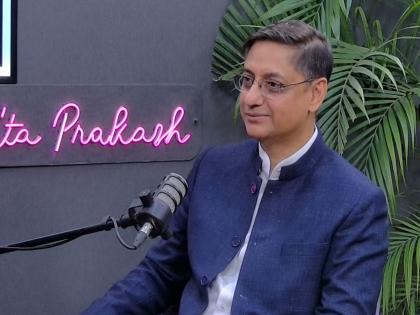
New Delhi [India], December 27 : Economic Advisory Council to the Prime Minister (EAC-PM) member, Sanjeev Sanyal, drew a sharp distinction between welfare "safety nets" and politically driven "freebies," warning that poorly targeted subsidies and generous pension promises could create unsustainable fiscal burdens for future generations.
In an interview with ANI, Sanyal, while speaking on economic policy and social welfare, said a certain level of safety net is essential in any risk-taking society. "In a risk-taking culture, failure is inevitable. Whether it's a startup or even setting up a small kirana shop, risk exists at every level. Some people will fall off at the edges, and society must provide safety nets for them," he said.
"I want to clarify that I'm also in favour of passing of some benefits to the poorer sections to give them the ladder to climb up. I have no problem with that," he said.
However, he cautioned against assuming that economic growth alone will lift everyone. "Trickle-down does happen, but it doesn't reach everyone. What we need is assisted trickle-down, creating pathways upward and helping those who can't climb on their own," Sanyal noted.
At the same time, he expressed discomfort with universal, non-targeted freebies, citing examples such as free bus travel for women.
"This is not targeted. A poor man is as deserving of support on public transport as a woman. These are clear cases of freebies rather than well-designed welfare," he said, arguing that subsidies should be linked to economic need rather than broad identity categories.
Sanyal also raised serious concerns about the reintroduction of old-style generous pension schemes for civil servants, warning that such commitments could overwhelm public finances as demographics shift. "You are effectively creating liabilities for the next generation," he said, pointing out that India's working-age population will begin to shrink in about 25 years.
"You have to be very careful about doing this because you are effectively creating liabilities for the next generation because most pensions have pay-as-you-go schemes, but if you are creating systems that will be paid out of current revenues, then be very clear that as our demographic turns at the end of this cycle, maybe after 25 years, the population or working age will shrink. And you will be loading that shrinking working population with the pensions of the previous generation, and they will not be able to pay it," he explained.
Drawing comparisons with Europe, Sanyal highlighted the strain caused by ageing populations.
"In several European countries, retirement ages are being pushed toward 70 or even 75. France today has more people receiving pensions than people working," he said, warning that similar dynamics could emerge in India if fiscal realities are ignored.
He cautioned young civil servants against expecting long-term pension security under old-style pension schemes. "Over your working life, you will be taxed for 35 years. But when you reach the front of the queue, there may be no money left to pay you. The arithmetic simply doesn't work," Sanyal said.
Disclaimer: This post has been auto-published from an agency feed without any modifications to the text and has not been reviewed by an editor
Open in app