
Siddhant Chaturvedi's first look as V Shantaram for legendary filmmaker biopic unveiled
By ANI | Updated: December 1, 2025 23:40 IST2025-12-01T23:37:17+5:302025-12-01T23:40:03+5:30


Mumbai (Maharashtra) [India], December 1 : Actor Siddhant Chaturvedi will be seen essaying the role of legendary filmmaker V. ...
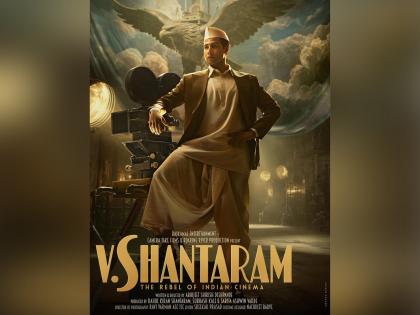
Siddhant Chaturvedi's first look as V Shantaram for legendary filmmaker biopic unveiled
Mumbai (Maharashtra) [India], December 1 : Actor Siddhant Chaturvedi will be seen essaying the role of legendary filmmaker V. Shantaram in his biopic.
On Monday, the makers unveiled Siddhant's look as V. Shantaram.
Camera Take Films shared the poster of Siddhant's look s V. Shantaram and wrote, "The Rebel Who Redefined Indian Cinema Is Back Where He Belongs, On the Big Screen."
Siddhant is depicted in the poster wearing a white dhoti-kurta paired with a brown blazer, standing confidently with a camera at his side.
The announcement poster introduces Chaturvedi in the title role of V. Shantaram, the auteur long celebrated as a visionary of Indian cinema. The film chronicles Shantaram's remarkable journey from the silent era through the advent of sound and color, showcasing his evolution as one of India's most influential filmmakers, as per Variety.
View this post on Instagram
V. Shantaram, born Shantaram Rajaram Vankudre in 1901, was a pioneering force in Indian cinema whose career spanned nearly seven decades. He founded two major film studios Prabhat Film Company in 1929 and Rajkamal Kalamandir in 1942 and directed the first Marathi-language talkie, "Ayodhyecha Raja," in 1932.
As per Variety, his films, including classics like "Duniya Na Mane" (1937), "Do Aankhen Barah Haath" (1957), "Jhanak Jhanak Payal Baaje" (1955) and "Navrang" (1959) were celebrated for their technical innovations and progressive social themes addressing issues like communal harmony, dowry, and prisoner rehabilitation. Known for his signature style of lavish sets, unique song picturizations, and visual symbolism he used cinema as an instrument for social change throughout his career.
He received India's highest film honour, the Dadasaheb Phalke Award, in 1985.
Disclaimer: This post has been auto-published from an agency feed without any modifications to the text and has not been reviewed by an editor
Open in app