
Artemis II crew returns after historic moon mission
By IANS | Updated: April 11, 2026 08:10 IST2026-04-11T08:09:12+5:302026-04-11T08:10:20+5:30



Washington, April 11 NASA’s Artemis II astronauts splashed down safely in the Pacific Ocean off the coast of ...
Artemis II crew returns after historic moon mission
Washington, April 11 NASA’s Artemis II astronauts splashed down safely in the Pacific Ocean off the coast of San Diego at 8:07 p.m. Eastern time on Friday, completing a historic 10-day mission around the Moon and marking humanity’s return to deep space after more than 50 years.
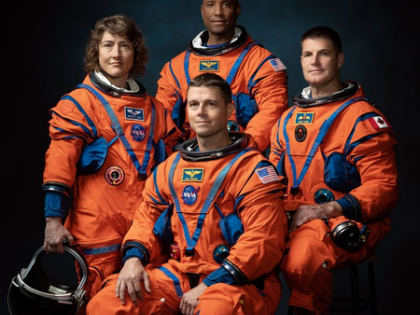
The Orion spacecraft carrying NASA astronauts Reid Wiseman, Victor Glover and Christina Koch, along with Canadian astronaut Jeremy Hansen, made a parachute-assisted landing as recovery teams moved in to retrieve the crew, NASA said in official updates.
“SPLASHDOWN!” NASA said, confirming the crew was “back on Earth” after completing the mission.
“What a journey,” Wiseman said moments after landing during a livestream. “We are stable one. Four green crewmembers.”
The mission marked the first crewed test flight of NASA’s Orion spacecraft and Space Launch System rocket, sending astronauts beyond low Earth orbit, around the Moon and back.
According to reporting by Smithsonian Magazine, the crew completed a nearly 10-day journey and splashed down off the California coast, marking the first time humans have travelled near the Moon in more than half a century and setting the stage for future lunar missions.
During the mission, the astronauts travelled as far as 252,756 miles from Earth, breaking the previous distance record set during the Apollo 13 mission, and observed the Moon’s far side and multiple lunar surface targets, including ancient basins and craters.
The flight also marked several milestones: Glover became the first Black astronaut to reach the Moon’s vicinity, Koch the first woman, and Hansen the first Canadian.
The journey was not without technical challenges. Minor issues, including problems with the spacecraft’s toilet system and unusual odours inside the cabin, were reported during the mission, though they did not affect its outcome, Smithsonian Magazine noted.
Re-entry into Earth’s atmosphere was one of the most demanding phases. The spacecraft travelled at about 25,000 miles per hour and endured temperatures approaching 5,000 degrees Fahrenheit as superheated plasma built up around the capsule.
NASA said the capsule deployed drogue and main parachutes in sequence before splashing down in the Pacific, where recovery teams approached in boats and later transported the astronauts by helicopter to the USS John P. Murtha for medical checks.
NASA Administrator Jared Isaacman praised the mission. “I just couldn’t be more proud of the entire workforce, the years, the effort, the late nights, all the hard work from across the country that contributed to this incredible moment,” he said.
The successful return drew praise from across the US government. The State Department said the mission “has shown the world what is possible,” while President Donald Trump called the trip “spectacular” and the landing “perfect,” adding that he looked forward to welcoming the crew to the White House.
Artemis II is a key step in NASA’s broader lunar programme, which aims to return humans to the Moon and establish a sustained presence there. The next mission, Artemis III, is expected to test docking capabilities and pave the way for a crewed landing on the lunar surface later this decade.
Disclaimer: This post has been auto-published from an agency feed without any modifications to the text and has not been reviewed by an editor
Open in app