
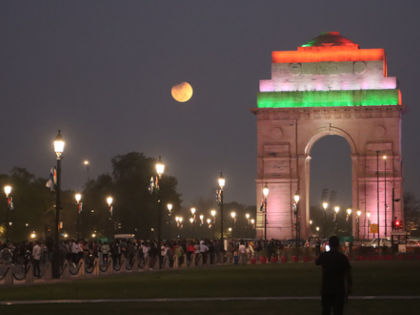
India Gate to go dark tonight as world observes Earth Hour 2026
By IANS | Updated: March 28, 2026 11:20 IST2026-03-28T11:17:59+5:302026-03-28T11:20:22+5:30



New Delhi, March 28 New Delhi’s iconic India Gate will go dark on Saturday night, between 8:30 p.m. and 9:30 p.m. IST, ...
India Gate to go dark tonight as world observes Earth Hour 2026
New Delhi, March 28 New Delhi’s iconic India Gate will go dark on Saturday night, between 8:30 p.m. and 9:30 p.m. IST, as part of Earth Hour 2026, a global environmental initiative encouraging people and institutions to switch off non‑essential lights for one hour to raise awareness about climate change and environmental sustainability.
Earth Hour this year marks the 20th anniversary of the global movement, observed under the theme “Give an Hour for Earth,” highlighting collective action for our planet.
Organised annually by the World Wildlife Fund (WWF), Earth Hour began in 2007 as a symbolic “lights‑off” event in Sydney, Australia, and has since grown into one of the world’s greatest grassroots environmental efforts, uniting millions of people, businesses, and monuments in more than 190 countries and territories.
In anticipation of the event, city authorities across India have urged residents to switch off non‑essential lights and electrical appliances during the one‑hour observance. In Hyderabad, the Greater Hyderabad Municipal Corporation (GHMC) appealed to citizens to participate actively in Earth Hour 2026 by turning off unnecessary lighting from 8:30 p.m. to 9:30 p.m. on Saturday, reinforcing the message of environmental stewardship.
GHMC Commissioner R.V. Karnan urged residents to embrace the symbolic act as more than just an energy‑saving measure, saying, “Every small action counts.
Across India and around the world, iconic landmarks, public spaces, and private homes will join the symbolic switch‑off, drawing attention to the urgency of climate action and the conservation of natural resources.
Last year, renowned structures such as India Gate, Rashtrapati Bhavan, and other national monuments participated in similar lights‑out observances, reinforcing the cultural significance of the campaign in the country.
Environmental experts say Earth Hour serves not only as a symbolic gesture but also as a reminder of the collective responsibility to address climate change, from reducing energy consumption to supporting policies and practices that protect ecosystems and reduce carbon emissions.
Disclaimer: This post has been auto-published from an agency feed without any modifications to the text and has not been reviewed by an editor
Open in app