
Instability in Iran sparks concern in New Delhi over Chabahar Port
By IANS | Updated: January 10, 2026 12:05 IST2026-01-10T12:00:41+5:302026-01-10T12:05:18+5:30


New Delhi, Jan 10 The situation in Iran has turned chaotic, and protests have spread across over 100 ...
Instability in Iran sparks concern in New Delhi over Chabahar Port
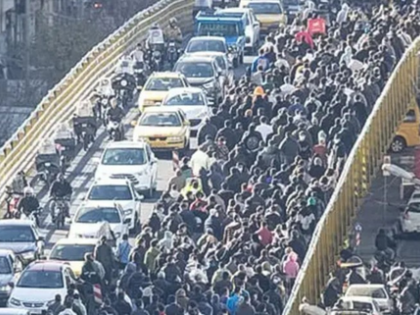
New Delhi, Jan 10 The situation in Iran has turned chaotic, and protests have spread across over 100 cities in the country. India is keeping a close watch on the situation as regime instability is rising in Iran. This poses a risk to India’s strategic investment in Iran’s Chabahar Port.
Officials in New Delhi say that these protests are concerning when it comes to the safety and continuity of operations at the critical port, in which India has an investment of nearly $500 million. An official said that there is no threat to the project as the protesters would not look to damage it. However, the concern is about the continuity of the project, and if the protests intensify further and there is a regime change, there would be a major delay, the official added.
The Chabahar Port is strategic for India. It is a gateway for India to bypass Pakistan to access Afghanistan, Russia, Europe and Central Asia. This port helps India in fulfilling its Connect Central Asia policy. Once ready, the port would boost trade with landlocked nations such as Uzbekistan, Turkmenistan and Kazakhstan.
The port is also part of the International North-South Transport Corridor (INSTC), which is a 7,200 km ship-rail-road network that links India to Iran, Russia, Europe and the Caspian Sea. This reduces transit time by nearly 40 per cent, apart from cutting costs by around 30 per cent.
The ongoing protests are likely to cause a delay in the completion of the project, and this would work against India’s advantage, officials note. A key part of the INSTC is the Chabahar–Zahedan railway project. The ongoing unrest could delay rail connectivity, which will eventually undermine the efficiency of the corridor.
New Delhi is worried that the unprecedented protests that have rocked Iran could delay cargo handling and also the development of infrastructure at Chabahar. The protests have already led to internet blackouts and disruptions in supply chains. All these are affecting the project, and hence, for India, it is important that normalcy returns to Iran.
It has been a nightmare for the security agencies in Iran to handle the situation currently. To add to this, the morale of the low-ranking cadres in the Islamic Revolutionary Guards (IRG) is down due to the growing economic crisis. All these factors have led to insecurity among the labour class, who feel that they could be targeted by the protesters due to a lack of security.
Another factor that India is bearing in mind is the moves that China could make during such a time. China is known to make its moves in a country which is undergoing instability. Chabahar is a counter to China’s growing influence at the Gwadar Port in Pakistan, which is located 170 km away.
Chabahar for India is also important since it helps in monitoring Chinese naval activity in the Arabian Sea and the Indian Ocean. India hopes that the dust in Iran will settle soon, so that its strategic investments are not hurt. Further, India would also be mindful of the fact that the Chinese are scaling up massively in Gwadar. Hence, a delay at Chabahar could delay India’s long-term plans, an official added.
Starting December 28 2025, mass protests erupted in Iran due to the deepening economic crisis and frustration with the Islamic Republic Government. Initially, the protest was about rising inflation, food prices and severe depreciation of the Iranian Rial. However, the protests quickly also changed course and today it is also about seeking regime change.
The protests began with shopkeepers hitting the streets, but today, students and the general public are also part of the protests. What began in a few cities initially has spread across 100 different places in Iran.
Disclaimer: This post has been auto-published from an agency feed without any modifications to the text and has not been reviewed by an editor
Open in app