
Pakistan surviving on IMF reviews but economy remains vulnerable as ever: Report
By IANS | Updated: January 1, 2026 20:55 IST2026-01-01T20:46:22+5:302026-01-01T20:55:26+5:30


New Delhi, Jan 1 Pakistan is witnessing the institutionalisation of a "survivalist" economy where every policy choice is ...
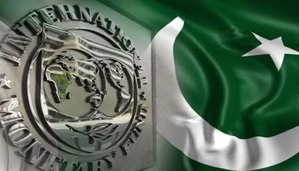
Pakistan surviving on IMF reviews but economy remains vulnerable as ever: Report
New Delhi, Jan 1 Pakistan is witnessing the institutionalisation of a "survivalist" economy where every policy choice is dictated by the need to pass the next International Monetary Fund (IMF) review, regardless of whether that policy erodes the tax base for the next decade, while the economy remains vulnerable as ever -- headed nowhere except, most likely, into another IMF programme, as per a news report.
The report in Business Recorder by Shahid Sattar reveals that Pakistan suffers from a chronic twin deficit: a fiscal gap (spending more than it collects) and a balance of payments crisis (consuming more foreign exchange than it earns).
"For fifty years, our imports have hovered at double the rate of our exports as a percentage of GDP. Simply, Pakistan is a country that has failed to produce," it added.
The report argued that the fundamental flaw in the IMF’s approach is a "dogmatic adherence to revenue extraction at the cost of value creation".
"
The historic economic model of state patronage was flawed and resulted in suboptimal allocation of resources.
"But there is a difference between weaning an addict off drugs and starving a healthy person. The IMF programme appears unable to distinguish between withdrawing support and subsidies, and actively destroying the ecosystem required for legitimate businesses to function," the report further argued.
On paper, the IMF deals with the Finance Minister and the Governor of the State Bank. Technically, all policies within the Letter of Intent are the government’s own ideas.
"In reality, the programme reflects the behest of those holding the greatest political and economic leverage. When policies fail, the IMF claims the government designed them; the government claims the IMF demanded them. This ambiguity serves everyone but the country and its citizens," the report lamented.
"Unless we reclaim our policymaking from the narrow, revenue-centric confines of IMF programmes, we are not just managing a crisis but rather our own decline," it added.
Disclaimer: This post has been auto-published from an agency feed without any modifications to the text and has not been reviewed by an editor
Open in app