
Somalia condemns Israel's recognition of Somaliland as "state aggression"
By ANI | Updated: December 27, 2025 19:00 IST2025-12-27T18:55:25+5:302025-12-27T19:00:05+5:30


Mogadishu [Somalia], December 27 : Somalia has sharply criticised Israel's decision to recognise the breakaway region of Somaliland, demanding ...
Somalia condemns Israel's recognition of Somaliland as "state aggression"
Mogadishu [Somalia], December 27 : Somalia has sharply criticised Israel's decision to recognise the breakaway region of Somaliland, demanding that the move be reversed and describing it as an act of "aggression that will never be tolerated".
Ali Omar, Somalia's state minister for foreign affairs, said the government would pursue all available diplomatic avenues to challenge what it termed an act of "state aggression" and interference in Somalia's internal affairs.
He said the decision directly undermined Somalia's sovereignty and territorial integrity, telling Al Jazeera that Mogadishu viewed the move as unacceptable.
The strong reaction came a day after Israel became the first country to formally recognise Somaliland, triggering swift condemnation from African and Arab states.
The development also raised concerns over whether the move was linked to alleged Israeli plans to forcibly displace Palestinians.
Somaliland unilaterally broke away from Somalia in 1991 following years of civil war but has never been recognised by any United Nations member state.
While it has established its own currency, parliament and flag, Somalia continues to assert that the region remains an inseparable part of its territory.
"This will never be acceptable or tolerable to our government and people who are united in defending our territorial integrity," Omar said.
"Our government strongly advises the State of Israel to rescind its divisive actions and abide by international law," he added.
In the weeks leading up to the announcement, Somaliland President Abdirahman Mohamed Abdullahi, popularly known as Cirro, had signalled that international recognition was imminent, without identifying the country involved.
Hargeisa had also seen billboards announcing that recognition was forthcoming.
Omar said the strategic importance of the Horn of Africa continued to draw foreign interest and interference.
"The importance of this region isn't new. It is still important for international trade today," he said, according to Al Jazeera.
He further accused Israel of pursuing recognition of Somaliland to advance its agenda related to Gaza.
"One of the motivating factors is the displacement of Palestinians from Gaza," Omar told Al Jazeera.
"It has been widely known - Israel's goal on that issue," he added.
Palestine's foreign ministry backed Somalia's position, recalling that Israel had previously identified Somaliland as a potential destination for forcibly displacing Palestinians from Gaza.
The ministry described the proposal as a "red line".
Somaliland authorities, however, defended Israel's decision.
Cirro said the recognition was "not directed against any state, nor does it pose a threat to regional peace".
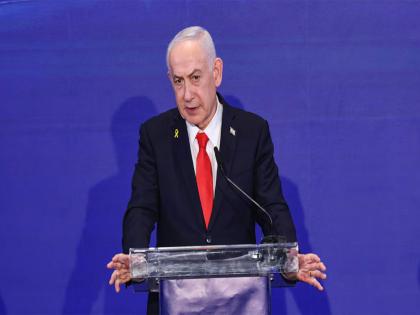
Following Israeli Prime Minister Benjamin Netanyahu's announcement, Somalia's prime minister's office issued a statement calling the move a deliberate attack on Somalia's sovereignty and an unlawful act.
The statement reiterated that Somaliland remains an "inseparable" part of Somali territory.
Netanyahu framed the recognition as being in the spirit of the Abraham Accords and said he would advocate for Somaliland during his meeting with US President Donald Trump.
He also invited Cirro to visit Israel, an invitation that was accepted.
Trump later distanced himself from the move, telling The New York Post that he would not follow Israel's lead.
Somalia's Public Works Minister Ayub Ismail Yusuf welcomed Trump's stance, writing on social media, "Thank you for your support, Mr. President."
Trump's remarks marked a shift from earlier comments suggesting his administration was working on the Somaliland issue.
The US has also recently voiced frustration with Somalia at the United Nations, citing security concerns and signalling reluctance to continue funding peacekeeping efforts.
At the regional level, African Union chairperson Mahamoud Ali Youssouf rejected any initiative aimed at recognising Somaliland as an independent state.
He warned that such a move would set a dangerous precedent.
The AU cited its long-standing principle of preserving borders inherited at independence.
Arab League Secretary-General Ahmed Aboul Gheit also condemned what he described as a provocative Israeli assault on the sovereignty of an Arab and African state.
He called the recognition a clear violation of international law.
Despite the international backlash, thousands of people gathered on the streets of Hargeisa to celebrate Israel's decision.
Many viewed it as an end to decades of diplomatic isolation.
The Israeli flag was displayed prominently at the national museum.
Somalia's strained relations with Israel date back decades, shaped by Israel's historic ties with Ethiopia, Somalia's regional rival.
During the Cold War, Israel provided Ethiopia with military support, while Somalia aligned with Arab states hostile to Israel.
The rivalry culminated in Somalia's defeat in the 1977 Ogaden War.
Earlier this month, Israeli Deputy Foreign Minister Sharren Haskel said there had been communication with Somalia over shared concerns about Houthi influence.
Omar, however, denied any such engagement, saying Somalia's position on Israeli policies remained unchanged, Al Jazeera reported.
Disclaimer: This post has been auto-published from an agency feed without any modifications to the text and has not been reviewed by an editor
Open in app