
Trump's social media diplomacy rattles fragile Iran peace talks as ceasefire deadline looms
By ANI | Updated: April 21, 2026 07:50 IST2026-04-21T13:18:20+5:302026-04-21T07:50:04+5:30



Washington, DC [US], April 21 : Efforts to broker an end to the seven-week conflict between the United States ...
Trump's social media diplomacy rattles fragile Iran peace talks as ceasefire deadline looms
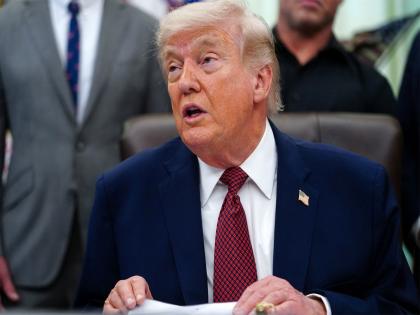
Washington, DC [US], April 21 : Efforts to broker an end to the seven-week conflict between the United States and Iran appeared to be on the brink of a breakthrough as the weekend drew near. However, the momentum shifted abruptly when President Donald Trump engaged in public posturing that threatened to derail delicate diplomatic channels, according to reports from CNN.
Breaking from the advice of his senior staff, the President appeared to move the negotiations into the media spotlight. On Friday morning, while Pakistani mediators were relaying updates from Iranian officials in Tehran, Trump took to social media and held multiple phone calls with journalists to discuss the status of the ongoing dialogue.
During these exchanges, Trump maintained that Iran had consented to various terms that, according to CNN sources familiar with the proceedings, are far from being settled. Most significantly, the President claimed Tehran had yielded to primary American demands, including the surrender of its enriched uranium, and proclaimed that the war was effectively over.
The reaction from Tehran was swift and dismissive. Iranian officials publicly refuted the President's claims and denied that a new round of discussions was even being scheduled. This immediate pushback sharply deflated the optimism that had been building throughout the week, leaving the future of the peace process in a state of flux.
Behind the scenes, the administration's own staff expressed frustration. CNN reported that several Trump officials privately conceded that the President's running commentary has been "detrimental to talks," particularly given the high stakes and the historical "deep mistrust" Tehran holds toward Washington.
A primary concern for American intelligence is a perceived internal fracture within the Iranian leadership. There are growing suspicions of a divide between the diplomatic team spearheaded by Foreign Minister Abbas Araghchi and Parliament Speaker Mohammad Bagher Ghalibaf, and the Islamic Revolutionary Guard Corps. This uncertainty has raised questions regarding who in Tehran possesses the ultimate authority to sign a binding agreement.
"The Iranians didn't appreciate POTUS negotiating through social media and making it appear as if they had signed off on issues they hadn't yet agreed to, and ones that aren't popular with their people back home," a source informed on the discussions told CNN. The source noted that the Iranian leadership is acutely sensitive to any perception of looking "weak" to their domestic audience.
Trump's public assertions have been extensive and varied. He informed Bloomberg that Tehran had accepted an "unlimited" suspension of its nuclear activities. Speaking to CBS News, he claimed Iran "agreed to everything," including the removal of enriched uranium. Furthermore, he told Axios that a summit would "probably take place over the weekend," adding, "I think we will get a deal in the next day or two."
Despite this public confidence, the situation on the ground remains volatile. A tenuous ceasefire was strained on Sunday when a US guided-missile destroyer intercepted and seized an Iranian merchant vessel attempting to breach the American naval blockade in the Gulf of Oman, an incident that sparked further outrage in Tehran.
As the clock ticks down on the initial 14-day truce, the President is faced with a pivotal choice: endorse a potentially "imperfect" compromise or escalate a military campaign he previously suggested would have concluded by now. While Iranian rhetoric softened slightly by Monday, the actual framework of a potential deal remains elusive.
White House press secretary Karoline Leavitt defended the administration's stance, stating that the President's "long game" tactics have brought the US closer to a "good deal" than the "horrible deal made by the Obama Administration." She dismissed critics of the President's methodology as "either stupid or willfully ignorant."
Substantive hurdles remain, specifically regarding uranium enrichment. Trump has established firm "red lines," demanding that Iran halt all enrichment and relinquish its "near-bomb-grade" materials. In contrast, Tehran is seeking to retain its influence over the Strait of Hormuz and is demanding the immediate lifting of economic sanctions.
Negotiation logs show a significant gap in timelines. According to CNN, the US initially proposed a 20-year freeze on enrichment, which Iran countered with a five-year plan. A more recent Iranian compromise suggested a 10-year total pause followed by a decade of strictly limited, low-level enrichment. Trump, however, has publicly stated he desires "no enrichment indefinitely."
To bridge this gap, the administration has weighed the possibility of unfreezing $20 billion in Iranian assets. CNN previously reported that this financial incentive would be contingent on Tehran physically handing over its stockpile of highly enriched uranium.
Critics of the current trajectory argue that a loose "framework understanding" might play into Iran's hands. There are concerns that Tehran is using the diplomatic window to "draw out the discussions" while protecting its mobile missile systems from US strikes.
The President, however, dismissed any sense of urgency in a Truth Social post on Monday. Despite the economic impact of the war on global fuel prices, he wrote, "I am under no pressure whatsoever, although it will all happen, relatively quickly!"
Communication within the executive branch has also appeared disjointed. On Sunday, Trump claimed Vice President JD Vance would skip the next round of talks due to "security concerns." Simultaneously, UN Ambassador Mike Waltz and Energy Secretary Chris Wright told national television audiences that Vance would indeed be leading the delegation in Islamabad.
The confusion extended to Vance's actual location. Trump told the New York Post on Monday that the Vice President was currently "in the air" and about to land in Pakistan. In reality, Vance's motorcade was seen arriving at the White House at that exact moment. Officials now indicate Vance will depart on Tuesday for talks scheduled to begin Wednesday.
This fluidity extends to the ceasefire's expiration. While the original deadline was set for Tuesday evening, Trump told Bloomberg the truce actually lasts until "Wednesday evening Washington time." This 24-hour discrepancy provides a narrow window before the President must decide whether to execute his threat to target Iranian infrastructure, a move international observers warn could constitute a "war crime."
When pressed on whether he would grant another extension if a deal isn't reached, Trump's answers have remained inconsistent. "If there's no deal, fighting resumes," he said at one point, only to later suggest, "If we need to, I would do that." He ultimately told reporters, "We'll see. I don't know that we'll have to. Ideally, we won't."
Disclaimer: This post has been auto-published from an agency feed without any modifications to the text and has not been reviewed by an editor
Open in app