
Rang Panchami 2026: Why Festival of Colors Celebrated After Five Days of Holi?
By Lokmat Times Desk | Updated: March 8, 2026 09:34 IST2026-03-08T09:34:45+5:302026-03-08T09:34:59+5:30



Rang Panchami is celebrated for five days after Holi! This time, Rang Panchami (Rang Panchami 2026) is on Sunday, ...
Rang Panchami 2026: Why Festival of Colors Celebrated After Five Days of Holi?
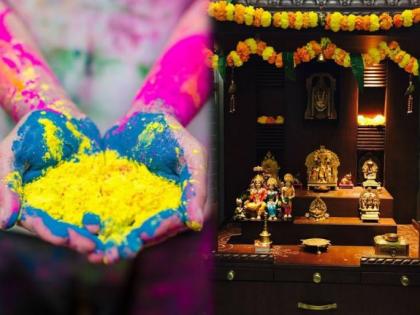
Rang Panchami is celebrated for five days after Holi! This time, Rang Panchami (Rang Panchami 2026) is on Sunday, March 8. Due to the lack of holidays, we celebrate Holi, Dhulwad, and Rang Panchami on the same day, but this year, Rang Panchami coincidentally falls on a Sunday, so we will be able to enjoy the fun of colors. On Rang Panchami, Rang Panchami is played with relatives as well as with gods. Playing with colors with gods and goddesses creates an emotional bond with God. Just as we tie Rakhi to Shri Krishna on Raksha Bandhan, we should play colors with the gods on Rang Panchami to build a bond with them.
Since Shri Krishna had killed the demon Putana on this day, the people of Gokul celebrated the festival of colors for five days in joy, and since then, Rang Panchami has become a five-day festival. And the custom of starting this festival by painting Krishna with colors every time has started. This day is celebrated with great enthusiasm in North India. Also, Rangpanchami is played on this day in Maharashtra, Rajasthan, Madhya Pradesh and other places. However, in recent times, due to the lack of holidays, Holi and Rangpanchami are played one after the other. The holiday is celebrated as Dhulwad, Rangpanchami day, and the offering of Puranpoli is shown on Holi.
In Jaisalmer, Rajasthan, the Krishna temple is known for its grand Rangpanchami celebrations, featuring folk dances and playing Rangpanchami with the deities. Though COVID has temporarily suspended festivities, the community continues to find ways to celebrate. Rangpanchami's origins lie in the divine realm, inspired by Shri Krishna's playful interactions with the gopis in Gokul.
This joyous celebration extended to the heavens, leading to the tradition of playing Rangpanchami with gods and goddesses. Following Dhulvad, Rangpanchami involves worshipping the deities and offering flowers, with prayers for unity and the dissolution of societal and personal differences.
Open in app